Category Archives: Coaching

Still Waters

One of the best teams we ever coached was a group of kids who were magnificent running down the rapids. Virtually unstoppable and an honest-to-goodness tour de force when the current flowed swiftly in their direction. But, we would lose focus and intensity when the current became easy and let up. When things should have been easy, when the game should have been packed away neatly under the “W’ column, we’d struggle to tread water and keep our heads above water.

Handling success and maturity means you must learn to navigate the still waters to keep afloat and continue to move in the desired direction. It is one thing working to succeed, but it’s a whole other thing to achieve success and then stay successful. One of the true joys of being good is the scramble, the character, and the discipline invested in order to stay good.

Tom Osborne, the legendary football coach at the University of Nebraska, said that everyone wants to win; it’s human nature. The difference between winners and losers often depends on how willing one is able to go all in and put in the work necessary. And in order to stay a winner, one has to work even harder and with greater efficiency to stay on the mountain.

One needs motivation, an edge. Some sort of carrot to dangle just out of reach in front of you that keeps your motivated. My favorite edge as a player and a coach is the “Chip on Shoulder” approach. Succeed despite the barriers you face. Suceed because there are people who don’t believe you will ever accomplish anything.

The edge. When you choose to play on the edge you have to be careful of two things.

  1. It’s easy to fall over the edge, so you must stay balanced and anchored.
  2. Key an eye on those who will push, nudge, or flat-out kick you over the edge.

The KC Royals in the first month of the season are a good example of this. They found a chip-on-the-shoulder edge which worked very well. But, when this motivator went too far, they fell over the edge and lost their composure. Fortunately, it appears they were able to step back and reboot under control to be successful. Use the edge to motivate your habits and performance, not lose emotional control. Be motivated without becoming consumed by the motivation.

Use the edge to motivate your habits and performance, not lose emotional control. Be motivated without becoming consumed by the motivation.

So you’ve turned things around. Your team and your performance proved to be successful. Pat yourself on the back, smile, and then get back to work. You have things to accomplish. The job has just begun. Find your edge and anchor yourself to your motivation.

To be a success, you need to learn to navigate the still waters. There will not always be a swift stream to move you along, so you need to be able to put your oar in the water and pull yourself forward time and time again.

Word hard.

Work focused.

Play hard.

Play focused.

Just don’t get pushed over the edge.

Still_Water_At_Dusk

Courtesy WikiCommons


Leave a comment

Filed under Coaching, Training

Finding Their Missing Somethings

“Let me tell you something, Dorothy Gale from the Wizard of Oz was one of the great all-time leaders. She took three people that were missing something and had them look back inside themselves to find something they thought they never had. She wanted to go home, that was mission No.1, but in the end it was all about everyone else.”

I read this quote from Clint Hurdle, manager of the Pittsburgh Pirates, in Sports Illustrated’s 2015 Major League Baseball Preview. Not only is it a statement about what a good leader does, it is perhaps the best distillation of the very essence of The Wizard of Oz I have ever seen.

wonderful-wizard-oz-l-frank-baum-paperback-cover-art

A leader seeks their own goal by helping everyone around them find what makes them better. A coach needs to pay attention to know what each of his or her players desires or needs and work with that athlete to make them better. When the collective individual goals are met, the team goals often follow for the coach. The devil is in the details. The devil is in making every single individual who walks through your door better on a daily basis.

I saw another fitting quote in a training and conditioning magazine this past week from Coach Mark Morrison, who is Head Strength and Conditioning Coach for Hendrick Motorsports. On the subject of training individuals and the myriad of training philosophies/programs available, Coach Morrison said,

“At the end of the day, as long as you are developing happy, healthy, strong, lean, and agile athletes, you have done your job.”

Truth! Write this in stone and live by it. Be the coach who, like Dorothy, finds the missing somethings in your athletes. Be the coach who helps them be happy, healthy, strong, lean, and agile athletes.

You will be a happier (and more successful) coach because of it.

Leave a comment

Filed under Coaching, Training

Rowing or Riding?

Which athlete are you? The one who rows the boat or the one who simply rides along?

I read an interesting blog post today from Seth Godin called Along for the Ride that reminded me of this aspect of team sports dynamics.

“How long have you been along for the ride? When is your turn to actually drive?”

As a player or a coach, these questions should be a constant in your development.

  • When is it your time to step up?
  • Did you miss it?
  • Did you ignore it?
  • Do you want nothing to do with it?

We are seeing an increase in younger athletes getting on the varsity sports field. Freshman, sophomores are being thrown into key team roles.  I have also noticed a trend where these same young players are thrown into the fire often don’t seem to get much better.

They are as good when they walk out the door as they were when they walked in.

These kids get put on the boat as riders and never develop into rowers.

Athletes need to eventually take the responsibility of driving the team train. Experience and leadership can’t ride the train. Experience and leadership need to be the drivers.

It’s your turn to step up.

It’s your turn to row.

Be what you are meant to be.

Out work. Out hustle. Out perform. Every day.

1 Comment

Filed under Coaching, Rants, Training

Swinging For A Better Investment

It’s almost baseball season.

Doesn’t that phrase have a nice ring to it? It is music to my ears. I can almost picture the excitement of kids all across this great country as they look forward to stepping on the diamond.

As you parents and coaches get ready to outfit the young players in your life, I want you to consider a purchase that will pay off 100x greater than just about anything else you are looking to buy for baseball.

Buy a tee.

I am a firm believer every kid should have a tee AND every kid/parent/coach should have a basic idea of how to use one.

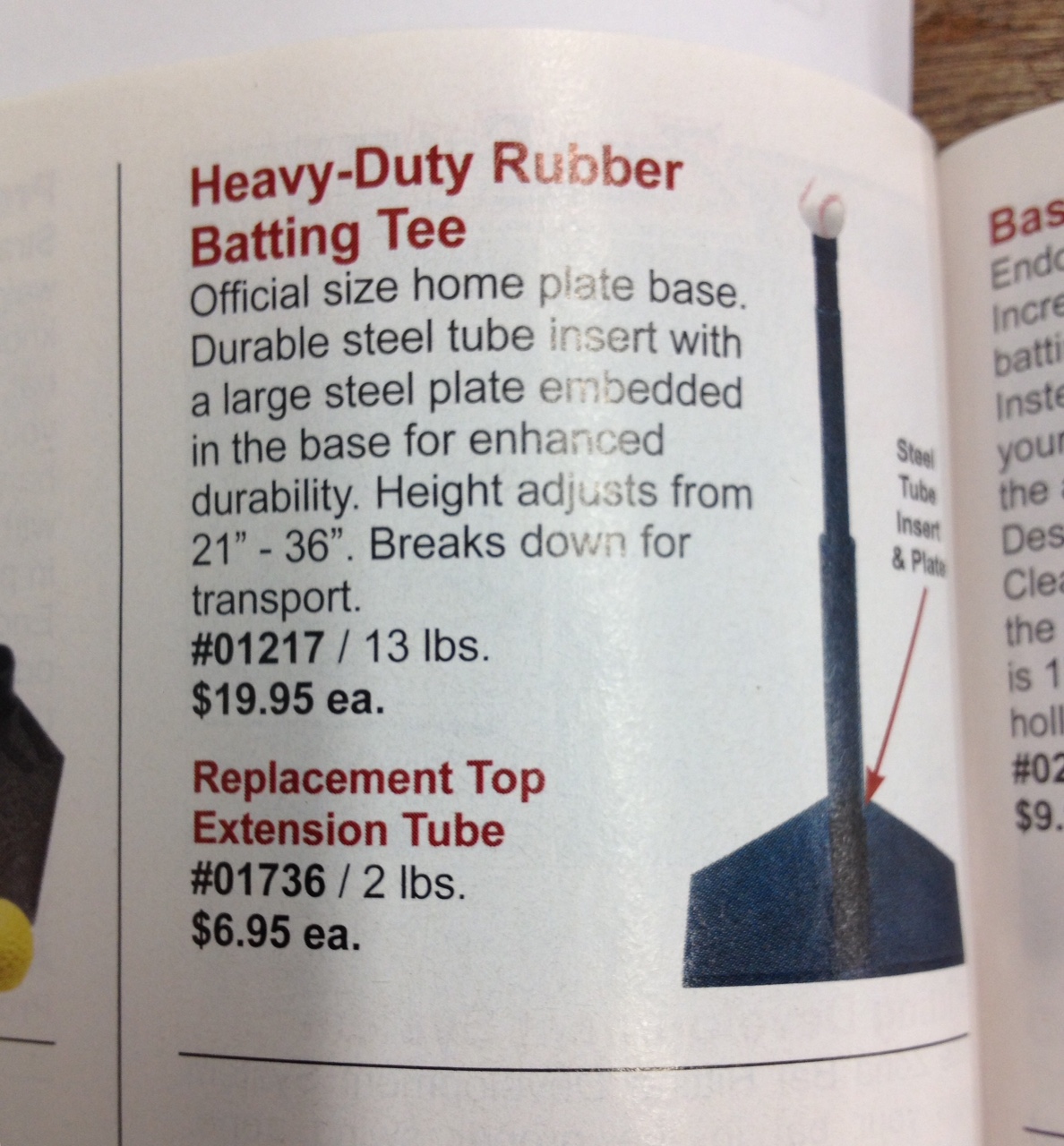
Here is a quality tee you can get for $20.

BattingTee

Thinking about spending $200-$500 on a bat? STOP!

First, and foremost, be willing to spend the $20 on a tee to teach the player to hit screaming line drives regardless of the bat they hold in their hands.

It is not the equipment that catches or hits a baseball; it is the skill of the hand that holds the equipment which accomplishes great things.

Buy a tee.

Learn how to use it.

Learn how to teach with it. See my earlier blog post, Hitting Position: The Hosmer Breakdown, for more information and keep an eye open to a upcoming post about tee drill progression. (And free open hitting sessions will start soon, also.)

Buy a tee. Hang a net to hit into or drill a hole in a ball and tether it to a 15-20′ piece of clothesline rope. Hit baseballs, plastic golf balls, tennis balls, or any kind of ball you can scrounge up.

Save yourself some money. Don’t be fooled into thinking a $400 baseball bat will miraculously make you or your kids a better hitter. At the end of the day, there is only one thing that makes a better hitter—WORK and REPETITION.

Have a great preparation to Baseball 2015!

Now, go buy a tee.

Leave a comment

Filed under Coaching, Rants, Training

Meat & Potatoes

I’ve been thinking a lot this week about meat and potatoes. Am I that hungry? No (But that does sound good, doesn’t it, Mrs. Hays?).  I’m not talking about meat and potatoes as a hearty meal, I’ve been thinking a lot about football meat and potatoes.

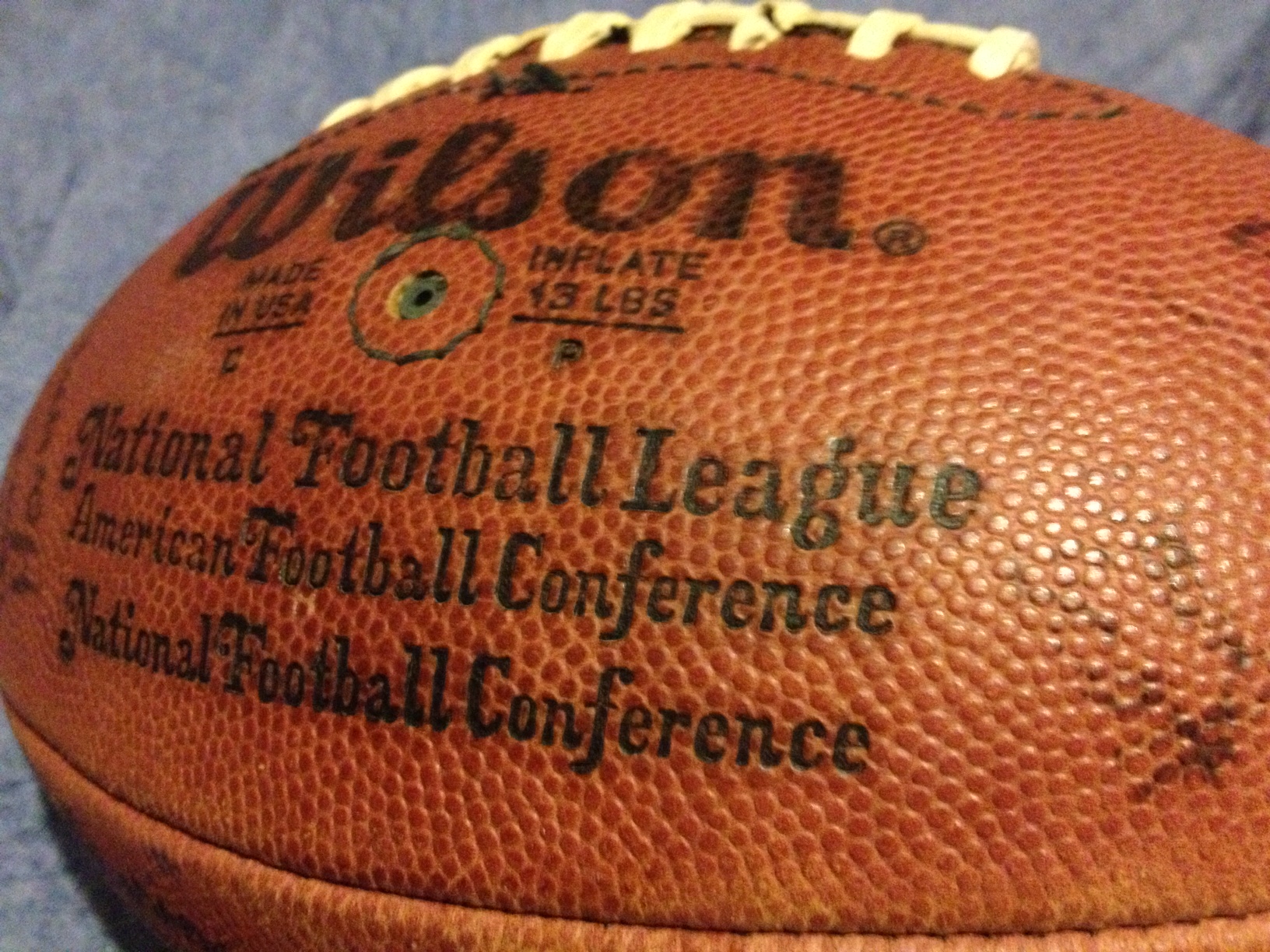
WilsonFootball

It’s post-Super Bowl week. Usually, in post-Super Bowl week, I rarely think about football. The season is over. Time to take a little break and get ready for the baseball season.

Not this year.

What happened?

Super Bowl XLIX happened. An uber-exciting game with the best two teams in the league participating. A game where the outcome came down to one final play. And THAT final play is what has been bugging the heck out of me all week.

Meat and potatoes.

In the ultimate game on the ultimate stage and at the very pinnacle of their sport, one team had a chance to win the Vince Lombardi trophy for the second year in a row but had their hopes dashed at the goal line with an interception. The team came up short due in large part to choosing to go with a cute, trickster play call instead of their meat and potatoes play call.

Meat and potatoes?

It’s the play your team runs best. It’s the play you hang the personality of the whole team on. It’s the play your players believe in and trust above all others. Coach Eric Burks taught me this in my first year of coaching freshman football. Our best play, the one all our kids trusted and executed above all others was 34 Power.

34 Power was a run play. An in-your-face running play, in fact. We double-team blocked the point of attack, led the lead blocking back through the hole to block the first threat, and handed the ball to the tailback, who followed the blocking back into the hole and broke to daylight.

It was a good play. We ran it well. We had confidence in it as a team. It was who we were. Coach Burks called 34 Power whenever we need to gain important yardage, like 4th and short or on the goal line. He called it our meat and potatoes play—our staple play. The kids caught on to the meat and potatoes concept. They caught on so well and became so confident in the 34 Power, Coach Burks just started calling the play “Meat & Potatoes”.

If we were behind in the 4th quarter and stuck in an do-or-die fourth and short at midfield, he would send in the play call with the WR. Meat & Potatoes. Everybody knew what it meant, everybody knew what their job was, and everybody (usually) got the job done.

That’s what’s been bugging me all week. The Seattle Seahawks, with the game on the line, got too cute. They skipped their meat and potatoes and went straight for the all-you-can eat dessert bar. Instead of running the football with the best short yardage, touchdown scoring, legs always churning forward running back, they passed the ball. They turned their back on everything they built their success on and failed.

They ate too many chocolate fudge sundaes and got an upset stomach.

The Seahawks skipped the most important part of their Super Bowl meal. They skipped their Meat & Potatoes.

It was a great game. One of the most entertaining Super Bowls ever.

I just can’t get the meat and potatoes mistake out of my mind.

Hurry up baseball, save me from this strategic football dilemma that haunts me.

Meat and potatoes…

MeatPotatoes

Leave a comment

Filed under Coaching, Rants

What is best?

High school-aged kids are going to screw up.  That’s a given.  It is part of being young and stupid.  You think you will not get caught, you think nobody will know or find out, and you think nobody cares.  As a parent and coach, I don’t like it.  I wish kids wouldn’t behave badly. I wish they would make good decisions 100% of the time 24/7.  But they don’t.  The learning curve of life is shaped by mistakes and failures.

But, what do we adults do? Do we turn a blind eye? Do we slap their wrist and tell them not to repeat the bad behavior event? Do we bring the hammer down?

Tough questions. I have no good answer. I don’t like the solution which completely takes away the activity from the kid. In our high school, I felt football kept a great number of our young men coming to school every day (more than any of us wanted to admit). Being part of the team kept them connected. Without the sport and without the team, many of them drifted away.

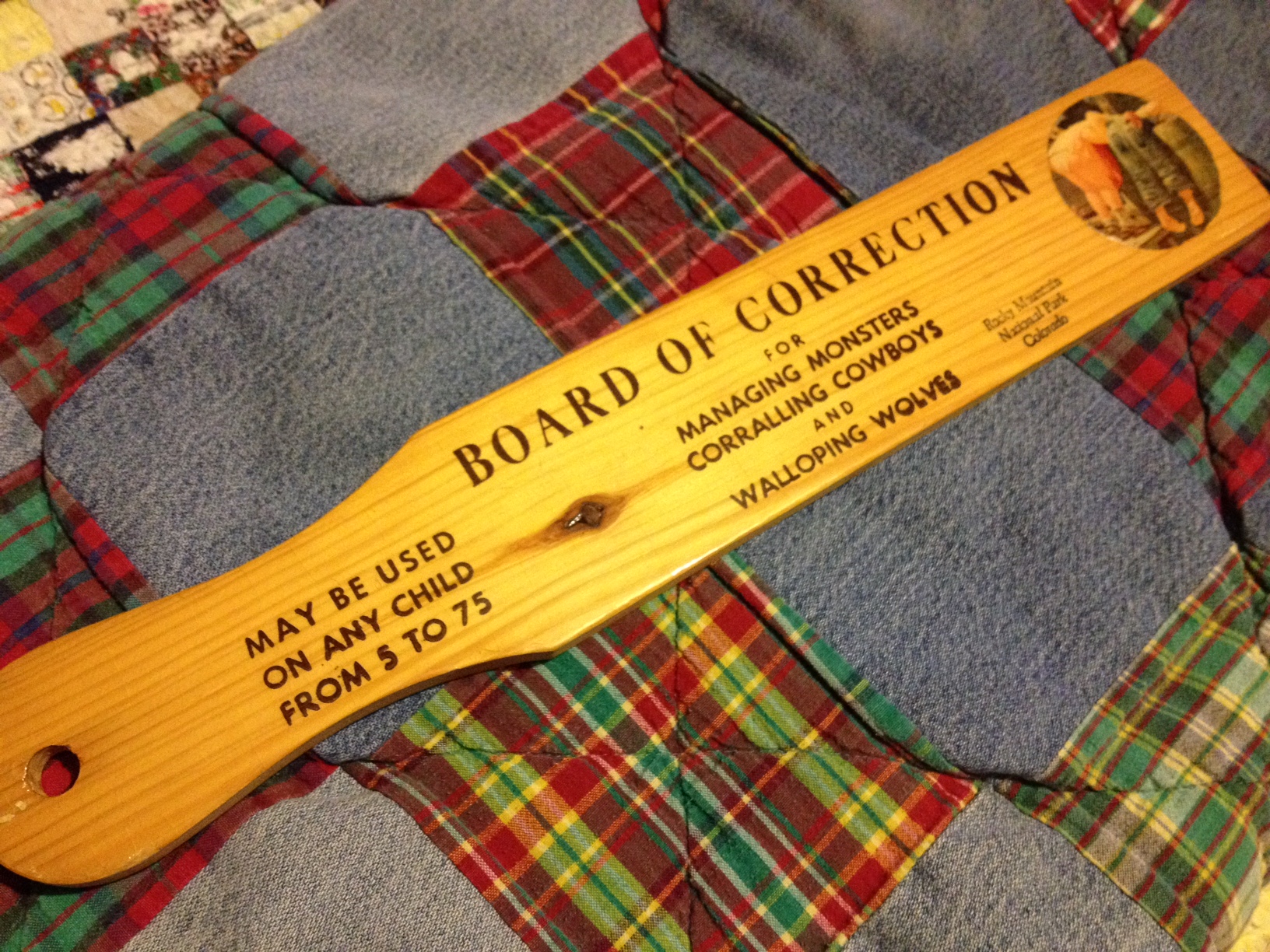
Paddle

With a sports coach, I like the multi-facet discipline approach to a player in trouble. I think the most effective enforcement comes three directions—the parent, the administrator, and the coaching staff. Not too severe from either direction, but enough to turn the thumb screws and make life in trouble an uncomfortable situation for the kid.

Not easy topics.  Mistakes and punishment are right at the bottom of the list of things coaches want to take care of during a season. But, they happen. They happen more than any of us want to admit. When they do occur, how we handle these issues has a long-term positive or negative impact on the kid. No pressure, right?

I don’t know the way to solve all these problems. High school kids will continue to get in trouble. Are we going to respond in a way the helps the kid in the long run or hurts the kid in the long run?

It’s never easy.


Leave a comment

Filed under Coaching

There’s no “I” in team, but there is a “ME” #2

“There’s no “I” in team, but there sure as heck is a “ME”.”

Of all the stupid coach-things I ever said, this was one of my favorites and maybe the wisest stupid thing I’ve ever said. It kind of goes against the grain against the popular “No ‘I’ in team” sayings we are so familiar with.

A good team is not a group of harmoniously tuned clones; a good team is a collection of individuals, from diverse backgrounds and personalities, who work well together toward achieving a goal.

I did not care where you came from.
I did not care who your friends were or what interests you had.
I did not care who your parents were.
I did not care where you came from.

What I cared about was how you contributed to the team. What I cared about was this. When you stepped across the white line and onto the field, you put the blinders on and committed to working toward making the team better.

Every minute, every hour, every day.

There is some intriguing research being down on the team concept in education, business, etc. Po Bronson, co-author of TOP DOG: THE SCIENCE OF WINNING AND LOSING, has some interesting ideas about the team.

One very important find from the research identifies the 60/30/10 Rule as a formula for a team, whether business, sports, education, etc.

60% of a team’s success is directly related to who is on the team. This means talent. Talented teams succeed. Building a team and/or acquiring talent matters in a big way. The talent level matters more than most people ever realize (or wish to admit). Coaches/leaders are important, but not nearly for the reasons most of us believe.

30% of the success is in the setup of the team. The setup of a team includes the program’s philosophy, goals, and the road map plan to get there. The single most important thing a leader can do to give a team the best chance to succeed is to clarify the roles on the team. Every member of the team should have a role and understand this role.

10% has to do with leadership. The leader’s job, once the team’s goals and roles are established, is to keep the team on course. Don’t micromanage a team.

So what the research is saying is that coaches are not the wizards most people perceive them to be. Coach K, Bill Self, or Bill Snyder are all exceptional in their set up of a team by implementing their goals, philosophies, and role clarification. Where these coaches excel at is acquiring talent and getting those players onto the field with the program’s goals, philosophies and specific roles fully ingrained.

They set and keep the course, not micromanage.

There’s a misconception about a team that everyone must get along. This is crap. Seriously. Harmony and chemistry are two very different things. Harmony means a peaceful, constant state. Harmony does not equate to team, though. Harmony kills progress with complacency. Sure you need some team harmony; you can’t be a team that goes for each other’s throats at every turn, that’s dysfunctional.

One of my biggest coaching pet peeves was the deal making kids would do. The
‘I’ll go easy and scratch your back if you’ll go easy and scratch mine” of the #1’s on the depth chart vs the #2’s and #3’s on the depth chart during drills and scrimmages. I want competition, I want fire. I want an environment the #2 is out to beat the #1 and the #3 is out to put the #2 and the #1 on the edge.

A little skirmish every now and then is not a bad thing for a team. Just don’t allow these little skirmishes to develop into team rifts. Players should challenge each to get better, not beat down each other. Serious issues need to be addressed and resolved early prior to becoming team rifts.

Chemistry is a mix of team member’s personality and skills which move the team forward and drive every member to get better. The players in the mix don’t have to be homogenous. They can be as different as can be. The only thing that matters is the team moves toward its goals.

A team needs someone to rock the boat and be a catalyst to trigger improvement. A team needs someone to point out the deficiencies in the team AND (this AND is very, very important) work to find solutions to improve.

Don’t underestimate the power of the individual to a group or team. As a coach, boss, or team leader, make an effort to understand the 60/30/10 Rule. Assemble the best talent you can, define and assign roles, and let people do their jobs.

Individuals matter.

Don’t allow ego to get in the way of progress.

There’s is no “I” in team, but there is a “ME”.

About.me_icon

Leave a comment

Filed under Coaching, Rants, Training