Tag Archives: History

A Words Look: General Eisenhower’s D-Day Letter to the Allied Expeditionary Force

DDay+80—eighty years since the Greatest Generation began the greatest offensive in all human history directed at the face of tyranny. 

With three writing projects in the orbit of three different eras of Dwight D. Eisenhower’s professional life, I’ve done quite a bit of reading and research on Ike Eisenhower. The most important thing I’ve discovered in this work is how much I find Ike’s ideas and philosophies mirror my ideas and philosophies as I approach age 60. 

Growing up in Kansas City, Kansas, all I ever really knew about President Eisenhower in the grand scheme of things was that he was born in Kansas. I remember bits and pieces of visiting the Eisenhower Library & Museum in Abilene, Kansas when I was about 8 or so on a family summer vacation to visit my grandparents’ house at Tuttle Creek Lake near Manhattan. My main memory is standing on a hot summer day inside the cool and quiet Place of Meditation, the final resting place of Ike and Maime. The surviving impression from that day is my gut telling me this place was somewhere special and the people buried here were something special.

After spending the last few years on a deep dive into Dwight David Eisenhower, I now can confirm those gut feelings, Ike was something special and his influence helped build the United States into the world leader the people of my generation and those to follow grew up taking for granted. 

We could all benefit at this 2024 moment in the United States from the life of Dwight D. Eisenhower. There are many historical parallels to the decade leading up to World War II that are increasingly impossible to ignore. As Spanish-American philosopher George Santayana famously wrote, “Those who cannot remember the past are condemned to repeat it.”

In remembrance of the 80th anniversary of D-Day, here is the letter General Eisenhower, Supreme Allied Commander of the Allied Expeditionary Force, sent his troops before the commencement of the D-Day attack on the beaches of Normandy on June 6, 2024.

May God bless all the brave soldiers and their families for their bravery and sacrifice in standing up to Nazi evil.

General Eisenhower’s letter to the troops before the D-Day invasion, June 1944.

Soldiers, Sailors and Airmen of the Allied Expeditionary Force!

You are about to embark upon the Great Crusade, toward which we have striven these many months. The eyes of the world are upon you. The hopes and prayers of liberty-loving people everywhere march with you. In company with our brave Allies and brother-in-arms on other Fronts, you will bring about the destruction of the German war machine, the elimination of Nazi tyranny over the oppressed people of Europe, and security for ourselves in a free world.

Your task will not be an easy one. Your enemy is well trained, well equipped and battle-hardened. He will fight savagely.

But this is the year 1944! Much has happened since the Nazi triumphs of 1940-1941. The United Nations have inflicted upon the Germans great defeats, in open battle, man-to-man. Our air offensive has seriously reduced their war strength in the air and their capacity to wage war on the ground. Our Home Fronts have given us an overwhelming superiority in weapons and munitions of war, and placed at our disposal great reserves of trained fighting men. The tide has turned! The free men of the world are marching together to Victory!

I have full confidence in your courage, devotion to duty and skill in battle. We will accept nothing less than full Victory!

Good Luck! And let us all beseech the blessing of Almighty God upon this great and noble undertaking. 

Dwight D. Eisenhower

Screenshot

Leave a comment

Filed under Reads, Uncategorized, Writes

1763

We know all about the American Revolution, right? Did not we dashing, young American children learn every important date, battle, and character of our nation’s fight for independence from British tyranny?

Huzzah!

We are such bright children. We know about the Boston Tea Party, Washington crossing the Potomac, and Jefferson and the Founding Father’s passionate Declaration of Independence. I bet most of us can recite the first line of Paul Revere’s Ride (which is probably the only thing besides his name we know of Henry Wadsworth Longfellow).

Though all these things sit prominently in the psyche of the American-educated child, they are not the things at the core of our struggle for independence in 1776. As is common in history, recorded history is in the eyes of the recorder—the information deemed vital usually results in making one group look like heroes while making another, antagonistic group look like pure evil.

My interest in this subject was prompted recently by the intersection of the PBS Hamilton Documentary, the 2016 Presidential Election, and background research of the Wyandot Indian Tribe of Kansas for a book I’m working on. Through all this information, I’ve discovered a fact that should really not be such a surprise, but it still hit me like a bat to the head.

Our Founding Fathers were imperfect human beings. The people who run our modern country are imperfect human beings. There exists both a good side and a dark side to our national heroes. Take Thomas Jefferson for example. Jefferson wrote “We hold these truths to be self-evident, that all men are created equal…” in the Declaration of Independence and then went home to the slaves he owned on his Monticello plantation.

Imperfect human beings.

So what the hell happened in 1763?

The American Revolution started.

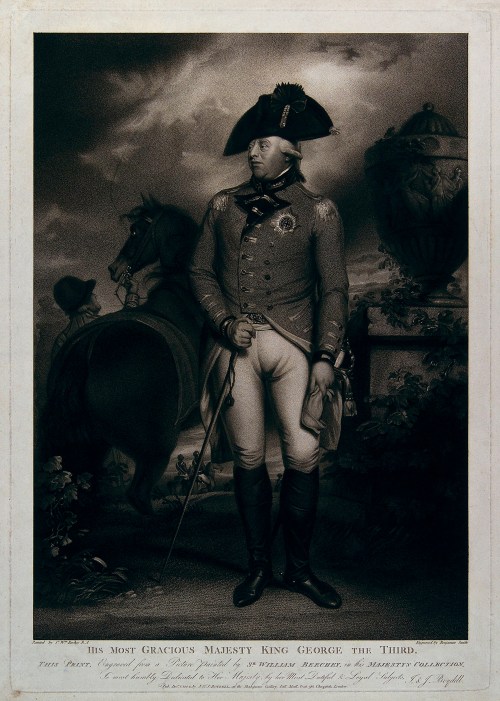
Well, maybe not officially but that was the year the bellwether event that instigated the colonies to eventually declare their freedom occurred. On October 7, 1763, triggered by the loss of many strategic forts in the Ohio Valley that year to a loosely bound confederation of Indian tribes led by the Odawa leader, Pontiac, King George III issued the Royal Proclamation of 1763. After obtaining the land west of the Appalachian Mountains as part of their victory over the French in the French and Indian War, Great Britain attempted to appease and stop further confrontation with the Native tribes of the Ohio Valley, outlawed white settlement in those regions. The white British colonists were furious. King George III, sitting on his throne an ocean away, outlawed their expansion to the prime real estate of the frontier.  

Taxation without representation and freedom from tyranny are just a few examples we were given in history class as directly leading to the Revolution. These, however, seem to take a back seat to the accumulation of wealth emphasis by the colonists. They looked out over all those raw resources available in the new world and wanted them. Things really weren’t much different then than what we see today in America. Economics, especially lassoing as many of this new continent’s economic resources into one’s own possession, played an equal or greater role than the altruistic fight for our freedom from the oppression of King George III.

1776 was just the culmination of 13 years of frustration in the New World. 13 long years of watching the ripe apple just sit there on the western frontier inhabited by the “uncivilized” Native tribes.  

History. It’s much more fascinating when we step behind the curtain and get a look at the mechanisms behind the singular event.

Credit: Wellcome Library, London. Wellcome Images

Leave a comment

Filed under Reads, Writes