Category Archives: Coaching

Slingers

I am a huge fan of Malcolm Gladwell. I just like the way he thinks and researches things. He seems to be that kind of interesting person you’d like to talk to on a train ride across the midwest. Like I said in the last post, he might be the actual, living Most Interesting Man In The World.

One of the first articles from Gladwell I read was The Physical Genius (The New Yorker, August 1999). In the article he wrote about advanced gestalt psychology development and vision in great athletes, like Wayne Gretsky and Tony Gwynn, a musician (Yo Yo Ma), and a neurosurgeon, (Dr. Charlie Wilson). These gestalt-exhibiting athletes are able to see and perceived the whole as more than just the collective sum of the parts. Brilliant and thought-provoking stuff. 

In his book,  DAVID AND GOLIATH: UNDERDOGS, MISFITS, AND THE ART OF BATTLING GIANTS, Gladwell explores the underdog and how the underdog often succeeds by taking advantage of what the “giant” sees as disadvantages. Below is a link to a video of Gladwell talking about his spotlight example in the story of David and Goliath. It is well worth a few minutes of your time to watch and listen to this Ted Talk about David and Goliath. He talks about how David took advantage of his slingshot skill to beat the intimidating giant Goliath. The value of a “slinger” is explained in detail. At the very minimum, you will leave this video with a whole new viewpoint about a Bible story we all thought we knew.

Too many people look at things like King Saul:

  • Be like everyone else
  • Operate like everyone else
  • Stick to the convention.

Because of who we ARE, we have to approach things differently. Like I’ve mentioned more than a few times before, we aren’t big, we aren’t particularly fast, we aren’t incredibly naturally talented, but we are who we are. We have to approach things from a non-conventional direction in order to develop into a successful team with the ability to slay the giants we faced. We developed our kids to be SLINGERS to battle the giants. Mobile, agile and able to hit the opponent like a cannon shot all game long.

The successes we had almost always lined up to the times we held tight to the David philosophy and tailored everything to that particular group of kids. Our failures more often than not came when we tried to squeeze square pegs into the round holes of convention. Instead of forcing these kids into our conventions, we should have been kicking down the round-holed-wall and rebuilding it to the necessary specs fitted for the current players.

Now, where’s my slingshot?
1 Comment

Filed under Coaching, Rants

My Ball!

Football has been on my mind lately. I know what you’re thinking, “Stop the presses! Hays never thinks about sports.” The general consensus has always been, even in the days before I coached the game, that a certain percentage of my total brain function is dedicated to football thought 24/7/365. This is different, though.

My latest football obsession has been triggered by a book (Yes, I said a book.). I’ve been reading (and listening) to Malcolm Gladwell’s book about the misconception of the underdog called DAVID AND GOLIATH: UNDERDOGS, MISFITS, AND THE ART OF BATTLING GIANTS. Gladwell is one of my favorite intellects currently walking this fine planet. Forget the grey-haired, elderly, beer-sipping character from a TV commercial, Malcolm Gladwell may truly be The Most Interesting Man In The World.

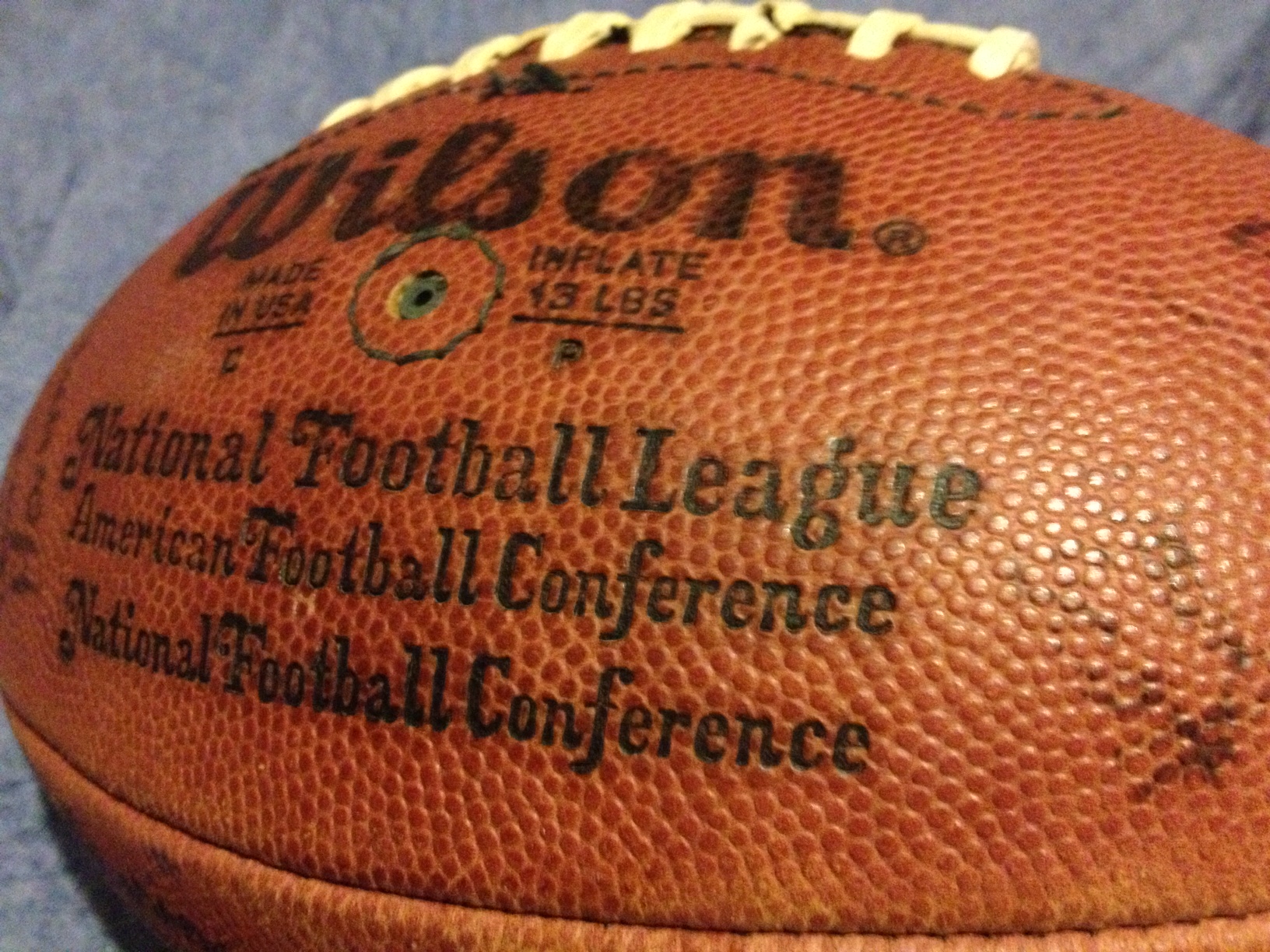
Many of the patterns and habit of underdogs—which, by the way, lead to more successes than expected—outlined in the book remind me of the things I learned while coaching. I’ll attempt to touch on some of these learned lessons over the next months on the blog. One of the most important lessons learned was this intricately simplistic, but incredibly effective, definition of the game of football. The “MY BALL!” philosophy of Coach Paul Lane.

In my town, we are perennial underdogs. We have the collective genetics of a lower middleweight wrestler. We aren’t big, we aren’t particularly fast, we aren’t incredibly naturally talented, but we are who we are. If you were to line our Clay Center boy’s teams up before the game at the 50-yard line against the opponent and take a vote on who’ll win from physical appearance only, we’d lose that vote in a landslide 95 times out of 100.

We are who we are.

Being what and who we naturally are, we have to approach things from a non-conventional direction in order to develop into a successful team. We have to think outside the proverbial box because we don’t have the natural athleticism that fits nicely into that box. I don’t mean to be mean-spirited because I loved coaching this tough-minded, hard-working population of kids. It is just the harsh reality—we have to develop competitive teams, not inherit competitive teams.

Coach Lane’s number one teaching point for the Tiger Defense consisted of only two words, MY BALL!. When the opponent had the ball, our job was to physically take our ball back, either by force or by making the opponent punt the ball back to us in three plays. Our goal was to be selfish by taking our ball back whenever the opponent happened to gain possession of it—and take it from them ASAP.

A beautifully simple, yet effective definition of the game that 99.9% of our teenage boys were able to grasp. They could “get it”. Football went from this apparently confusing game of rules and playbooks, and techniques to something they could wrap their young minds around. It’s all about MY BALL.

  • Get it back when we don’t have it.
  • Take care of it when we have it and move it to our special piece of prime real estate at the opposite end of the field as many times as possible.

With this simple mental framework in place, we could teach our kids their jobs and they could understand why they had to do that job. The team needed them to do their job in order for us to get Coach Lane his ball back.

Easy-peasy.

“MY BALL!” made me rethink the game of football and more importantly, rethink how I studied and taught the game of football. Two simple words, one simple philosophy that helped our underdogs as they worked to become successful. David beats Goliath playing the game David’s way and not Goliath’s way.

Until next time.

WilsonFootball

1 Comment

Filed under Coaching, Training

Going Pro

I’ve had a lot of my athletes go pro. Seriously, look it up. It’s absolutely true.

It’s just that none of them have gone pro playing sports.

They are professionals, nonetheless.

  • Farmers
  • Ranchers
  • Teachers
  • Soldiers
  • Engineers
  • Park rangers
  • Firemen
  • Pilots
  • EMT’s
  • Doctors
  • Coaches
  • Landscapers
  • Linemen
  • Mechanics
  • Recreation specialists
  • Nurses
  • Construction workers
  • Fence builders
  • Bankers
  • Salesmen
  • Laborers
  • Entrepreneurs

And the list goes on and on.

They are successes in their own stories.  They make me proud to have been their coach. No win, no matter how big it seemed at the time, matches the joy of observing these young men as husbands, fathers, and fine adult citizens.

I’ve coached kids who were (are) borderline brilliant. I’ve coached kids who had many adults in their teenage lives who thought they were borderline criminals. Except for a few rare outliers, I liked them all. Except for a few outliers, I believed in them and believed ALL of them would grow up (eventually) to become fine adults. They have.

Sports are great. Enjoy them while you still have the opportunity to participate. Compete within yourself to be the best you that you can be. But, please, please, please, never forget sports are a first step in your developing life, not the last step.

It gets better from here. I know this may be hard to believe, but it’s true.

Trust me on this one, kids.

800px-NFL_Draft_2010_stage_at_Radio_City_Music_Hall
mockdraft

Leave a comment

Filed under Coaching, Rants

The Youth Sports Conundrum

Sometimes I speak my sports mind.

Sometimes I tell people the “truth” on sports as I see it.

Sometimes this gets me in trouble.

Recently, I was asked at our youth baseball association meeting if I was excited as a former high school level coach to see all these local kids playing youth club baseball. I thought for a moment, looked at the floor trying to think of a politically correct way to answer this question.

I couldn’t—so I spoke the sports truth, “Yes…and NO!”

“Yes” because it’s great to see kids playing baseball, but “NO!” because I don’t think you should ever approach youth baseball for the purpose of someday having your dozen or so kids all becoming high school stars.

Eyes widened. Jaws fell open. I quickly tried to elaborate that, as I high school level coach, I’d prefer to see kids enter the high school program armed primarily with a love for the sport and the ability to throw and catch. There will be attrition. Even in the best case scenario, only about half of those dozen kids who play on a youth team will probably still be playing in their later high school days.

Kids will change, their bodies will grow and shift by the time they reach high school. If a kid has that love and passion for the game, I can teach them (or re-teach them) as they enter the high school program and mold them into the players best suited for their skill set. These kids will put the hours of hard work needed to be a solid player. They will use their love of the game to push through tough times and tough situations to get better every day.

That is what I want to see out of a youth sports program. Help kids love the sport, teach them the basic fundamentals of the sport, and give them the basic skills tool set to be successful. All the other pieces of the puzzle will fall into place with hard work and repetition.

Youth sports are not a minor league for high schools. The two bottom things on the list of priorities for a youth sports program are the emphasis on winning above development and a philosophy of making future high school stars. Most of the problems that grow out of youth sports are rooted in these two negative prioritizations. The “burnout” problem so often discussed as a major problem with youth sports most often grows out of these two philosophical approaches.

Youth sports exist to teach kids the fundamentals of a sport. Youth sports programs should teach the kids how to play the game, teach kids about the value of teamwork and the value of competition.

Above all else, youth sports need to teach kids to enjoy the sport and the opportunity to play.

Play hard and have fun!

Campbell Infield

Leave a comment

Filed under Coaching, Rants

The Depths

Depth is underrated. The value of having quality people in your program is fairly obvious—you need good players to succeed. The number ones on the depth chart are important, but as a coach or leader of a program, one cannot ignore the value of depth and numbers.

Depth in the kids who fill the backup role and must step in when called upon when the starter goes down. Depth in the kids who stand on the sidelines on game night, seemingly for the sole purpose as a show of force in uniform.

Depth is more important than that.

Depth makes a program successful.

A program needs the kids on the third and fourth string—the kids on the low end of the depth totem pole— to make everyone better. These players are the ones who make a program stronger and a lot more fun to be a part of. The “filler” players are the ones who push the kids above them on the depth chart to get better. The challenge, the competition, and the friendly rivalry are the “magic” which makes a team shine.

I used to enjoy working with the football scout team kids in practice. It wasn’t easy for these kids to learn the opponent’s offense and defense on the fly. It was a daily struggle for them to stir up within themselves the intensity and effort to give the first and second string players a quality look in our preparations. We called ourselves the “Black Dogs”. We took pride in what we did. We learned a lot of football running all those opponents schemes and plays.

I’d challenge them to push the other players as much as possible, even if it got a little chippy at times. Honestly, I didn’t mind an occasional scuffle or melee as these mostly occurred when the third string player made a first string player look bad on a play. Oddly enough, after these incidents, the starter usually attacked their practice with renewed effort.

Everybody gets better.

Every day.

You build successful programs from the ground up. You recruit quality depth. You plant the seed of possibility within these kids when they show up at your door. You cultivate their talent with as much, or more, effort as is put into developing your number ones. You give them a sense of importance and value. Everybody sees the intricately carved and beautifully decorated top of the totem pole, but people rarely pay attention to the bottom of the totem pole, which provides the foundation. If the foundation is weak and gives way, the whole thing falls apart.

It takes a special relationship between coaches and these kids on the lower half of the depth chart. A coach needs to make these kids feel like they are an important part of the program and demand effort from them every single practice, workout, and game. These kids don’t get much attention and the attention they get is mostly negative. A classmate poking fun at them for “riding the pine”. A parent chiding them for not being a starter. It’s a tough life for a Black Dog. That’s why a coach needs to be there to encourage and develop them as players.

Every day.

Everyone gets better.

I salute the Black Dogs of the world. I salute the kids who practice hard and work to make themselves and the team better on a daily basis. Without you, a team has no depth. Without you, a team has no foundation. Without you, a program crumbles.

Have patience. Keep working hard. Make your position a better place. And never forget the light at the end of the tunnel. Your time will come.

Next time you see the players at the lower end of the depth chart, give them a high five. Pat them on the back in appreciation for their efforts and cheer them on. THEY are the keys to a successful program. As the old saying goes, “A chain is as strong as its weakest link.”

A program is built from the ground up. Talent is forged from upward pressure and challenge from below.

Everyone contributes. Every day.

CC@Abilene2009

Leave a comment

Filed under Coaching

Fully Formed

I had this recurring dream about showing up to the locker room one day and meeting the principal at the coach’s office door. No, I was not in trouble so this wasn’t the usual administrative nightmare which, in all actuality, was my coaching reality. In my dream, the principal is standing at the office door to introduce me to the strapping athlete at his side, who just happened to transfer to our school. A Brian Urlacher-type. Ready-made out of the box ready to step on the field and dominate.

Fully formed.

Ready to go.

But this never happened. Sure we had our share of kids transfer in, but none of them ever was a Division I caliber athlete.

The mythology of the transfer student.

The mythology of “fully formed” is just that…a myth.

Even in the writing game, nothing starts fully formed. An idea becomes a sentence, the sentence becomes a paragraph, the paragraphs become chapters, and the chapters become a draft. The draft is chopped up and reworked, and then polished to a shine. Next, trusted people read it, suggest changes, and the whole process repeats itself until the book is fully formed.

Hard work is the magic.

Nothing is fully formed out of the box.

When I was just starting out in coaching, I used to grump and griff around that the new kids coming into the program didn’t already know the things I wanted them to know. I’d get frustrated when the kids couldn’t do the things I thought they should do.

I was an idiot.

I would grumble out loud, but Mrs. Hays would point out, “If those kids already knew everything, they wouldn’t need to pay you now, would they?”

Thanks, Mrs. Hays.

I would point a finger at the developmental level coaches and Coach Lane, who taught freshman English class, would say, “I can’t expect 8th graders to come in knowing freshman English, I need to teach them freshman English.”

That’s why he was such a good head coach and mentor.

Everyone needs work. Everyone needs coaching and teaching.

Fully formed never just walks in the door.

Done right with a developmental approach, though, and fully formed can walk out your door.

Developing athletes is a sports coach’s #1 job. It truly is why they pay us.

Developing athletes is the key to success. Make the kids who walk through your door the best they can be. Help them realize their potential and their dreams.

Send them away at the end of their time with you as  fully formed as you can make them.

DB+Parallettes

Leave a comment

Filed under Coaching, Training

The Jack-In-The-Box

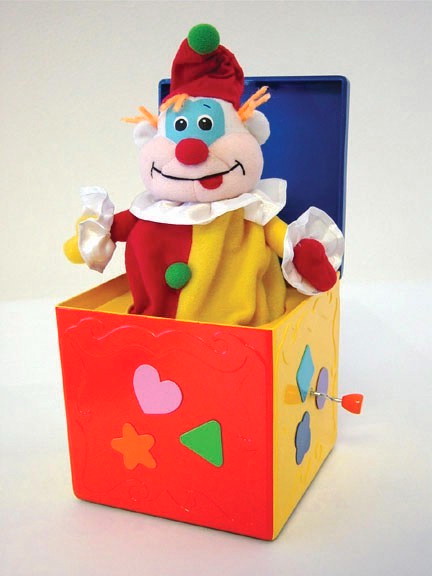
The jack-in-the-box.

You turn the crank slowly. Nothing happens.

You turn slower and slower and slower in anticipation of the freaky clown popping out when the lid springs open. With every turn, your heart beats faster and your eyes get a little wider. The chime rings out the tune one slow note at a time as you get closer and closer to the always surprising endgame and then…

POP!

Jack-in-the-box

Developing athletes is similar to a jack-in-the-box. The athlete cranks the handle by practicing and training. When the time is right, the breakthrough comes, and the performance “pops” for all to see.

I saw this with several of the baseball kids we coached this summer (I know, I know, I retired. Insert Mrs. Hays laughing). Starting this spring, these particular players worked and worked to become better hitters. We worked with them on staying vertical and using their tall, lanky frames to generate angular force through a short, compact swing.

These players slowly cranked the handle of their athletic jack-in-the-box to get better throughout the season. They put in meaningful time at the batting cages and at practice. Honestly, they hit the crap out of the ball more often than not this summer. Finally, for one of the players, the catch was sprung on the lid and he hit his first home run to seal a victory in our final game of the summer. It was a legit shot that easily cleared the left field fence. I even smiled—during an actual game, if you can believe that.

This is how athletic development works. You work toward a goal. You grind it out day after day to what often seems to no avail. You get frustrated. You despair. Sometimes, you quit. But to those who keep turning that handle on their athletic jack-in-the-box with grit and determination, success will come.

You will improve.

It is inevitable.

So, keep lifting, keep running, keep swinging, and throwing. Practice ball-handling and shooting baskets every day. Continue to work on your technique, your footwork, and your mental game. Just keep cranking and good things will happen.

I’ve said this many times in the past, but one of the most important things a coach or teacher can do is to see the potential in a kid and help them achieve that potential. Teach them to keep working and to keep turning their cranks of improvement until their talent springs forward.

Now, it’s time to shove this old, tired, jack-in-the-box of a coach down, snap the lid shut, and throw him back into the storage closet. I am retiring from active coaching…again.

Maybe (Stop laughing Mrs. Hays.).

Leave a comment

Filed under Coaching, Training

Be Indelible

I used to confuse the word indelible with the word inedible. So when I’d see a permanent marker with “Indelible Ink” printed on it, I’d think, “No $#@!, Sherlock! Who would want to eat a Sharpie anyway?”

Now I’m slightly smarter…well, enough smarter to know that inedible and indelible are completely different things. Indelible means to make a lasting mark—it means that something will not be forgotten or removed.

I like that.

Indelible.

I want to coach and develop indelible athletes.

I want to produce indelible writing.

I want to make an indelible impact on my communities.

I want to be indelible.

MarkerParticipate or Compete?
As an athlete, or as part of any organization, which are you choosing to be?

The participant shows up most of the time and, more often than not, jumps into the wagon to go for the ride.

The competitor is the one who pulls the wagon and makes everyone around them better. The competitor is the very definition of indelible. The competitor is never satisfied with their current efforts and performances. A competitor does the things the participator refuses to do.

What does a competitor do? Well, in high school sports, in my opinion, the competitor is the athlete who puts in the extra offseason work to improve at least 4 or 5 days a week.

  • Baseball – 50 throws & catches, 50 swings, 50 ground balls/pop-ups.
  • Football – Explosive power development, 25 starts and footwork reps, routes, and throws.
  • Basketball – 250+ shots a day, ball-handling skills, explosive power development.
  • Tennis, golf, volleyball, etc. – All need skills reps

All In
I am a firm believer in playing multiple sports and being involved in multiple activities, hobbies, etc. But, the work and the commitment to all these activities requires a monumental effort. The key is to, as the wonderful Mrs. Hays often says about life and work and parenting, “Be present.” Pay attention to the needs of the situation staring you in the face. Focus 100% on the task at hand and not 60% with the other 40% worrying about the next activity on you agenda.

Be Present = Go All In

Whatever you do in life, go all in. Jump into the fray feet first with a fully-focused effort. Don’t straddle the border with one foot in and one foot out. Hit the accelerator and give your drive and desire full throttle to make your world a better place.

That is the very meaning of indelible.

Go all in.

Compete, don’t just participate.

Leave a lasting mark.

Be Indelible

1 Comment

Filed under Coaching, Rants, Training

Herding Cats

Sometimes coaching high school kids feels akin to an attempt at wrangling a dozen cats out the backyard gate while avoiding a fully-functioning sprinkler head. In other words…utter chaos.

A team and each individual kid on that team needs direction–they need to know where they are supposed to go and some idea of how to get there. One of the knocks from I hear way too often from coaches is today’s kids don’t care, they don’t “buy” into what the coach is selling.

The truth is, today’s kids are probably brighter and sharper and have an increased problem-solving capacity than we ever did. They want to know what you are asking them to do, why you are asking them to do it, and where is it going to take them. Kids today have very well-honed bullshit meters.

They are skeptical and need to be convinced the plan and vision you present to them is the real deal. Where us grumpy, old folks used to accept what we were given and did what we were told, these kids want to know the bigger picture and see what is beyond blind acceptance. And they have the collective power of the internet and social media for information.

One of the first coaching lessons I learned from Paul Lane in football and Rex Carlson in baseball was to be upfront and be honest. These two fine coaches taught me the athletes cannot read my mind and need to be told and shown what I need them to do. Tell the kids what we are going to do, why we are going to do it, and how it will make them better as an individual and as a team.

Another knock against the kids is they just don’t get it. “They spend too much time sitting in front of their video games or have their faces glued to their phones.” You all know the attitude. The grumpy old man, stay-off-my-lawn you juvenile, drug addicted, delinquent” attitude we often have toward the habits of youth.

Kids today want a vision. They want (and desperately need) someone to recognize their potential and help them map out a path to achieve it. I’ve said this a hundred times, but everybody wants to win. Everybody wants to be a success. They just need the plan and the guidance.

That’s what the successful coach is able to do.

Dream the plan.
Devise the plan.
Sell the plan.
Implement the plan.

And then drive the individual and the team in the right direction and never let them take their eyes off the prize.

Just like successfully herding a dozen of the cutest, most well-behaved cats out of the back yard, your athletes will eventually find their goal—but you’ll always end up worn to a frazzle and sporting a few fresh scratches.

Vision.
Direction.
Communication

The keys to the kingdom.

“Cats on Beach” by haitham alfalah – haitham alfalah. Licensed under Attribution via Wikimedia Commons – http://commons.wikimedia.org/wiki/File:Cats_on_Beach.JPG#/media/File:Cats_on_Beach.JPG

Leave a comment

Filed under Coaching, Rants

Load. Step. Swing

The title is absolutely correct;. “Load (Period) Step (Period) Swing (Period)”

It’s not “Load, step, swing” or what I see way too much from young players, “loadstepswing”.

A good and consistent baseball swing consists of three distinct and separate parts.

  1. The load.
  2. The stride.
  3. The swing.

bat_tee3

Why is “Load. Step. Swing.” so important? Because it’s vital to develop solid fundamentals in young hitters so they will be fundamentally solid older hitters. Fundamentally solid older hitters are able to enjoy success against better quality pitching as they mature and enjoy playing the game longer.

Do you know why most kids quit playing the game of baseball? They say the game is not fun for them. The game is no longer fun for them because they usually struggle to hit the baseball at the advanced level. Hitting a baseball is fun. Period. Ask any kid, they’ll back me up at an almost 100% clip.

Here is the simple method I used to instruct hitters. I use this same basic philosophy to help hitters from preschool kids up to the collegiate level. It works, It’s basic. It makes hitters able to hit laser shots from the left field line to the right field line. And when one hits the ball hard, good things happen.

Get Bouncy

Athletes move on the balls of their feet, not flat-footed or with weight on the heels. Relax the body and get bouncy to be a better athlete.

Hitter’s Rhythm

Stand up. Go ahead, get off your rump and stand with feet comfortably about shoulder width apart. Now get bouncy off the balls of your feet. Feels good, right? Next, rock side to side. When one heel comes off the ground the weight shifts to the other heel on the ground. Do you know what this is? It’s your body’s natural, relaxed motion of hitting a baseball. It is hitter’s rhythm.

Hitters should naturally rock with this rhythm almost unconsciously, even when just standing around. (It’s how we find each other in the crowd…look for the guys rocking back and forth in hitter’s rhythm).

Load

When weight rocks to back foot, the hands load to the back shoulder and lock into place.  It’s like shooting a rubber band at your sister. Be honest, do you take that big, thick, Sunday morning paper rubber band and only pull it back an inch before firing it in the direction of their beloved sister? Heck no! You pull that rubber band back as far as you can so you can fire it at that beloved sibling with explosive speed and power. Same for loading up in your swing. When a hitter loads, the rubber band has been pulled and now you are ready to release that locked and loaded power onto the ball.

Step

The step, or stride, will vary between hitters depending on where the hitter is comfortable in their stance. If the hitter likes a narrow stance and longer stride is usually more natural. If the hitter likes a wide stance, then the stride is usually short. If I see a kid having problems controlling the stride or being consistent with their stride, the I’ll put them in a wide stance and have them just pick up their front foot and post it down right where it was. The whole purpose of the step is to shift the energy from the load into the barrel during the swing.

I like to teach hitters to “stick” the ball of the front foot into the ground with the outside of the foot pointed toward the pitcher. The hitter needs to post the front leg to stop the forward body momentum shift so the hitter doesn’t slide through the front hip and waste all that loaded up power. A solid step movement should be relaxed, quiet and stick the perfect hitting position. (see Hitting Position for an explanation on the importance of starting a swing from a consistent hitting position.)

Swing

You’ve loaded, you’ve stepped, and now you are in perfect hitting position. What’s next?

Simple, it’s a swing.

Take your front hand (the bottom hand) and pull the knob toward the ball in a quick, compact, powerful swing. By developing a consistent hitting position, a hitting only needs to learn the one swing which is directed toward the pitched ball. The swing needs to start from the back shoulder and go directly to the ball, no matter where it is pitched. Inside, outside, high, low, or right down the middle. A hitter with a good fundamental swing can hit any of these pitches with power to all fields and makes for a dangerous hitter who is very difficult to pitch to and defend.

Sounds like fun, doesn’t it?

Sounds like something we all want, right?

So, repeat after me.

“Load.”

“Step.”

“Swing.”

Say these three words hundreds and hundreds of times in your head and out loud. It is the rhythm of a hitter. It is the rhythm of baseball.

Three separate words, not one.

Three separate parts, not one.

Load. Step. Swing

Hitting a baseball is one of the great things in life.

Enjoy life!

Happy Hitting!

bat_tee1

3 Comments

Filed under Coaching, Training