Category Archives: Rants

Take the Field

I’ve given a few inspirational talks in my life in and around sporting activities. I’ve also heard many from other coaches and from movies, etc. But none is more emotionally charged than this scene from the movie We Are Marshall. It is virtually perfect; it says everything about team and effort and tradition and leaving your mark that I would ever want to say. Even after watching and listening more times than I can keep track of, it still gives me chills and makes me want to break out the shillelagh and go to work.

Happy Football Friday Night in America.

Leave a comment

Filed under Rants

Marital Communications & Freshman Writing Prompts

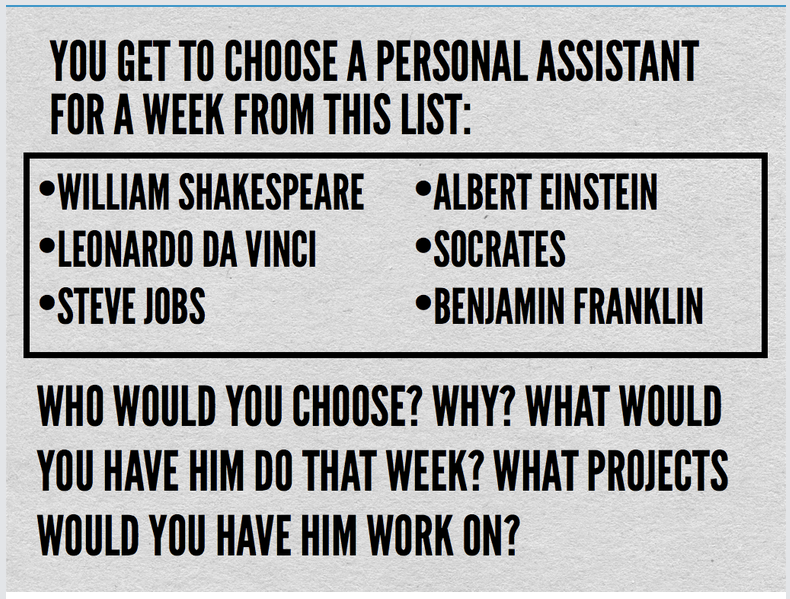
The Mrs. Hays teaches freshman English. She does a daily writing prompt for the freshman journals. Below is one of particular interest she posted last week. I couldn’t resist joining the discussion to point out a glaring omission from the personal assistant options on this writing prompt.

They say communication is key to a marriage. We “communicated” about the writing prompt. With her permission here is a transcript of the brief discussion. I think (know) I am right. What do you think?

png;base641d62f577ea33009

me:  Where’s Darth Vader on that writing prompt list? Huh?????

me: He’d be the perfect personal assistant.

me: 1. DV can force choke people who tick you off. Who doesn’t need THAT skill around?

me: 2. In a fight, DV’s one good man to have at your back. Only Hulk would be better.

Mrs. Hays:  I’ll mention it to the kids.  They flipped out this morning when I admitted to never having watched star wars.

(At this point, I ignored the aforementioned “never having watched star wars” comment. Plus, Star Wars starting in lower case???? A major English teacher FAIL.)

me:  3. The restaurant forgets to bring a steak knife for your 32 oz. sirloin. A disaster? No, with DV as your assistant, it’s only a few swipes of the light saber and you’re good to go.

me:  4. His wardrobe selection will never overshadow yours.

me:  5. Loyal as a Labrador Retriever. He’d even ALMOST kill his own son to do your bidding. That’s about as loyal as they come.

me: We can save the other 99 great reasons to have Darth Vader as your personal assistant for later…

Mrs. Hays:  Or never.

Marital bliss. Need I say more?

Oh, brother…

Leave a comment

Filed under Rants, Reads, Writes

Blocking the Veer With Your Best Friends

“Hey, Ned.”

“Hello, Mel.”

“Yo, Vic.”

“How’s it going out there, Opie?”

If you’ve read this blog in the past, you had a pretty good idea how stupid I can be. That said, here’s one I’m extra proud of. When you coach, one of the most important (and most difficult) things you have to do is get everyone on the same page. Doesn’t sound that hard, does it? Now, consider you are dealing with high energy, hormone-driven, attention-span-of -duck, teenage boys and the difficulty level rockets through the stratosphere.

A veer-based run game is an explosive, quick hitting scheme and can be a potent offensive weapon.  With veer principles, two level one defenders are left unblocked to be read by the quarterback.   The first level one unblocked defender is the dive read and the second level one unblocked defender is the option read.   The offensive linemen aligned on the two read defenders release to seal level two defenders, creating running lanes for the backs.

In case you don’t understand a word of the previous few sentences, here it is in a nutshell. The offensive lineman need to be smart. Not ACT/SAT, Ivy League smarts, but football smarts. And part of this football smarts is…having everyone on the same page as to what we are trying to do and how we are going to do it.  So, as a coach, you must develop a language everyone, from the ACT 32 composite kid to the kid whose best grade in junior English is 32%,  can wrap their heads around. 

The first year we went to a veer-based offense, we used schemes and rules based on identifying read men from their defensive alignment technique when blocking each of our three veer running plays, the midline veer, inside veer and outside veer.  During that first season, we ran into problems adjusting to the multiple defensive fronts we saw on a weekly basis (or even within a single game) which forced confusion at the line of scrimmage. 

Since the key for blocking success with the veer offense is to get off the ball fast and aggressive, the confusion created when identifying read men against multiple defensive fronts often led to our offensive lineman playing timid, which slowed down our entire play.  As a result, we did not move the ball as well as we would have wanted and we were forced into developing a new system of veer blocking. 

So we went with our Best Friends. But, first a little football basics.

We came up with the gap read veer (GRV) blocking principles which simplified the schemes allowing for continuity of this simplicity throughout multiple defensive fronts and continuity through the midline, inside and outside veer plays.

Gap Read Veer Basics

 The GRV is a combination of the no-mesh mesh technique and a clear/cloudy read of the target gap by the QB.  A speed attack from the dive back into the target hole is necessary.  The goal is to get the dive back 1-2 yards into the line of scrimmage before the defense has a chance to react.

The dive back targets the call hole, 0 or 1 for midline, 2 or 3 for inside veer and 4 or 5 for outside veer (Table 1).  The dive back attacks the target hole full speed expecting the ball.  If he gets it, he tucks and runs, looking to cut out, stay on path or cut back.  If he does not get the ball, the dive back tucks and collides with the defender to sell the fake.

The QB opens to the hole and steps into the line of scrimmage.  He has the ball extended with both hands with his eyes on the read gap (Read Gap = gap directly outside the hole target of the dive back).  If the read gap is open (clear), he gives the ball to the dive and continues on with the fake.  If the read gap is closed (cloudy), he pulls the ball and explodes into and down the line of scrimmage to the option read man.

So, here come the problem of communication. Everyone, when they get to the line of scrimmage, needs to be on the same page as to who the read men are.

We felt it necessary to establish simplicity and consistency in our system which identifies defensive read men.  We wanted a system based on our offensive structure rather than the old system which was based on a defensive alignment structure that could change when the defense changed.

Within our GRV structure, after our linemen get to the line of scrimmage, each lineman verbally identifies the defensive lineman that will ultimately help them determine who the dive and option read defenders are.  What they call the read men doesn’t matter as long as everyone understands what the names stand for and how they need to use it. We designate or identify the defensive lineman with our “BEST FRIEND” names:

  • Center – Called and identified “NED”. The defensive line defender aligned anywhere on the center.  This man will never be a read man.
  • Guards – Called and identified “MEL”. The first defensive line defender outside A gap. This man will be the dive read on Midline.
  • Tackles – Call and identified “VIC”. The first defensive line defender outside B gap. This man is the dive read on Inside Veer.
  • Tight End – Call and identified “OPIE”. The first defensive line defender outside C gap. This man will be the dive read on Outside Veer.

If a lineman felt he could block a defender one on one, he called his friend “ELMO”

If the lineman felt he needed double team help, he called out his friend, “OSCAR”

We also had our friends for lineman pull blocking:

  • COWBOY – Center pulls
  • TODD – Tackle pulls outside
  • GOD – Guard pulls outside
  • SAM – Backside guard pulls
  • GUS – Both guards pull
  • SAW – Both baskside guard and tackle pulls

Our offensive lineman had ALOT of friends!

TABLE 1.


Dive Target

Hole

QB Gap Read

Release Man

(Dive Read)

Combo

Block

Option Read Man

Midline

Right

0 – Center’s Right Foot

A

1st DL on or outside A gap

DL inside A gap

2nd DL on or outside A gap

Midline

Left

1 – Center’s Left Foot

A

1st DL on or outside A gap

DL inside A gap

2nd DL on or outside A gap

Inside Veer Right

2 – Right Guard’s Crack

B

1st DL on or outside B gap

DL inside B gap

2nd DL on or outside B gap

Inside Veer Left

3 – Left Guard’s Crack

B

1st DL on or outside B gap

DL inside B gap

2nd DL on or outside B gap

Outside Veer Right

4 – Right Tackle’s Crack

C

1st DL on or outside C gap

DL inside C gap

2nd DL on or outside C gap

Outside Veer Left

5 – Left Tackle’s Crack

C

1st DL on or outside C gap

DL inside C gap

2nd DL on or outside C gap

So once we had everyone identified, then we blocked with this simple rule set. General Veer Blocking Rules

                        RELEASE – COMBO – SEAL – CLIMB – ESCORT

Play Side Offensive Linemen

  • Release – An inside release or outside release, whichever is most efficient, around the read man.  Attack and seal a level 2 linebacker.
  • Combo – Double team the first defensive lineman inside the read gap to drive him off the line of scrimmage and seal defenders in order to create a running lane.
  • Seal – Stretch step and cut or seal the 2nd defensive lineman inside the read gap.

            Backside Offensive Linemen

  • Climb – Stretch step and climb to seal play side gap or move up to a level 2 linebacker.
  • Escort – Last man on the backside of play. Sprint downfield to block safety or deep backside pursuit.  Escort the RB into the end zone on a breakaway run.

A veer-based run game can be a potent offensive weapon to attack a defense using an explosive, quick-hitting run scheme.  The key to success in the veer is for the offensive line to get off the ball fast and aggressive.  Confusion at the line of scrimmage will force offensive lineman to play timid and slow down the offense.  For us, the gap read veer blocking principles and the naming of our “Friends” simplified our blocking schemes. 

From an offensive line point of view, the GRV Friends blocking system allowed us to approach the veer package of midline, inside veer and outside veer as one play with different target holes instead of three plays with three blocking schemes.  This concept dramatically simplified the mental aspect for our lineman and was a big part of our success running the football.

 Don’t you agree, NED, MEL, VIC, and OPIE?

(Author’s “Ha ha ha, that’s stupid funny” Note:

I just recalled a story about our blocking friends that cracked me up. We were playing our rival, Marysville, and one of the lineman who also played defensive line came to the sidelines and said, “Coach Hays, Marysville is so f!@#$-ing stupid. Their o-line is calling stupid stuff like ‘San Antonio’ and ‘Fort Worth’.”

I looked at the young man. “Seriously? You’re calling Marysville ‘f!@#$-ing stupid’ and WE’RE the ones who are yelling Sesame Street characters out there?”)

  

1 Comment

Filed under Rants, Reads

Step By Step

Everybody wants to win.

It’s human nature.

What distinguishes success from failure if we all initially desire the same thing? In other words, how did we get to the results we got?

It’s the staircase philosophy.

Huh?

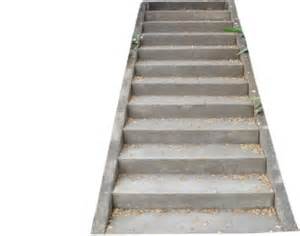
Think of a long flight of stairs. My own visual staircase is an isolated utilitarian concrete set of stairs anchored to the ground in the middle of nowhere. Now visualize a shiny, rather gargantuan gold trophy at the top. This is the victory, the goal which is the pinnacle of your chosen endeavor. When you reach that top step, you’ll sit down next to that golden trophy and put your arm around it like it’s your best friend in the whole world. It’s Nirvana.

Here’s the problem that separates the “everybody wants to win” people from the winners. You have to start at the start. You have to start at the bottom of the stairs and work your way up one stair at a time.

The first step is not so bad. It’s usually just a simple hop up.

The second step is a little higher and it takes more skill to climb.

And so on and so on…

Until you get to those final few steps. These steps are the separators, these are the monster steps. Hard work is the magic on these steps. The prize is within reach, you can almost taste it.. One must decide on doing the work and making the sacrifices to make the next level or stay and give up.

PlainStairs

Successful folks understand the staircase philosophy. Constant work builds upon a solid foundation each step of the way. There are no shortcuts. A lot of money is spent on magic bullets and pills and supplements trying to find a shortcut.

There are no shortcuts.

It’s like learning the alphabet. We didn’t learn “A” and jump right to “Z”. Too many people want to make a grab for the “Z” right off the bat. It doesn’t work that way.

It is a methodical learning curve, A to B to C to D…, one letter at a time, all the way to Z. It’s like Mrs. Hays is often (always) saying, “If it’s worth doing, it’s worth doing right.”

A wonderful group of local Clay County people are starting a project to bring life back into our baseball field, Kelly Campbell Field. We are going to follow the staircase philosophy. We are going to work our way up to have a playable small town high school baseball field. We are going to follow a staircase philosophy while being extremely financially responsible and respectful.

(So, if you see folks working on Kelly Campbell Field, thank them for their effort. And, if you find yourself with an extra dollar in your pocket, I’m sure the Clay Center Parks & Recreation Committee can find a good use for each dollar designated to Campbell Field.)

Everybody wants to win. Winning is a way of doing business, a way of life.

The joy is in the journey. The joy is climbing one step at a time. The is earning your way to the next step.

Step by step.

Leave a comment

Filed under Rants, Training

Roll With The Changes

“So, if you’re tired of the same old story, oh, turn some pages”

-Roll With The Changes, REO Speedwagon

The moment you accept you are good enough is the moment you begin to lose.

Getting better is a constant, no matter the endeavor you have chosen. Whether it is as an athlete, coach, writer, scientist, teacher, trashman, welder, librarian, etc., it doesn’t matter. If you want to get better you have to work at it on a consistent basis. We have to learn to break out of our shells of complacency to improve. We have to learn how to turn the pages if we are tired of the story.

cicadashellside

Getting better also means accepting change. Change pushes and pulls improvement. A refusal to change stops improvement dead in its tracks. Why? Because change often comes with failure and this failure needs to fuel the desire to improve. We used to call this concept The Fail Cycle.

In a perfect world, we would fail, back up a couple steps, analyze the situation and then make the changes needed to overcome the failure. But, being human, we don’t always accept the need to change our tact and we too often stay on the path of complacency and acceptance in our stagnate situations.

I had two standard speeches for football and baseball athletes when I felt we were not doing the necessary adjustments to be successful. Things like using the same swing every at-bat in the midst of a 0-20 slump or falling for the same QB pump fake and losing contain rush time and time again.

  1. Running into the solid, brick wall at increasingly faster speeds will not get you through the wall, it just gets you more pissed off and feeling a lot of pain. Change your plan of attack, take two steps over, and walk right through the open doorway.
  2. Don’t hit yourself in the head with a hammer time and time again and wonder why it hurts. Quit hitting yourself in the head with a hammer!

To me, part of the great joy in life is working to get better at the things that you love doing and the things that make you happy. The only way to do this is to change and move forward.

So, get up and get to work. Whatever you choose to do if your life, do it with purpose, pride, and passion.

Turn the pages and enjoy your new story.

2 Comments

Filed under Rants, Reads, Training, Uncategorized, Writes

The Whole Alphabet

I was (am) a developmental coach. It’s what I do, teach the basics, build the fundamentals, and show kids how to compete. To me, the development of athletes is the core job of a sports coach.

In fact, for about any endeavor which requires training or supervision of people, the development of resources (people) is vital to a successful organization. Teachers develop kids; senior scientists take young scientists under their wing and show them what they know. Artists, writers, welders, mechanics all do the same, help develop the young or fledgling talent that comes knocking at the door.

Like I said, I am a developmental coach. The goal is to build a player from the ground up. Start with a fundamental foundation of physical movement skills and lay the bricks onto the foundation one at a time until a complete player begins to form.

Brick by brick we get better.

A coach can never emphasize enough the importance of the learning the playbook in football and baseball. We can work the fundamentals until we are blue in the face, but if the athlete fails to do the mental work necessary to burn the plays and responsibilities in their head, we are not going to be successful.

Below is one of my standard (and favorite) things to say to the young JV football or baseball players in order to get across the importance of studying and learning the plays to the point they become second nature.  

“The playbook is like the alphabet. If you learn all the letters, you can make any word you want. The world becomes wide open to you. If all you learn is A, B, and C, then the only word you can make is ‘CAB’.  You’ve severely limited yourself. And people, you can’t get very far in life when all you have in the arsenal is ‘CAB’.”

Leave a comment

Filed under Rants, Training, Writes

Tenets of #TigerFamily

History. Tradition. The age-old tenets of the Clay Center Community High School Tigers. It is our way of doing business. It is who we are. It is what we do. It is us being defined by our predecessors, following the character and the expectations passed from generation to generation, from decade to decade, and from season to season.

A young man lamented to me last month about how he felt they had no traditions at the high school anymore. He was frustrated. He didn’t seem to fully comprehend what it all means or how awesome it is to be a part of this wonderful tradition. #TigerFamily means more than a hashtag; it means more than just a catchy slogan.

There is a deep, historical standard in Clay County, KS. Not being a native citizen, I tried to learn as much as I could when I was an active part of the Tiger sports coaching family. I’ve heard the stories from former athletes, young and old. I’ve studied the Blackie (Lane) Book and Coach Otto Unruh’s How to Coach Winning Football more times than I dare count. What follows is my feeble attempt to distill all this tradition and all this history into a list of principles and beliefs on the meaning of Tiger Family.

Current and future Tiger Family members, we sit in the middle of a rarefied tradition in Clay Center. The torch is passed. The flame of tradition and history is now in your hands.

What are you going to do with it?

The Tenets 

  • Outwork everyone.
  • Earn everything. Expect nothing to be given.
  • Hit your opponent like a cannon shot, from the opening gun to closing bell.
  • Never back down, never give up.
  • Every man, every play.
  • Get better every day.
  • When the opponent puts their head on the chopping block, cut it off.
  • Hustle everywhere. Hustle is an attitude. Intimidate with hustle.
  • Take care of your own !@#$ business. Do your job.
  • Think explosive, train explosive, play explosive.
  • Be who you are while being part of the whole.
  • Earn respect, command respect.
  • Challenges, direction, discipline, and limits will make you better. Accept them.
  • Be relentless.
  • Luke 11:23 “He who is not with me is against me.”

(There is no order or rank of importance. All are equally important.)

Interlocking CC

1 Comment

Filed under Rants, Writes

Coach Hays Rant: The Questions?

Recently, I read “Who Could That Be at This Hour?” by Lemony Snicket (Daniel Handler). It is the first book in the new All the Wrong Questions series. You may remember the author’s previous book series, the wonderful A Series of Unfortunate Events. The new book chronicles the career beginnings of the 13-year-old Lemony Snicket.

13314914031993458145question-mark-hi

The new series is called All the Wrong Questions for a good reason. The young Snicket, according to his recently appointed chaperone, S. Theodora Markson, is always asking the wrong questions. The book is very entertaining and I recommend it highly, but it also raised a question is my coaching mind:

For a player, teammate, coach, or parent, what are the right questions?

I have been pondering this practical and philosophical question rattling about in my head for the past few weeks. I still don’t have a concrete answer. Maybe it would be beneficial to start with some of the wrong questions and then consider what the right questions may be.

The WRONG Questions

  • You lost? Again?
  • Why did you strike out?
  • Why don’t watch this videotape of your miserable performance with me?
  • Do you believe those umpires/referees/officials so bad?
  • What in the world was that idiot Coach Hays thinking tonight?
  • Can’t you ever do anything right?
  • Why didn’t you win?
  • What in heaven’s name were you doing out there?

The RIGHT Questions

  • Do you enjoy the game?
  • Did you give your best?
  • Do you feel you prepared yourself properly?
  • Are there things you’d do differently?
  • Did you get better?
  • Are you a good teammate?
  • Were you respectful of the game?

Next time you are involved in a sporting event, either as a player, parent, or fan, stick to the RIGHT questions and avoid the WRONG questions. Attempt to promote the sport in a positive manner, win, lose, or draw. I know it is hard, very hard. But I think you will be surprised how much more you can enjoy the sport by sticking to the spirit of the RIGHT questions.

Leave a comment

Filed under Rants, Training, Writes

Coach Hays Rant: Supplements

I am not a big fan of supplements for average high school athletes. I am in a minority. I’ve been jeered, deemed old-fashioned, and dismissed for many of my beliefs in regard to supplements. 95% of all athletes don’t need them. Many of the supplements you see advertised, as well of a huge chunk of the supporting data, are designed and tested for the upper level athlete. These are the top 5% college and pro athletes who work and train at such a high level, their diet cannot completely help them recover.

I wrote an article for Gridiron Strategies football coaching magazine ten years ago about the Performance Triangle philosophy we used in our rural high school football program. Since many of our athletes also participated in other sports throughout the year, my hope was that they would take these principles with them throughout the year.

equilateral-triangle1

The Performance Triangle consisted of the three prong approach of nutrition, hydration, and rest. After years of coaching high school male athletes, I came to realize the majority of these kids have poor nutrition, poor hydration, and don’t get a proper amount of rest. Which brings the million dollar question…if you don’t eat right, if you don’t drink enough water, and if you don’t get enough sleep, why are you (or probably your parents) spending hundreds of dollars on supplements?

Protein supplements, muscle milks, shakes, drinks, powders are a mega-dollar industry. Do you know the human body only absorbs about 15% of the protein ingested? The other 85% is eliminated by the kidneys in the urine. So, for every $100 you spend on protein supplements, one’s body eliminates 85 of those dollars down the toilet. Now, does that sound like a wise investment?

Former Kansas State University Strength and Conditioning Coach Rod Cole, one of the best in the business, used to tell his players to eat two peanut butter sandwiches with a glass of milk every morning and night to cover the athlete’s extra nutritional needs. The first place an athlete, their coaches, and their parents should look is at the athlete’s nutrition, hydration, and rest before even investigating supplements.

The folks who push these supplements on kids without education, prescribed need, and exploring basic nutritional options are, in my opinion, pushers. They sell a bottle, not belief. It is the greatest sin a youth coach or youth mentor can commit.

The pill begins to control the player. The mentality which comes with this perceived need is deadly to the success of an athlete. It is the protein shake, not the hours of hard work that become the reason for gains. Shortcuts make long journeys. In the case of supplements, these journeys wind through the lands of self-doubt and dependency, neither place fitting for the ideals and dreams of young athletes.

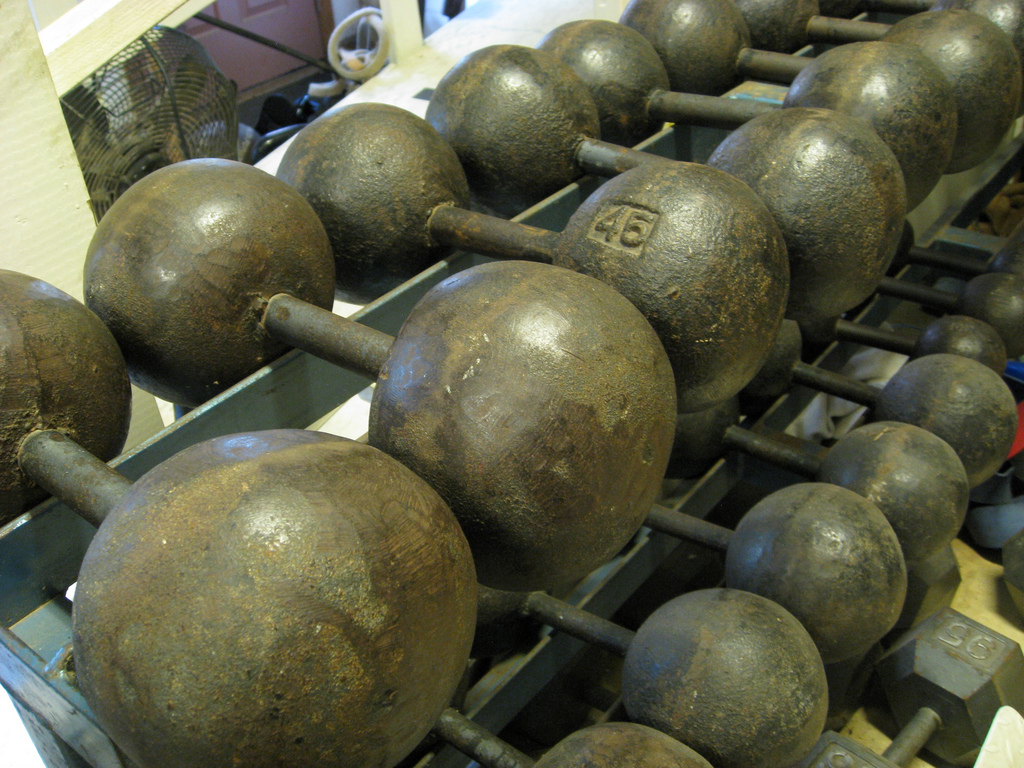
Widscreen_Wallpaper_Weightlifting-1280x960

Looking for the edge over your opponent? I suggest looking in a mirror. What you will see there is your greatest asset. You will find in that reflection the number one, most effective tool you have in your arsenal…YOU.

Believe in yourself, not the chemical. You will soon discover the difference when you are asked to perform and the game is on the line. There will be no doubt in your mind, or your teammate’s minds, about whether or not you have what it takes to get the job done. Belief trumps bottles every single time.

Be the best you that you can be. Dedicate yourself to the person in the mirror. Give that person in the mirror the very best of your mind, body, and heart. Do the work. The shortcuts are filled with pitfalls and traps, as murky and dangerous as quicksand.

There is no magic bullet.

Hard work is the magic.

Believe in yourself.

Be the best you that you can be.

DBs

Leave a comment

Filed under Rants, Training

Coach Hays Rant: EASY Button?

I think at one time or another, we all wish for the EASY button. Pleasant dreams in which our lives will be made easier by some means of magic. Well, haven’t you ever wished that? Sure you have.

But here’s the bubble-bursting truth…there is no EASY button. If you want to get something done, then it’s time to get to work. There is no EASY button. There, I’ll say it again just for emphasis.
Things worth having are worth working for. Things worth accomplishing are worth working for. Dream big and do the work necessary to achieve your dreams.

If you want to play big, train big.
If you want to learn big, study big.
If you want to play explosive, you need to train explosive.
If you want to play slow and sluggish (even if you are static strong), train slow.

DB+Parallettes

Easy doesn’t require an investment.
Easy doesn’t require a commitment.
Easy accepts minimal effort and laziness.
Easy allows shortcuts and shortcuts make long, miserable journeys with unfulfilling endings.
Easy becomes a lifestyle.

Never lose sight that things worth having are worth working for.
Never allow yourself to be seduced by the shortcut and the EASY.

Dream it and do it.

Hard work is the magic.

Leave a comment

Filed under Rants, Training