Autumnal Equinox: Beware the Autumn People

Welcome to the Autumnal Equinox. We have turned the corner, left summer behind, and on the horizon looms Winter. In celebration of this fine season, which brings us football, school, the World Series, changing leaves, and Halloween, here is one of my favorite passages from one of my favorite books by one of my favorite authors. Happy Autumn!

From SOMETHING WICKED THIS WAY COMES by Ray Bradbury

“For some, autumn comes early, stays late through life where October follows September and November touches October and then instead of December and Christ’s birth, there is no Bethlehem Star, no rejoicing, but September comes again and old October and so on down the years, with no winter, spring, or revivifying summer. For these beings, fall is the ever normal season, the only weather, there be no choice beyond.

Where do they come from?

The dust.

Where do they go?

The grave.

Does blood stir their veins?

No: the night wind.

What ticks in their head?

The worm.

What speaks from their mouth?

The toad.

What sees from their eye?

The snake.

What hears with their ear?

The abyss between the stars. They sift the human storm for souls, eat flesh of reason, fill tombs with sinners. They frenzy forth. In gusts they beetle-scurry, creep, thread, filter, motion, make all moons sullen, and surely cloud all clear-run waters. The spider-web hears them, trembles—breaks.

Such are the autumn people.

Beware of them.”


SomethingWickedbcweb

1 Comment

Filed under Reads

The Youth Sports Conundrum

Sometimes I speak my sports mind.

Sometimes I tell people the “truth” on sports as I see it.

Sometimes this gets me in trouble.

Recently, I was asked at our youth baseball association meeting if I was excited as a former high school level coach to see all these local kids playing youth club baseball. I thought for a moment, looked at the floor trying to think of a politically correct way to answer this question.

I couldn’t—so I spoke the sports truth, “Yes…and NO!”

“Yes” because it’s great to see kids playing baseball, but “NO!” because I don’t think you should ever approach youth baseball for the purpose of someday having your dozen or so kids all becoming high school stars.

Eyes widened. Jaws fell open. I quickly tried to elaborate that, as I high school level coach, I’d prefer to see kids enter the high school program armed primarily with a love for the sport and the ability to throw and catch. There will be attrition. Even in the best case scenario, only about half of those dozen kids who play on a youth team will probably still be playing in their later high school days.

Kids will change, their bodies will grow and shift by the time they reach high school. If a kid has that love and passion for the game, I can teach them (or re-teach them) as they enter the high school program and mold them into the players best suited for their skill set. These kids will put the hours of hard work needed to be a solid player. They will use their love of the game to push through tough times and tough situations to get better every day.

That is what I want to see out of a youth sports program. Help kids love the sport, teach them the basic fundamentals of the sport, and give them the basic skills tool set to be successful. All the other pieces of the puzzle will fall into place with hard work and repetition.

Youth sports are not a minor league for high schools. The two bottom things on the list of priorities for a youth sports program are the emphasis on winning above development and a philosophy of making future high school stars. Most of the problems that grow out of youth sports are rooted in these two negative prioritizations. The “burnout” problem so often discussed as a major problem with youth sports most often grows out of these two philosophical approaches.

Youth sports exist to teach kids the fundamentals of a sport. Youth sports programs should teach the kids how to play the game, teach kids about the value of teamwork and the value of competition.

Above all else, youth sports need to teach kids to enjoy the sport and the opportunity to play.

Play hard and have fun!

Campbell Infield

Leave a comment

Filed under Coaching, Rants

Football Is NOT Life: 2015

I wrote the blog post, Football is NOT Life, in 2010. I re-post it every year at the start of the season as a reminder to myself and to you. When first published, I was two years out of my bad breakup with football coaching. The obsession with coaching the sport was waning and life, my real, actual life was beginning to seep back into its position of dominance in my psyche. It’s hard to explain if you’ve never experienced it. Football coaching— coaching, in general—has a tendency to take over the way one thinks.

Everybody wants to win, it is written in the marrow of our bones. However, not everybody can win and we need to remind ourselves there are worse things in life than losing a game of football, no matter how much it hurts.

Respect the kids and respect the coaches. Parents, be your child’s biggest fan, not their biggest critic. Respect the work and effort everyone invests, no matter how disappointing the outcome is. Use games and sports to build character in our young people, not to expose poor character.

Please read this post and think about it.  If it helps, then pass it on to the next person before we adults take all the fun out of this great game.

(originally posted on September 21, 2010)

FOOTBALL IS NOT LIFE 

I know this may sound highly irrational and maybe even a bit hypocritical coming from me, but contrary to what the t-shirts say, FOOTBALL IS NOT LIFE!.

Football is the greatest damn game ever invented, but it is not life.  Football is intensity, competitiveness, sportsmanship, and violence, but it is not life.  Football requires immense strategy and teamwork, but it is not life.  Football provides education, drama, entertainment, and a solidarity which binds communities, campuses and fan bases throughout the nation, but it is not life.  Football is universal, it is played by presidents and paupers, genius, and idiot, big and small, aggressive and passive, rich and poor, but it is not life.  Football should not be all consuming.  Football should not be the top priority.  I know this for a fact, I have tripped and fallen down this hole before (see my story).

Football can be like a package of Oreos, both need to be consumed in moderation.  You’ve been there, you opened the package of Oreos and left it out on the counter.  Sooner, rather than later, the whole package is gone and you don’t feel so good.  But if you open that package and only take a couple of Oreos and place the package in the cupboard for a later date, they not only taste spectacular, but last and satisfy for days upon days.  Football is not life.  It should be taken in moderation and/or with a tall glass of milk, (preferably 1% or skim).

Football has it’s proper place, it has its proper perspective. Football is not the primary reason for the existence of high schools, colleges, and universities. Yes, football is important.  It is important to compete.  It is important to work hard to be the best coach or player you can be.  It is important to compete with purpose, pride, and passion.

I think Coach Paul Lane said it best with his prioritization of the sport,

“Faith, family, and football is a game we are lucky enough to play.”

Football is important to me.  But football is not life.  Let’s work to keep football in its proper perspective and place. I would hate for you to get a football belly-ache.

Unruh from scoreboard

Leave a comment

Filed under Rants

The Depths

Depth is underrated. The value of having quality people in your program is fairly obvious—you need good players to succeed. The number ones on the depth chart are important, but as a coach or leader of a program, one cannot ignore the value of depth and numbers.

Depth in the kids who fill the backup role and must step in when called upon when the starter goes down. Depth in the kids who stand on the sidelines on game night, seemingly for the sole purpose as a show of force in uniform.

Depth is more important than that.

Depth makes a program successful.

A program needs the kids on the third and fourth string—the kids on the low end of the depth totem pole— to make everyone better. These players are the ones who make a program stronger and a lot more fun to be a part of. The “filler” players are the ones who push the kids above them on the depth chart to get better. The challenge, the competition, and the friendly rivalry are the “magic” which makes a team shine.

I used to enjoy working with the football scout team kids in practice. It wasn’t easy for these kids to learn the opponent’s offense and defense on the fly. It was a daily struggle for them to stir up within themselves the intensity and effort to give the first and second string players a quality look in our preparations. We called ourselves the “Black Dogs”. We took pride in what we did. We learned a lot of football running all those opponents schemes and plays.

I’d challenge them to push the other players as much as possible, even if it got a little chippy at times. Honestly, I didn’t mind an occasional scuffle or melee as these mostly occurred when the third string player made a first string player look bad on a play. Oddly enough, after these incidents, the starter usually attacked their practice with renewed effort.

Everybody gets better.

Every day.

You build successful programs from the ground up. You recruit quality depth. You plant the seed of possibility within these kids when they show up at your door. You cultivate their talent with as much, or more, effort as is put into developing your number ones. You give them a sense of importance and value. Everybody sees the intricately carved and beautifully decorated top of the totem pole, but people rarely pay attention to the bottom of the totem pole, which provides the foundation. If the foundation is weak and gives way, the whole thing falls apart.

It takes a special relationship between coaches and these kids on the lower half of the depth chart. A coach needs to make these kids feel like they are an important part of the program and demand effort from them every single practice, workout, and game. These kids don’t get much attention and the attention they get is mostly negative. A classmate poking fun at them for “riding the pine”. A parent chiding them for not being a starter. It’s a tough life for a Black Dog. That’s why a coach needs to be there to encourage and develop them as players.

Every day.

Everyone gets better.

I salute the Black Dogs of the world. I salute the kids who practice hard and work to make themselves and the team better on a daily basis. Without you, a team has no depth. Without you, a team has no foundation. Without you, a program crumbles.

Have patience. Keep working hard. Make your position a better place. And never forget the light at the end of the tunnel. Your time will come.

Next time you see the players at the lower end of the depth chart, give them a high five. Pat them on the back in appreciation for their efforts and cheer them on. THEY are the keys to a successful program. As the old saying goes, “A chain is as strong as its weakest link.”

A program is built from the ground up. Talent is forged from upward pressure and challenge from below.

Everyone contributes. Every day.

CC@Abilene2009

Leave a comment

Filed under Coaching

Fully Formed

I had this recurring dream about showing up to the locker room one day and meeting the principal at the coach’s office door. No, I was not in trouble so this wasn’t the usual administrative nightmare which, in all actuality, was my coaching reality. In my dream, the principal is standing at the office door to introduce me to the strapping athlete at his side, who just happened to transfer to our school. A Brian Urlacher-type. Ready-made out of the box ready to step on the field and dominate.

Fully formed.

Ready to go.

But this never happened. Sure we had our share of kids transfer in, but none of them ever was a Division I caliber athlete.

The mythology of the transfer student.

The mythology of “fully formed” is just that…a myth.

Even in the writing game, nothing starts fully formed. An idea becomes a sentence, the sentence becomes a paragraph, the paragraphs become chapters, and the chapters become a draft. The draft is chopped up and reworked, and then polished to a shine. Next, trusted people read it, suggest changes, and the whole process repeats itself until the book is fully formed.

Hard work is the magic.

Nothing is fully formed out of the box.

When I was just starting out in coaching, I used to grump and griff around that the new kids coming into the program didn’t already know the things I wanted them to know. I’d get frustrated when the kids couldn’t do the things I thought they should do.

I was an idiot.

I would grumble out loud, but Mrs. Hays would point out, “If those kids already knew everything, they wouldn’t need to pay you now, would they?”

Thanks, Mrs. Hays.

I would point a finger at the developmental level coaches and Coach Lane, who taught freshman English class, would say, “I can’t expect 8th graders to come in knowing freshman English, I need to teach them freshman English.”

That’s why he was such a good head coach and mentor.

Everyone needs work. Everyone needs coaching and teaching.

Fully formed never just walks in the door.

Done right with a developmental approach, though, and fully formed can walk out your door.

Developing athletes is a sports coach’s #1 job. It truly is why they pay us.

Developing athletes is the key to success. Make the kids who walk through your door the best they can be. Help them realize their potential and their dreams.

Send them away at the end of their time with you as  fully formed as you can make them.

DB+Parallettes

Leave a comment

Filed under Coaching, Training

Everybody’s Undefeated

This is the time of the year where optimism in high school football rides higher than a Ray Guy punt.

Everybody is undefeated.

Every coach’s scheme is pure gold.

The pads are clean and arranged neatly in a squeaky-clean locker after check out.

The freshly painted helmets shine like museum pieces, anxiously awaiting their seasonal baptism by that first contact scratch.

Mouthpieces are formed.

The practice fields have fresh lines painted on real grass that’s actually grown this year.

It’s almost time.

Excitement permeates the air while players, parents, and fans dream of the “What If’s”.

What about coaches?

Well, coaches are a different breed, or at least I know I was. These were the most nerve-wracking days for me of the season. You can have the highest (or lowest) expectations for a group of kids, but you can never be sure of what you are going to get until you strap up the pads and turn it loose.

As a strength and conditioning coach, I worried about everything.

  • Did we develop them enough physically in the offseason?
  • Were they physically in shape and ready to perform?
  • Did we put them to the fire enough to develop their mental and emotional makeup to compete at the level we want to compete at?

As a defensive and offensive line coach, I agonized over the installation and planning schedules.

  • What do we need to learn? And when?
  • Where were my linemen on the developmental scale?
  • What did I need to do to help them get to where they wanted to be and where the team needed them to be?

Tough times. Exciting times. Anxious times.

As we put the pedal to the floor and drive toward the 2015 season, we need to temper our “What If” expectations and keep anchored sensibilities.

Be positive, enjoy the ride, and enjoy playing the game or watching your favorite players in action.

Just don’t forget…

Everyone is undefeated right now. In a month, that won’t be true. There will be winning and there will be losing. Either way, life will go on.

Good luck to all players, coaches, and their fans. Football is just around the corner.

Everybody’s undefeated. 

Play hard and have fun.

Hard work is the magic.


Dolphis-N-trophies27_6046365_ver1.0_640_480

1 Comment

Filed under Uncategorized

Crank Up the Warm Up

Warm-up. Traditional static stretching.

As a player, I used to hate it. As a coach, I grew to hate it even more. Static stretching.

I don’t like the idea of forcing “cold” muscles to stretch. I know I half-assed static stretching back in the day just as the current generation of players half-ass through their static stretching regimens.

I prefer functional flexibility. I prefer a dynamic type of warm-up routine.

Why?

Besides incrementally increasing the range of motion of primary and secondary muscle groups as they are being functionally used, there is another very important benefit to dynamic warm-up, it improves athleticism. An area often overlooked factor by sports coaches at the high school level is the value of athletic development.

I’ve ranted on this subject on many occasions, but it is my belief the number one duty of a high school sports coach is to see the potential in a kid and find a way to help that kid achieve his or her potential. This duty is beyond schemes, strategy, play calling, depth charts, etc.

Developing athletes is job numero uno and when I coached, we found the dynamic warm-up routine to be a great opportunity for us to squeeze the most out of the first ten or fifteen minutes of every workout, every practice, and every contest. We used a total body, functional range of motion series of movements to prepare the muscles, stretch the muscles, and teach the muscles how to move to become a more mobile athlete.

Dynamic Warm-Up

Stretch Runs

  • High Knee
    Bounds
    High Knee Skip
    Carioca with a Twist
    Zig Zag Runs
    Backward Long Stride
    Flip Flop Hops
    Squat Walk
    Kangaroo Hops
    Walking Lunges

Sprints (Start on a verbal or visual signal)

  • 4 – 20-yard sprints (2-right foot start, 2-left foot start)
    4 – 10-yard sprints (2-right foot start, 2-left foot start)
    4 – 5-yard sprints (2-right foot start, 2-left foot start)

How effective was it?

Well, in my nine football seasons and almost as many baseball seasons, we had, at most, five straight-out pulled muscle injuries over the time frame. Several coaches have also used the routine for their basketball programs with similar results.

In short, it works. Kids get better. Kids stay healthier. Kid perform at higher level.

It’s not easy to implement a change in philosophy in sports. Sports people are just as bad, or worse, than the general public when it comes to an aversion to change. Our situation was no different. But with science and research and great, forward-thinking head coaches who took the risk and allowed this dynamic warm-up philosophy, we were able to make this a vital part of our program operations.

The proof was in the pudding. We used the first 10-15 minutes of practice to develop better athletes and prepare our bodies for the physical demands we put them through. It was an important factor in developing the “human weapons” we needed to complete.

I coach with the philosophy, “I will put my athletes up against your athletes any day of the week”. We may not always win, but we will leave our mark on the minds and bodies of our opponents every single time we step on a field to compete.

Success starts with the basics

Kids getting better.
Kids getting healthier.
Kids performing at a higher level.

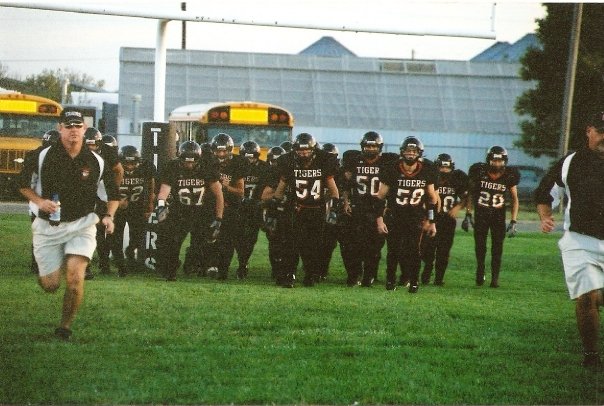
Tigers 2006 runout

Leave a comment

Filed under Uncategorized

The Jack-In-The-Box

The jack-in-the-box.

You turn the crank slowly. Nothing happens.

You turn slower and slower and slower in anticipation of the freaky clown popping out when the lid springs open. With every turn, your heart beats faster and your eyes get a little wider. The chime rings out the tune one slow note at a time as you get closer and closer to the always surprising endgame and then…

POP!

Jack-in-the-box

Developing athletes is similar to a jack-in-the-box. The athlete cranks the handle by practicing and training. When the time is right, the breakthrough comes, and the performance “pops” for all to see.

I saw this with several of the baseball kids we coached this summer (I know, I know, I retired. Insert Mrs. Hays laughing). Starting this spring, these particular players worked and worked to become better hitters. We worked with them on staying vertical and using their tall, lanky frames to generate angular force through a short, compact swing.

These players slowly cranked the handle of their athletic jack-in-the-box to get better throughout the season. They put in meaningful time at the batting cages and at practice. Honestly, they hit the crap out of the ball more often than not this summer. Finally, for one of the players, the catch was sprung on the lid and he hit his first home run to seal a victory in our final game of the summer. It was a legit shot that easily cleared the left field fence. I even smiled—during an actual game, if you can believe that.

This is how athletic development works. You work toward a goal. You grind it out day after day to what often seems to no avail. You get frustrated. You despair. Sometimes, you quit. But to those who keep turning that handle on their athletic jack-in-the-box with grit and determination, success will come.

You will improve.

It is inevitable.

So, keep lifting, keep running, keep swinging, and throwing. Practice ball-handling and shooting baskets every day. Continue to work on your technique, your footwork, and your mental game. Just keep cranking and good things will happen.

I’ve said this many times in the past, but one of the most important things a coach or teacher can do is to see the potential in a kid and help them achieve that potential. Teach them to keep working and to keep turning their cranks of improvement until their talent springs forward.

Now, it’s time to shove this old, tired, jack-in-the-box of a coach down, snap the lid shut, and throw him back into the storage closet. I am retiring from active coaching…again.

Maybe (Stop laughing Mrs. Hays.).

Leave a comment

Filed under Coaching, Training

Library Love

Note: As public funding becomes tighter and less reliable, I am concerned about the future of our libraries in communities, universities, and school districts. The library is as important to the health of a community as schools, sports facilities, public service departments, etc. Please support your local libraries with your time, your talent, and your treasure.

Don’t you just love libraries? I know, dumb question coming from a sports geek, but don’t you? I am a fan of the library, especially my local library, the Clay Center (KS) Carnegie Library.

I fondly remember my branch library in my hometown of Kansas City, Kansas. I remember the book smell, the quiet, and not being able to fathom the number of books there must be in the world if we could have this many books in our little library. I was fascinated by the old-school checkout card machine where the librarian would masterfully align and feed the three cards into a slot and the due date was printed on each card. The card stack exited from another slot and the librarian would insert them into the books. It was magic. I was happy I came from a big family so I could watch the librarian run the cards from the giant stack of Hays family books. The sound of that old machine was music to my ears.

As a kid, I was a husky, could-not-sit-still introvert, slow-developing reader of a boy. Without a tremendous amount of help and patience from the adults in my young academic life, I may never have grown up a reader. I always liked the library, though. I liked to graze the shelves looking at the book spines, book covers, and flipping through the pictures. I am a better reader now, but roaming and searching the book stacks is still a favorite activity.

One of the earliest memories of being completely, totally PO’d in life was when I was about six or seven and my onerous older brother told the librarian I probably lied and didn’t read all of the four or five books (a major accomplishment for me at the time) I’d listed on my summer reading program sheet. I remember the sheet vividly, it had a drawing of a genie riding a magic carpet on the top and blank lines for what seems like 50 books. I will never forget the look the librarian gave me when she thought I had cheated. I was so embarrassed and so mad at the possibility of my first real reading success melting right before my eyes, I crumpled into a ball on the library floor and had to be dragged out wailing and screaming.

Libraries.

CCPL

I had the honor in 2013 to be the keynote speaker at our local Friends of the Library annual meeting. It floored me to be invited to speak as a writer. I talked about libraries, the role of libraries in the 21st century, eBooks and the middle-grade book I wrote called, THE YOUNGER DAYS. Through this wonderful opportunity, I attempted to convey how important lending libraries are to a community, regardless of size.

I believe libraries and museums are the two vital community institutions. No other community institution, be it police, fire, or city hall, reflects a community like the library and the local museum. These two cultural institutions define the collective communities we live in; they tell us:

  1. Who we were as a community – our history and past is defined in the collections.
  2. Who we are now – our present values are defined in the current acquisitions and direction.
  3. Where we need to go – our core community values serve as an anchor for future decision-making.

Libraries are a center of gravity in our communities. The early leaders of our country knew the importance of knowledge to the dream of democracy. In a second floor room of Carpenter Hall in Philadelphia, just a floor above the room where the first treasonous talks between the traitors to the crown took place, Benjamin Franklin started one of our first new world lending libraries.

“It (the library) was Ben Franklin’s idea. At the very beginning comes the idea of learning, of books, of ideas.”                                             -historian David McCullough.

Steel magnate Andrew Carnegie’s personal philosophy revolved around the importance of knowledge to the self-made man, knowledge gained through books. Through his donations and foundation, just under 1700 libraries were started in the United States. The Carnegie Foundation set the standards and groundwork for community lending libraries for the common man. One of the more interesting innovations of the Carnegie Library was the establishment of the open stacks, where patrons could browse the books themselves. Previously, the patron had to rely on a librarian to retrieve a requested book from the stacks located behind the counter. The true library for the common man was established through Andrew Carnegie’s vision and access to knowledge made more accessible than it had ever been.

Libraries serve a major role in our society, below is an ALA list of recommended minimal functions of a library.

  • Collect Circulate
  • Borrow Catalog
  • Provide access to catalogs Provide reference service
  • Offer reader advice Provide access to technology & the Internet
  • Serve children Serve teenagers and young adults
  • Serve adults Provide exhibit space and offer exhibits
  • Provide reading rooms Provide meeting rooms/convene meetings
  • Serve as a community center Serve as a community symbol

As as we dive into the digital age, providing access to technology & the internet jumps out from this list as one of the most important function of a library. Look at these recent numbers from the Institute of Museum and Library Services:

  • 67% of libraries offer access to e-books.
  • 64% are the only source of free Internet access in their communities
  • 169 million people used one of 16,000 public libraries in the study year; 77 million of them used a library computer
  • 86% of public libraries provide free Wi-Fi

With the rise of the digital world, some tend to think the library is a dinosaur. To the contrary, libraries are as important and will be as important as ever in the 21st Century. Libraries will serve will not only to provide access to physical knowledge, but to digital knowledge, as well. Libraries will increasingly by becoming hubs for access and training in digital media and become a major tool in the fight to reduce society’s digital divide.

In their report, Confronting the Future, the ALA defines four major issues on which a library’s staff, a library’s board, and a library’s patrons must find a balance as they move into the digital age.

  • They must find a balance between how much of a physical and how much of a virtual library they want to be.
  • A balance must be found between serving the individual and the community.
  • Develop a philosophy and implement practices that balance being a collections library and a creations library.
  • Finally, a library must find the best fit within their budget, patron needs, and infrastructure to balance their role as a portal for information and/or a site for archived information.

The intersection of all these decisions will determine the sweet spot of a library’s future directions and priorities.

I love libraries. Big libraries, medium-size libraries, school libraries, university libraries, technical libraries, small-town libraries, or a small birdhouse sized wooden box in someone’s front yard to exchange books, it doesn’t matter. What matters is the information, what matters is the content, what matters is the reader.

Update: I have successfully gone over forty years without breaking down in a sobbing mass of goo on the library carpet, but my wife still has to drag me out of the library on occasion.

References

Levien, Roger E., Confronting the Future: Strategic Visions for the 21st Century Public Library,  ALA Office for Information Technology Policy, Policy Brief No. 4, June 2011.

http://www.ala.org/offices/sites/ala.org.offices/files/content/oitp/publications/policybriefs/confronting_the_futu.pdf

Miller, Elizabeth R., Exploring the role of the 21st century library in the age of e-books and online content. Knight Blog, February 25, 2012.

http://www.knightfoundation.org/blogs/knightblog/2012/2/25/exploring-role-21st-century-library-age-e-books-and-online-content/

Leave a comment

Filed under Reads, Writes

Be Indelible

I used to confuse the word indelible with the word inedible. So when I’d see a permanent marker with “Indelible Ink” printed on it, I’d think, “No $#@!, Sherlock! Who would want to eat a Sharpie anyway?”

Now I’m slightly smarter…well, enough smarter to know that inedible and indelible are completely different things. Indelible means to make a lasting mark—it means that something will not be forgotten or removed.

I like that.

Indelible.

I want to coach and develop indelible athletes.

I want to produce indelible writing.

I want to make an indelible impact on my communities.

I want to be indelible.

MarkerParticipate or Compete?
As an athlete, or as part of any organization, which are you choosing to be?

The participant shows up most of the time and, more often than not, jumps into the wagon to go for the ride.

The competitor is the one who pulls the wagon and makes everyone around them better. The competitor is the very definition of indelible. The competitor is never satisfied with their current efforts and performances. A competitor does the things the participator refuses to do.

What does a competitor do? Well, in high school sports, in my opinion, the competitor is the athlete who puts in the extra offseason work to improve at least 4 or 5 days a week.

  • Baseball – 50 throws & catches, 50 swings, 50 ground balls/pop-ups.
  • Football – Explosive power development, 25 starts and footwork reps, routes, and throws.
  • Basketball – 250+ shots a day, ball-handling skills, explosive power development.
  • Tennis, golf, volleyball, etc. – All need skills reps

All In
I am a firm believer in playing multiple sports and being involved in multiple activities, hobbies, etc. But, the work and the commitment to all these activities requires a monumental effort. The key is to, as the wonderful Mrs. Hays often says about life and work and parenting, “Be present.” Pay attention to the needs of the situation staring you in the face. Focus 100% on the task at hand and not 60% with the other 40% worrying about the next activity on you agenda.

Be Present = Go All In

Whatever you do in life, go all in. Jump into the fray feet first with a fully-focused effort. Don’t straddle the border with one foot in and one foot out. Hit the accelerator and give your drive and desire full throttle to make your world a better place.

That is the very meaning of indelible.

Go all in.

Compete, don’t just participate.

Leave a lasting mark.

Be Indelible

1 Comment

Filed under Coaching, Rants, Training