Tag Archives: Coaching Philosophy

Getting Technical

I read an article about a 6’ 8” college basketball player who decided this spring to switch and play football at the same college. The football coaches were working to refine his big man basketball skills toward the goal of being an offensive tackle. It was a very interesting article and kind of reinforced my belief there are certain common physical movements which exist between sports.

The head football coach made a comment that the staff didn’t mind working with such a green athletes because many of their actual football recruits also show up with no, or very little, fundamental technical skill from the high school level. I about choked. It made me mad at first, but then I remembered how many times over the past five or so years I’ve noticed this lack of fundamentals in action at high school football games I’ve watched.

How can this be? Is teaching solid technical proficiency becoming a lost coaching art?

Fundamental technique is the building block on which winning programs are built. In baseball and football coaching, everything, for me, revolved around developing solid technical skills. Being sound technical offensive and defensive linemen allowed us to overcome a general lack of size, speed, and athleticism in order to compete almost every time we stepped on the field.

Years ago, one rival baseball coach asked me once how it was that our kids all seemed to be able to drive the ball on the line to all fields. I told him the truth. I told him we teach front-hand hitting technique and every, single thing we do in practice, in the cage and on the field is geared toward developing a consistent technical swing. He looked at me like I was nuts, shook his head and laughed as he walked back to his dugout.

At football coaching clinics, I always got a kick out of the “progressive” coaches who talked nothing but schemes and theories while laughing behind the old, highly successful coaches who talked about fundamentals and drills and perfection. Simple science.

By Snyder, Frank R. Flickr: Miami U. Libraries - Digital Collections [No restrictions or Public domain], via Wikimedia Commons

By Snyder, Frank R. Flickr: Miami U. Libraries – Digital Collections [No restrictions or Public domain], via Wikimedia Commons

Perhaps it is too simple for some to understand.

It is not magic.

It is not simply innate ability.

It is hard work. And teaching. And holding the line. And being strict. And demanding. And sometimes being completely unlikeable to the players.

It is pushing to get better every day.

Technique matters. It’s not sexy or shiny or going to make a big splash, but…

Technique matters.

It gives you an advantage. Good fundamental technique and good preparation give the advantage of an extra step. In sports, even at the lowly high school level, this single step can be the difference between winning and losing. Being fundamentally sound gives your team the edge over an opponent of equal or lesser quality and levels the playing field somewhat against a superior opponent.

Make the commitment. Get technical and get better.

By Royalbroil (Own work) [CC BY-SA 3.0 (http://creativecommons.org/licenses/by-sa/3.0)], via Wikimedia Commons

By Royalbroil (Own work) [CC BY-SA 3.0 (http://creativecommons.org/licenses/by-sa/3.0)%5D, via Wikimedia Commons

Leave a comment

Filed under Coaching, Training

The Work Necessary

The Kansas City Royals are 2015 American League Champions!

The Boys in Blue are in the World Series against the New York Mets!

But a weird thing happened the morning after they won the ALCS over Toronto. Instead of waking up 100% joyful and ready to roll for the Series, I woke up thinking about two plays from ALCS Game 6 and how these two plays spotlight the value of coaches doing the work necessary for their players.

  1. When Alex Rios stole second base against David Price, a left-handed pitcher who allows unbelievably few stolen bases when he is on the mound.
  2. When Lorenzo Cain scored the game-winning run from first base on Eric Hosmer’s double down the right field line.

Both plays, at face value, look totally like big plays made through the exceptional speed and athleticism of those two athletes. But if you look closer, listen to the announcer comments, and the postgame interviews of players and coaches, you begin to see a whole different story.

True, Alex Rios and Lorenzo Cain are two incredibly gifted athletes but that is not what gave them the advantage and confidence to execute those clutch plays on one of the biggest stages of their sport.

What gave both players the edge was the hard work and analysis of the coaches and advanced scouting department.

Yeah. Coaching matters, scouting matters, preparation matters. Hard work IS the magic. Although both plays look to be just a couple of plays of guys running, the amount of time and effort—film study, the scouting report from the scouts following the Blue Jays for the past few months, transfer of that information to the player—are staggering.

Case One – Rios steals second base on a jump he takes off of the first movement home by David Price. Price is difficult to steal on. He’s left handed and although he doesn’t have a great move, he has a quick slide-step delivery which makes it hard for the runner to get an aggressive lead or jump. Scouting appears to have picked up on a tendency for him to sometimes forget about the runner and not give him a “look” when he’s going to pitch the ball to his catcher. For several pitches, he peeks to Rios before delivery to home. On this particular pitch, he doesn’t peek or look to first base and goes straight home, Rios runs on Price’s first movement and is safe with a stolen base–the VERY FIRST stolen base allowed by David Price ALL YEAR. Rios did not end up scoring, but it was a blow to the confidence level of the Blue Jays and added to the pile of things they had to think about.

Scouting, picking up on tendencies, AND being able to relay those details to the player = Makes the game looks easy.

http://m.mlb.com/video/topic/28898650/v525581583

Case Two – Royals third base coach Mike Jirshele and the scouts studied Toronto’s exceptional right fielder, Jose Bautista. They noticed he often fields a ball down the right field line and spins to throw the ball by turning his back toward the infield instead of opening up frontside where he would be able to see the infield all the time. They also noticed he almost always wheels to the blindside and throws the relay to the shortstop positioned around second base.

Coach Jirshele planned on taking advantage of this if, and when, the situation arose. Well, it arose. In fact not only were the players coached this during practices and meetings, but they were given a refresher before game six AND Coach Jirshelle revisited this with Cain and Hosmer BEFORE the inning even started since they were due to bat.

http://m.mlb.com/video/topic/135309324/v525692683

Preparation works.

As a coach, when you watch hours and hours of film or live action, you begin to see patterns. When you rewind and watch a play over and over a dozen times or more, the structure patterns emerge. These patterns become tendencies when put together and analyzed.

  • Tendencies allow a coach to focus preparation.
  • Tendencies allow a coach to focus teaching.
  • Tendencies allow a coach to give his players an edge.

The word “Coach” must be used as a verb, rather than just as a noun. 

As a coach, do the work necessary to put your team in a position to succeed.

Hard work is the magic.

OLYMPUS DIGITAL CAMERA


Leave a comment

Filed under Coaching, Training

My Ball!

Football has been on my mind lately. I know what you’re thinking, “Stop the presses! Hays never thinks about sports.” The general consensus has always been, even in the days before I coached the game, that a certain percentage of my total brain function is dedicated to football thought 24/7/365. This is different, though.

My latest football obsession has been triggered by a book (Yes, I said a book.). I’ve been reading (and listening) to Malcolm Gladwell’s book about the misconception of the underdog called DAVID AND GOLIATH: UNDERDOGS, MISFITS, AND THE ART OF BATTLING GIANTS. Gladwell is one of my favorite intellects currently walking this fine planet. Forget the grey-haired, elderly, beer-sipping character from a TV commercial, Malcolm Gladwell may truly be The Most Interesting Man In The World.

Many of the patterns and habit of underdogs—which, by the way, lead to more successes than expected—outlined in the book remind me of the things I learned while coaching. I’ll attempt to touch on some of these learned lessons over the next months on the blog. One of the most important lessons learned was this intricately simplistic, but incredibly effective, definition of the game of football. The “MY BALL!” philosophy of Coach Paul Lane.

In my town, we are perennial underdogs. We have the collective genetics of a lower middleweight wrestler. We aren’t big, we aren’t particularly fast, we aren’t incredibly naturally talented, but we are who we are. If you were to line our Clay Center boy’s teams up before the game at the 50-yard line against the opponent and take a vote on who’ll win from physical appearance only, we’d lose that vote in a landslide 95 times out of 100.

We are who we are.

Being what and who we naturally are, we have to approach things from a non-conventional direction in order to develop into a successful team. We have to think outside the proverbial box because we don’t have the natural athleticism that fits nicely into that box. I don’t mean to be mean-spirited because I loved coaching this tough-minded, hard-working population of kids. It is just the harsh reality—we have to develop competitive teams, not inherit competitive teams.

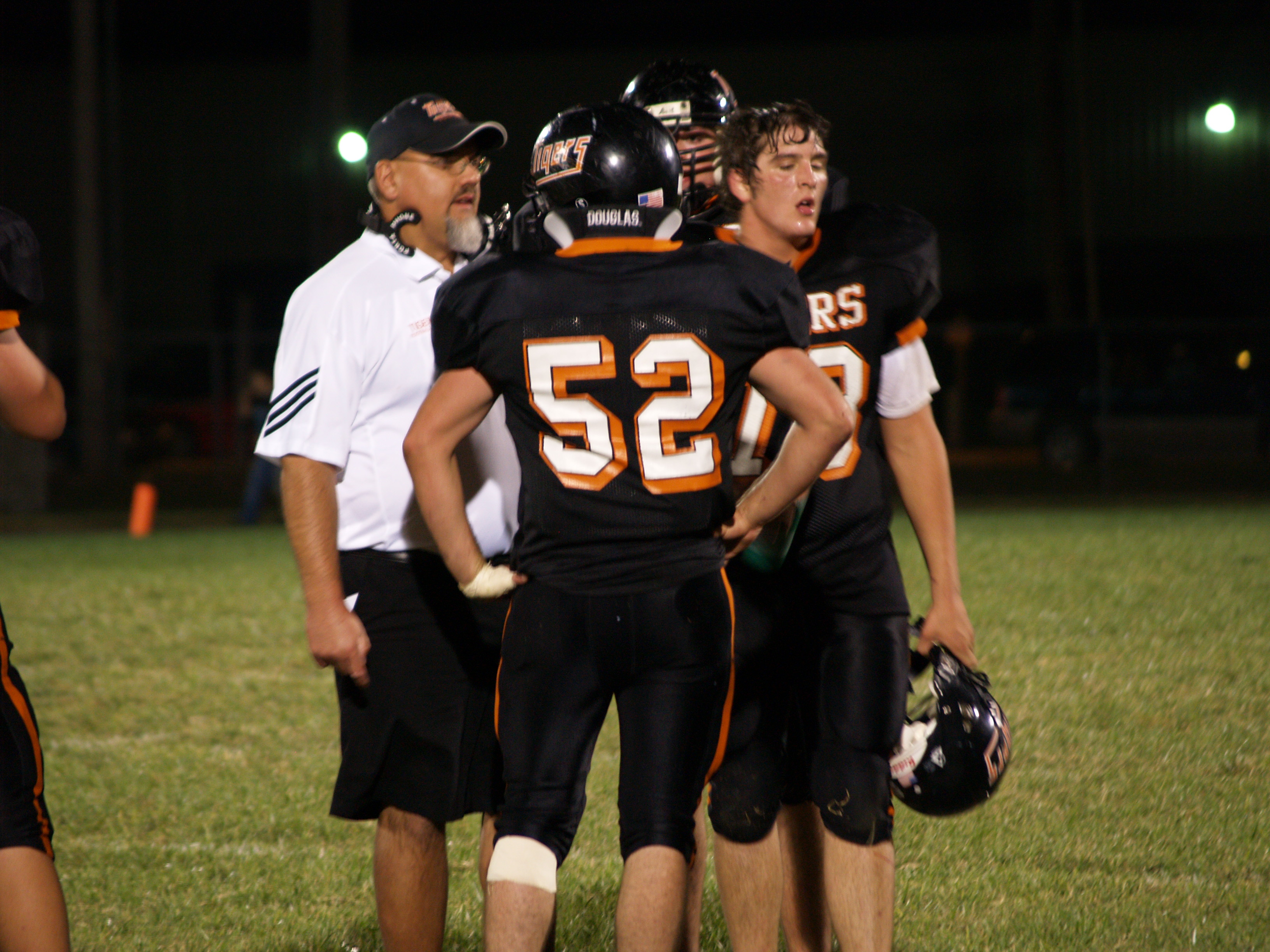
Coach Lane’s number one teaching point for the Tiger Defense consisted of only two words, MY BALL!. When the opponent had the ball, our job was to physically take our ball back, either by force or by making the opponent punt the ball back to us in three plays. Our goal was to be selfish by taking our ball back whenever the opponent happened to gain possession of it—and take it from them ASAP.

A beautifully simple, yet effective definition of the game that 99.9% of our teenage boys were able to grasp. They could “get it”. Football went from this apparently confusing game of rules and playbooks, and techniques to something they could wrap their young minds around. It’s all about MY BALL.

  • Get it back when we don’t have it.
  • Take care of it when we have it and move it to our special piece of prime real estate at the opposite end of the field as many times as possible.

With this simple mental framework in place, we could teach our kids their jobs and they could understand why they had to do that job. The team needed them to do their job in order for us to get Coach Lane his ball back.

Easy-peasy.

“MY BALL!” made me rethink the game of football and more importantly, rethink how I studied and taught the game of football. Two simple words, one simple philosophy that helped our underdogs as they worked to become successful. David beats Goliath playing the game David’s way and not Goliath’s way.

Until next time.

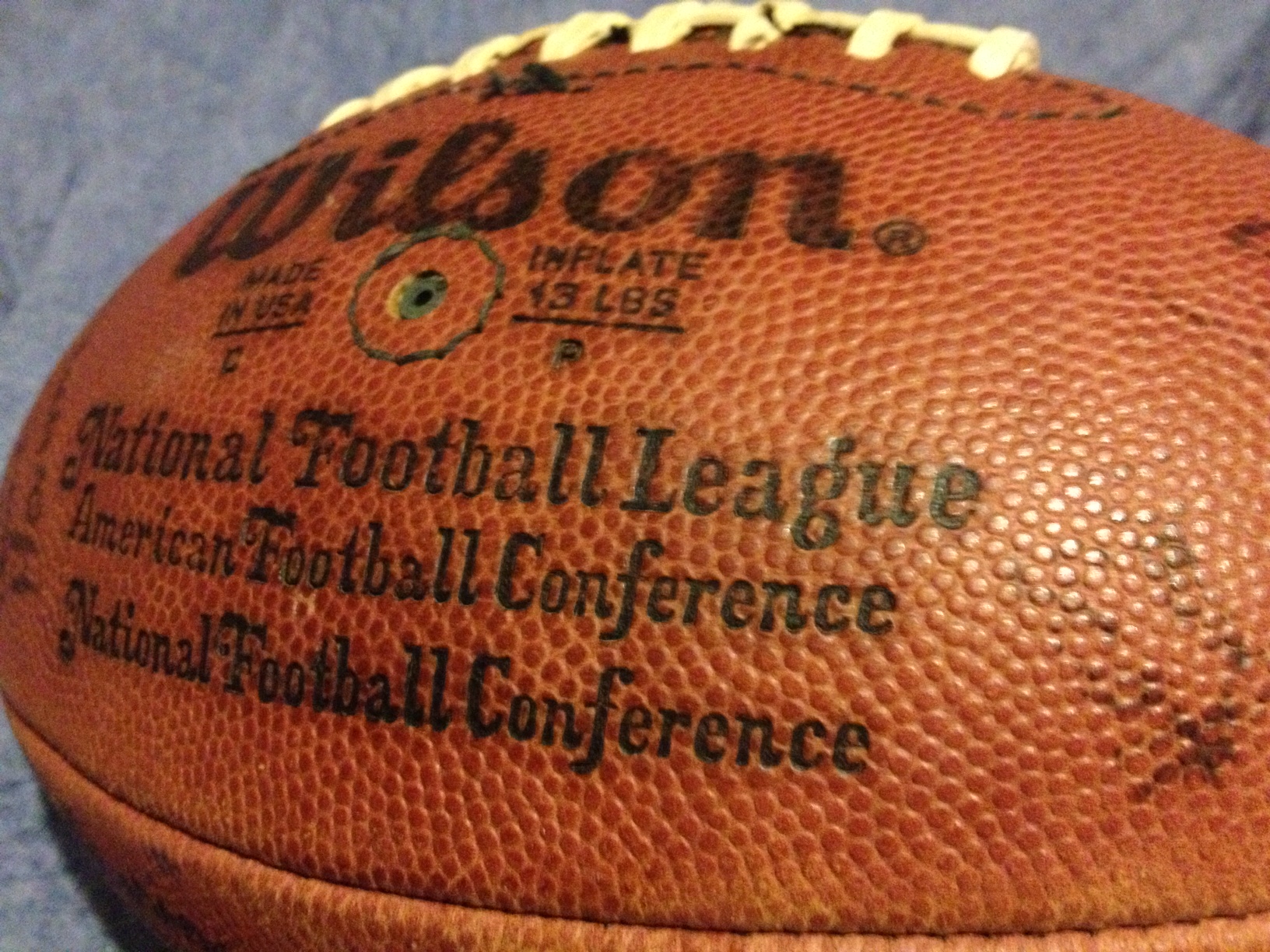
WilsonFootball

1 Comment

Filed under Coaching, Training

The Youth Sports Conundrum

Sometimes I speak my sports mind.

Sometimes I tell people the “truth” on sports as I see it.

Sometimes this gets me in trouble.

Recently, I was asked at our youth baseball association meeting if I was excited as a former high school level coach to see all these local kids playing youth club baseball. I thought for a moment, looked at the floor trying to think of a politically correct way to answer this question.

I couldn’t—so I spoke the sports truth, “Yes…and NO!”

“Yes” because it’s great to see kids playing baseball, but “NO!” because I don’t think you should ever approach youth baseball for the purpose of someday having your dozen or so kids all becoming high school stars.

Eyes widened. Jaws fell open. I quickly tried to elaborate that, as I high school level coach, I’d prefer to see kids enter the high school program armed primarily with a love for the sport and the ability to throw and catch. There will be attrition. Even in the best case scenario, only about half of those dozen kids who play on a youth team will probably still be playing in their later high school days.

Kids will change, their bodies will grow and shift by the time they reach high school. If a kid has that love and passion for the game, I can teach them (or re-teach them) as they enter the high school program and mold them into the players best suited for their skill set. These kids will put the hours of hard work needed to be a solid player. They will use their love of the game to push through tough times and tough situations to get better every day.

That is what I want to see out of a youth sports program. Help kids love the sport, teach them the basic fundamentals of the sport, and give them the basic skills tool set to be successful. All the other pieces of the puzzle will fall into place with hard work and repetition.

Youth sports are not a minor league for high schools. The two bottom things on the list of priorities for a youth sports program are the emphasis on winning above development and a philosophy of making future high school stars. Most of the problems that grow out of youth sports are rooted in these two negative prioritizations. The “burnout” problem so often discussed as a major problem with youth sports most often grows out of these two philosophical approaches.

Youth sports exist to teach kids the fundamentals of a sport. Youth sports programs should teach the kids how to play the game, teach kids about the value of teamwork and the value of competition.

Above all else, youth sports need to teach kids to enjoy the sport and the opportunity to play.

Play hard and have fun!

Campbell Infield

Leave a comment

Filed under Coaching, Rants

The Depths

Depth is underrated. The value of having quality people in your program is fairly obvious—you need good players to succeed. The number ones on the depth chart are important, but as a coach or leader of a program, one cannot ignore the value of depth and numbers.

Depth in the kids who fill the backup role and must step in when called upon when the starter goes down. Depth in the kids who stand on the sidelines on game night, seemingly for the sole purpose as a show of force in uniform.

Depth is more important than that.

Depth makes a program successful.

A program needs the kids on the third and fourth string—the kids on the low end of the depth totem pole— to make everyone better. These players are the ones who make a program stronger and a lot more fun to be a part of. The “filler” players are the ones who push the kids above them on the depth chart to get better. The challenge, the competition, and the friendly rivalry are the “magic” which makes a team shine.

I used to enjoy working with the football scout team kids in practice. It wasn’t easy for these kids to learn the opponent’s offense and defense on the fly. It was a daily struggle for them to stir up within themselves the intensity and effort to give the first and second string players a quality look in our preparations. We called ourselves the “Black Dogs”. We took pride in what we did. We learned a lot of football running all those opponents schemes and plays.

I’d challenge them to push the other players as much as possible, even if it got a little chippy at times. Honestly, I didn’t mind an occasional scuffle or melee as these mostly occurred when the third string player made a first string player look bad on a play. Oddly enough, after these incidents, the starter usually attacked their practice with renewed effort.

Everybody gets better.

Every day.

You build successful programs from the ground up. You recruit quality depth. You plant the seed of possibility within these kids when they show up at your door. You cultivate their talent with as much, or more, effort as is put into developing your number ones. You give them a sense of importance and value. Everybody sees the intricately carved and beautifully decorated top of the totem pole, but people rarely pay attention to the bottom of the totem pole, which provides the foundation. If the foundation is weak and gives way, the whole thing falls apart.

It takes a special relationship between coaches and these kids on the lower half of the depth chart. A coach needs to make these kids feel like they are an important part of the program and demand effort from them every single practice, workout, and game. These kids don’t get much attention and the attention they get is mostly negative. A classmate poking fun at them for “riding the pine”. A parent chiding them for not being a starter. It’s a tough life for a Black Dog. That’s why a coach needs to be there to encourage and develop them as players.

Every day.

Everyone gets better.

I salute the Black Dogs of the world. I salute the kids who practice hard and work to make themselves and the team better on a daily basis. Without you, a team has no depth. Without you, a team has no foundation. Without you, a program crumbles.

Have patience. Keep working hard. Make your position a better place. And never forget the light at the end of the tunnel. Your time will come.

Next time you see the players at the lower end of the depth chart, give them a high five. Pat them on the back in appreciation for their efforts and cheer them on. THEY are the keys to a successful program. As the old saying goes, “A chain is as strong as its weakest link.”

A program is built from the ground up. Talent is forged from upward pressure and challenge from below.

Everyone contributes. Every day.

CC@Abilene2009

Leave a comment

Filed under Coaching

Fully Formed

I had this recurring dream about showing up to the locker room one day and meeting the principal at the coach’s office door. No, I was not in trouble so this wasn’t the usual administrative nightmare which, in all actuality, was my coaching reality. In my dream, the principal is standing at the office door to introduce me to the strapping athlete at his side, who just happened to transfer to our school. A Brian Urlacher-type. Ready-made out of the box ready to step on the field and dominate.

Fully formed.

Ready to go.

But this never happened. Sure we had our share of kids transfer in, but none of them ever was a Division I caliber athlete.

The mythology of the transfer student.

The mythology of “fully formed” is just that…a myth.

Even in the writing game, nothing starts fully formed. An idea becomes a sentence, the sentence becomes a paragraph, the paragraphs become chapters, and the chapters become a draft. The draft is chopped up and reworked, and then polished to a shine. Next, trusted people read it, suggest changes, and the whole process repeats itself until the book is fully formed.

Hard work is the magic.

Nothing is fully formed out of the box.

When I was just starting out in coaching, I used to grump and griff around that the new kids coming into the program didn’t already know the things I wanted them to know. I’d get frustrated when the kids couldn’t do the things I thought they should do.

I was an idiot.

I would grumble out loud, but Mrs. Hays would point out, “If those kids already knew everything, they wouldn’t need to pay you now, would they?”

Thanks, Mrs. Hays.

I would point a finger at the developmental level coaches and Coach Lane, who taught freshman English class, would say, “I can’t expect 8th graders to come in knowing freshman English, I need to teach them freshman English.”

That’s why he was such a good head coach and mentor.

Everyone needs work. Everyone needs coaching and teaching.

Fully formed never just walks in the door.

Done right with a developmental approach, though, and fully formed can walk out your door.

Developing athletes is a sports coach’s #1 job. It truly is why they pay us.

Developing athletes is the key to success. Make the kids who walk through your door the best they can be. Help them realize their potential and their dreams.

Send them away at the end of their time with you as  fully formed as you can make them.

DB+Parallettes

Leave a comment

Filed under Coaching, Training

The Jack-In-The-Box

The jack-in-the-box.

You turn the crank slowly. Nothing happens.

You turn slower and slower and slower in anticipation of the freaky clown popping out when the lid springs open. With every turn, your heart beats faster and your eyes get a little wider. The chime rings out the tune one slow note at a time as you get closer and closer to the always surprising endgame and then…

POP!

Jack-in-the-box

Developing athletes is similar to a jack-in-the-box. The athlete cranks the handle by practicing and training. When the time is right, the breakthrough comes, and the performance “pops” for all to see.

I saw this with several of the baseball kids we coached this summer (I know, I know, I retired. Insert Mrs. Hays laughing). Starting this spring, these particular players worked and worked to become better hitters. We worked with them on staying vertical and using their tall, lanky frames to generate angular force through a short, compact swing.

These players slowly cranked the handle of their athletic jack-in-the-box to get better throughout the season. They put in meaningful time at the batting cages and at practice. Honestly, they hit the crap out of the ball more often than not this summer. Finally, for one of the players, the catch was sprung on the lid and he hit his first home run to seal a victory in our final game of the summer. It was a legit shot that easily cleared the left field fence. I even smiled—during an actual game, if you can believe that.

This is how athletic development works. You work toward a goal. You grind it out day after day to what often seems to no avail. You get frustrated. You despair. Sometimes, you quit. But to those who keep turning that handle on their athletic jack-in-the-box with grit and determination, success will come.

You will improve.

It is inevitable.

So, keep lifting, keep running, keep swinging, and throwing. Practice ball-handling and shooting baskets every day. Continue to work on your technique, your footwork, and your mental game. Just keep cranking and good things will happen.

I’ve said this many times in the past, but one of the most important things a coach or teacher can do is to see the potential in a kid and help them achieve that potential. Teach them to keep working and to keep turning their cranks of improvement until their talent springs forward.

Now, it’s time to shove this old, tired, jack-in-the-box of a coach down, snap the lid shut, and throw him back into the storage closet. I am retiring from active coaching…again.

Maybe (Stop laughing Mrs. Hays.).

Leave a comment

Filed under Coaching, Training