Category Archives: Coaching

Your Choice

I snapped these photos of the neighborhood trees and one of our oak trees yesterday. It was a cool, overcast, and drizzly morning but the colors of the leaves popped. The same view this morning, with the bright November sunshine radiating the colors is also beautiful, but, in my opinion, not as striking.

Something hit me as I stood and looked down the street. The first thought that jumped out of my brain didn’t jive with the beauty before me. 

What was that first thought? 

I saw all those leaves in their various stages of color transformation and thought, “Man, I’m going to have to rake up all those SOBs soon.”

The other side of my brain quickly jumped in. “But, they’re so beautiful. Just take a few deep breaths and enjoy.” I took that advice.

Even standing in a cold drizzle couldn’t rob that moment of natural wonder. It made me wonder, though, why I would think such an initial negative reaction. Truthfully, it made me feel a little guilty. Why didn’t I just immediately go glass half full instead of starting glass half empty?

I was reminded of a chapter I’d recently read in Secrets of the Mind compilation from Scientific American on how our brains learn by processing information in interconnecting neural maps. The negative thoughts and experiences on raking leaves are neurally associated with leaves turning vibrant colors and falling to the ground. 

I didn’t feel so guilty then. My brain was just doing what brains do. It processed the visual information as an awesome sight and triggered a little response to remind me I would have work to do. My brain was taking care of me!

I also learned an important take-home lesson. Amazing things require work.

Whether it’s art, athletics, family, school, work, or something as simple as the leaves changing,  remarkable things in this world are built on a scaffold of effort. The glass is half full because somebody put in the effort to fill it. 

It’s your choice. Do the work and fill the glass? Do the work and fill your space with kindness and beauty? Or not?

I know which I choose. I know there’s a cost and work to be done. But, that’s okay. The end result is worth the work. Enjoying a remarkable and beautiful sight in my neighborhood is worth the work I’ll do picking up the leaves.

Silver linings are sewn from the thread of effort.

Thanks, Mother Nature, for the reminder. 

Now, where’s that damn rake?

Leave a comment

Filed under Coaching, Reads, Writes

Fourth of July Baseball, 1981

On the Fourth of July 2023, I mowed the lawn.

It was 97 degrees and the “feels-like” temperature hovered around 104. Yes, it was hot. 

It was especially hot for an old Bubba like me. But I had what they call in sports and in rocket science, a “window of opportunity”, so I drank a lot of water and got the job done before the evening’s festivities began.

While mowing, my mind often wanders. Sometimes my brain rants. Sometimes it attempts to solve highly complex problems. But sometimes it kicks up memories of things not remembered for years.

In this particular instance, it was a trip down memory lane to the Fourth of July, 1981, and an American Legion baseball doubleheader road trip to the Fort Leavenworth Army base in Leavenworth, KS.

If memory serves, we only had 9, maybe 10, players make the 45-minute drive with our coaches to Leavenworth that day for a noon first pitch. Four or five players couldn’t make it because of family commitments or work. The legendary Kansas Hall of Fame baseball coach, Dennis “Harpo” Hurla was our manager. This was back in the day before he was a legend. Back then, Dennis was just a great baseball coach and a fabulous human; his well-deserved legendary status would come with time. I think our assistant coaches, “Easy” Ed Hernandez and Dom Dumovich, also traveled with us that day.

It was hot. Triple digits. We were smack dab in a month-long heat wave that eventually convinced my dad it was time to upgrade to central air conditioning. That had to be some serious heat (and maybe a little bit of whining from the family) if it convinced my dad to spend money on air conditioning. 

There was a great crowd on the Fort Leavenworth base that day, even though 90% of onlookers were there for the holiday festivities on the post and not to watch a bunch of rowdy, 17-18-year-old baseball players play.

Inside my 58-year-old brain, I feel we swept the doubleheader. I know we at least won one game because we almost always won at least one game, right? I remember being completely drained physically at the end of the second game. This was before the time when everyone felt the need to make every senior-level baseball field a mini, professional-grade baseball field. The infield was dirt. The outfield was dry, sun-burnt grass. The kicker, however, was the dugouts, which were the open-air, chain-link fence versions with no roof or sun protection. In short, it was miserably hot with no means of escape until the final out of the final inning.

After the game, we packed up the gear with the normal high school boy smack-talking and giving Harpo crap about his talent for scheduling games at the worst times of day under the worst environmental conditions. We carried the team gear and our gear to Harpo’s red and white VW van. He must have felt sorry for us or maybe he appreciated the fact we showed up and played the games because, shortly after pulling out of the Ft. Leavenworth front gate onto K-7 highway, he flicked on the right blinker and turned into Pizza Hut. I can still visualize him turning around in the driver’s seat with that million-dollar smile of his, and asking, “Boys, how about some pizza?”

Our mothers would have been impressed with the speed at which nine teenage boys threw off their sweaty and stinky t-shirts, slapped on a clean one dug from the recesses of their bags, and headed for the Pizza Hut door. The blast of cold air as I stepped into the restaurant and the smell of pizza wafting through the air is a memory I hope never slips from my neural storage. 

Never before had ice-cold Pepsi from the tap tasted so refreshing. 

Never before had a pizza been so utterly satisfying. 

There may have been a shared pitcher of beer somewhere in the mix for the 18-year-olds (wink wink) only. The camaraderie around those two tables in an almost empty Pizza Hut restaurant on a blistering Fourth of July baseball road trip evening is the essence of what sports and teams are about. Good times.

As I finished mowing and sat in the shade with my mental faculties firmly back in 2023, I smiled at the memory of that summer day in 1981. I smiled thinking about those teammates. I smiled thinking about Easy Ed and Dom. I smiled thinking about Dennis “Harpo” Hurla and the opportunity he gave me to enjoy baseball at a high level. Mostly, I thought about ice-cold Pepsi, a belly full of pizza, and a day spent playing the game I loved with the best teammates one can hope to spend time with. 

I also thought of young athletes today existing in our uber-connected cyber society. A hope I have is the younger generations of players don’t miss the experiences these lifetime connections offer as they navigate the slippery slope that is the modern corporate youth sports model.

Leave a comment

Filed under Coaching, Reads, Writes

Transitions

I recently sat with a friend for a few peaceful minutes at our grandsons’ t-ball game. It was classic 4-6-year-old baseball. Bat hits the ball (after several violent swings with the bat knocking over just the tee) and it rolls across the infield. None of the dozen or so defenders in the field are paying attention because military helicopters are maneuvering in the airspace over town. Defying all laws of friction and physics, the ball rolls all the way to the outfield grass. Upon verbal prodding from the coaches, a group of defenders races to the ball and devolve into a scrum fighting over who gets to throw the ball to first base. One player eventually wrestles control of the ball and throws it within a city block of first base while another melts into tears in the outfield because that was “my ball”. The first baseman chases down the ball after verbal prodding from the coaches and launches it in the general direction of home plate where the next batter is waiting. (Thank God for backstops!) 

The process is repeated until every batter on both teams has batted three times and then the teams line up, shake hands, and sprint to the dugout where the postgame treats are waiting.

A nearby parent mentioned to me how her husband, who is helping to coach one of the t-ball teams playing, privately mentioned to her how the way his kid and the others play drives him crazy. I laughed and agreed. I told her it was all about transitions. It’s the steps one has to go through to learn something new. Sports, or any other endeavor, are about improving through a series of transitions. We can also call it “leveling up”.  

It’s the Fail Cycle. Try something. Fail. Step back. Evaluate. Work hard. Try again. Repeat until successful. Try something harder. 

In baseball, there are transitions.

  1. No idea how to play the game to the t-ball basics.
  2. T-ball basics to coach or machine pitch.
  3. Coach or machine pitch to kid pitch. A (HUGE transition landmark that can be very frustrating to watch and has been known to burn the eyeballs of the fans.)
  4. Kid pitch to full-on competitive baseball.
  5. The challenging transitions as one progresses up the competitive baseball ladder. 

One of the harsh realities of sports is you work through the transitions to level up or you don’t and stagnate. These transitions get progressively harder and often become the point where individuals quit playing the game. Middle school to high school to college to the minor leagues to the major leagues all involve challenging transition periods for the athlete. 

Transition periods are always challenging and rarely things of beauty.   

As an adult or advanced player in any sport, it’s often frustrating to coach or parent inexperienced individuals. There’s often an assumption the kids know what they should be doing. As adults on the other end of the playing rainbow arc, the exit side, we often forget that kids beginning their journey on the entry side don’t know what we know and can’t do what we do. They’re on the uphill side of that playing arc, with emphasis on uphill, looking and searching for handholds and footholds to move upward and onward in their playing career. These handholds and footholds often take time for each individual to find.

They need a guide through the transitions. That is where coaches and parents do their work. That’s where instead of frustration, you teach and encourage. You work to develop and perfect the developmental skills of the game. The parent and coach must nurture trust and drive in each individual. 

You must listen and trust their judgment and decisions while only gently nudging when absolutely necessary. This is important because they need to have the agency and freedom to pursue their dreams as far as they want to go with them. The higher the leveling up goes, the more it requires hard work, sacrifice, and risk to reach the next handhold on the steepest developmental slope where competition is most fierce. 

Moral of the story. Next time you’re at a beginner-level event, whether sports, music, art, etc., remember this particular event is an early transition, not a finished and polished product. Enjoy the ride because tomorrow’s performance is often better than today’s, even if today’s performance consisted of 50 pitches with only 12 of those being close enough to home plate to be called a strike. 

Celebrate the baby steps. Transitions are just part of any journey.

Leave a comment

Filed under Coaching, Training

R.I.P. Franco

I was born a Kansas City Chiefs fan. I was five when they won Super Bowl IV on January 11, 1970. They were good for a year or two after that but began a slow decline into a miserable existence by the mid-1970s forcing many of us young football fans to alternate fandoms. Me? Like many, I turned to the Pittsburg Steelers under Coach Chuck Noll. 

The Pittsburgh Steelers dynasty of that era held tremendous appeal to a 10-year-old, football-loving, lower-middle-class kid from Kansas City, Kansas. They played aggressive and physical defense that earned the nickname, The Steel Curtain. They had an effective offense built on the legs of their running back Franco Harris and the arm of Terry Bradshaw. Most important to me, however, was the fact they beat the hated Oakland Raiders in several high-profile games, including the Immaculate Reception game (a life-changing event for this kid!).

Franco Harris passed away today at age 72. I’ve been thinking quite a bit about Franco and the Steelers recently due to the NFL’s plan to celebrate the upcoming 50th anniversary of the Immaculate Reception game. It’s a sad day for this 58-year-old “kid”. Not only has another childhood sports hero died, but one who also appeared to have been as great of a human as he was a football player. I never met or saw Franco in person, yet I feel we lost a favorite uncle. 

That’s a great compliment to Franco and his Steeler teammates. They were Everyman’s Team. They were tough-as-nails and blue-collar. The team, like Franco Harris, wasn’t loud or outrageous as a general rule. They did their job and won football games with class and honor.

Rest in peace, #32! 

Jeno’s, Public domain, via Wikimedia Commons

Leave a comment

Filed under Coaching, Reads, Uncategorized, Writes

A Privilege or a Right?

There are things bigger than sports.

Hard for some of us to believe perhaps, but it’s the truth.

Sports in high school are called extracurricular activities for a reason. They are activities students have the option to do outside of the classroom. They are not required. They are not the reasons our high schools exist. They are voluntary. Students aren’t entitled to participate in these activities.

There was a local incident this past fall where a student-athlete got into legal trouble but was still allowed to participate in an extracurricular activity. The situation was called out in public and it caused quite a heated debate in our community. I don’t know all the details, I don’t need to know all the details. What I know is there are a defined set of rules and consequences the school district put in place back around 2007-2008 to deal with these types of issues. However, in this case, it doesn’t appear to the outside observer these rules and consequences were enforced. 

One crucial piece was left out of the discussion and ensuing arguments, though. Extracurricular activities are privileges, not rights. Students who operate within the rules and expectations earn the privilege to participate. Students who fail to operate within the rules and expectations do not. They are not entitled to participate independently of their behavior. 

Being able to play a high school sport is earned. 

This type of behavior problem is something that has been around as long as there have been high school sports. I dealt with it as a player. I dealt with it as a coach. Teenagers don’t always make good decisions. When they fail to make good decisions, especially ones contrary to the rules, they should have to suffer the consequences. 

We, as parents, coaches, and administrators, don’t do our athletes any good to look the other way. We don’t help them to become responsible and productive citizens/team members by ignoring or selectively enforcing the rules. It’s not fair to the student-athlete involved or to their teammates. Part of our job as the adults in these situations is to help our young people make better decisions and show them the value of earning the privilege to participate. 

Personally, my philosophy in dealing with kids who get into trouble is to guide them through their punishment and make them earn their way back into the trust of their teammates and coaches. We used to have a hell-ish series of physical challenges the player would have to complete to go along with their game/event suspension. Once they served their punishment, all was good. They earned their way back. Their teammates saw firsthand the road to redemption the player traveled and, in the end, we were a stronger team because of it. 

We’ve seemed to have lost sight that extracurricular activities are privileges.

We’ve seemed to have lost perspective of the true endgame of high school.

There truly are things bigger than sports.

And that’s the damn truth.

Clay Center @ Abilene 2009. Photo credit: Logan Hays

Leave a comment

Filed under Coaching, Rants, Uncategorized

The Silver Lining?

I love good ideas. I love problems. I love trying to figure out ways to solve problems. It’s the coach, the competitor, and the scientist in me. Some people probably say that it’s mostly the a$$hole in me but I digress.

First, a huge “THANK YOU!” to people who read my previous post, The End of an Era. It was a post about the school district’s decision to sell the iconic football stadium in Clay Center, Kansas. If you wish to share your favorite Unruh Stadium memories or histories, please add a comment on the post. I’d love to learn more from your stories!

One of the comments on the post completely blew my mind. It’s a great idea about what to do with Unruh Stadium after the school district moves out. The individual points out that since the city pretty much gave the stadium to the school district by selling it to them for one dollar, it’s only right for the school district to give it back, especially as they’ve invested very little in its physical upkeep over the years. 

Basically, the community gave USD 379 a gift in the 1990s, and perhaps it’s time for USD 379 to return the gift. 

Give it back. What an idea!

Why?

The commenter suggested that once returned to the city, the stadium could be used for public recreation. One thing that has been on many citizens’ minds over the past 15 years is the need for a real and actual Clay Center City Recreation facility in town. A group did a study a few years ago and drew up some nice plans for a facility but, if I remember correctly, the location was an identifiable problem. I agree the current stadium complex would make the perfect home for a Clay Center City Recreation facility for decades to come. 

Picture three youth soccer/flag football fields on the current football field with seating and facilities already available. Next, imagine a future recreation building/parks department office complex with courts, classrooms, and community space at the south end of the Unruh Stadium. (The area currently being developed adjacent to the Clay County Fairgrounds could be sold, shared with the Fairgrounds Board, or kept for a future city development site.) With some time, investment, and TLC, it could be a stellar recreation facility. Just as important, it’s something our capable Parks & Recreation Department could maintain.

Taking a lead from the economic benefits that the Clay Center Aquatic Park brought to the local area, an even greater economic benefit can be tapped by making Clay Center an area hub for recreation activities. Youth sports, tournaments, leagues, adult activities, exercise classes, arts and crafts, and a place for the community to be a community. 

The western corridor entering Clay Center exudes much of what Clay Center is. The Aquatic Park, Huntress Park, Schaulis Field, Montel Field, Brade’s Park & Shelter, Campbell Field, and Otto Unruh Stadium. That corridor is as identifiable with Clay Center as the Courthouse or Downtown or Utility Park. 

It’s part of what we were as a community. 

It’s part of who we are as a community. 

It’s part of what the community will become.

Silver linings can be found in every cloud. One just has to be willing to rip the cloud apart sometimes to find them.

Finally, one also has to be willing to sit down, talk to people, and exchange ideas to solve even the most daunting of problems together.

That, my friends, is how communities move forward in a positive manner.

1 Comment

Filed under Coaching, Rants, Reads, Uncategorized, Writes

The End of the Era

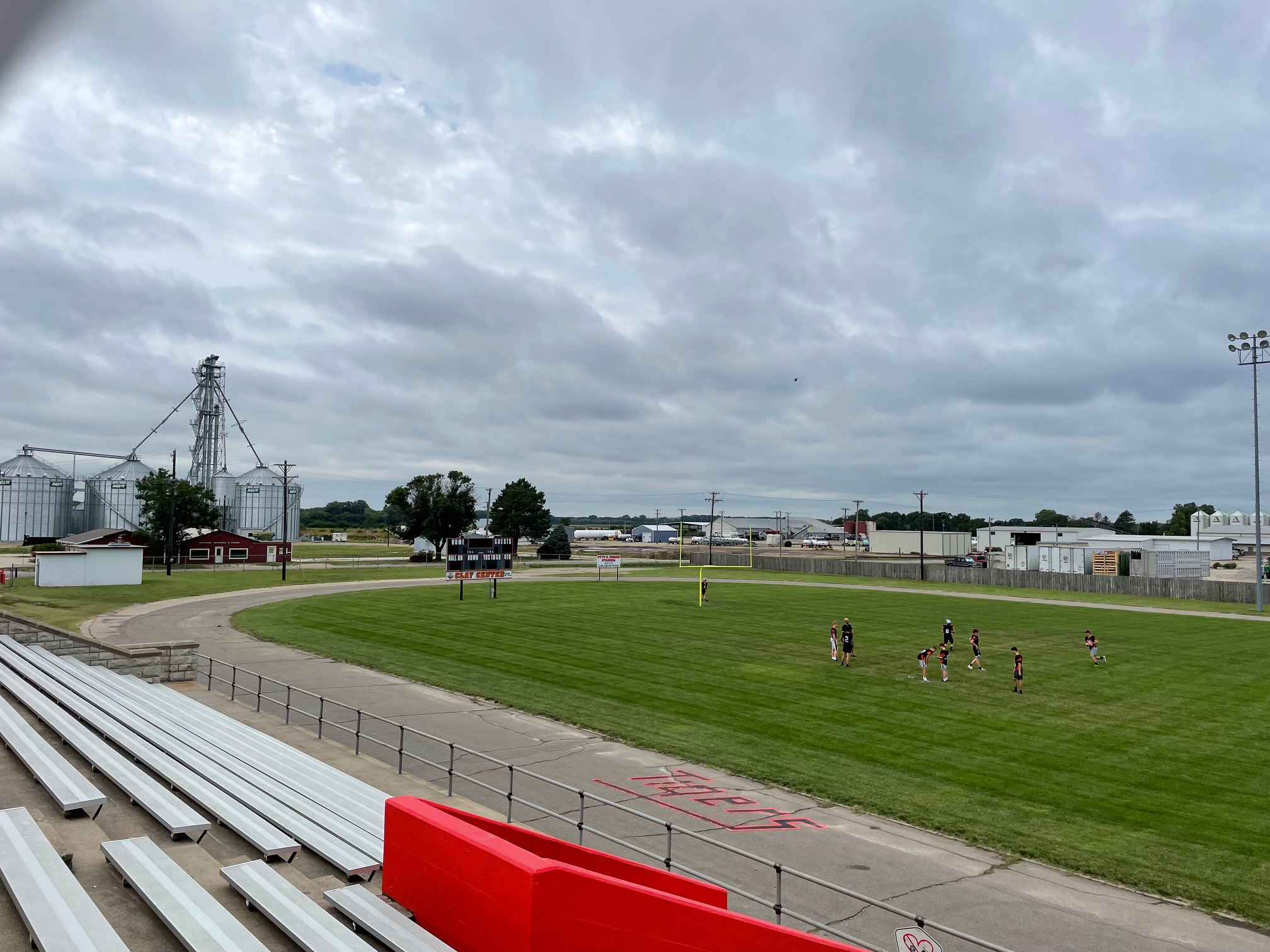
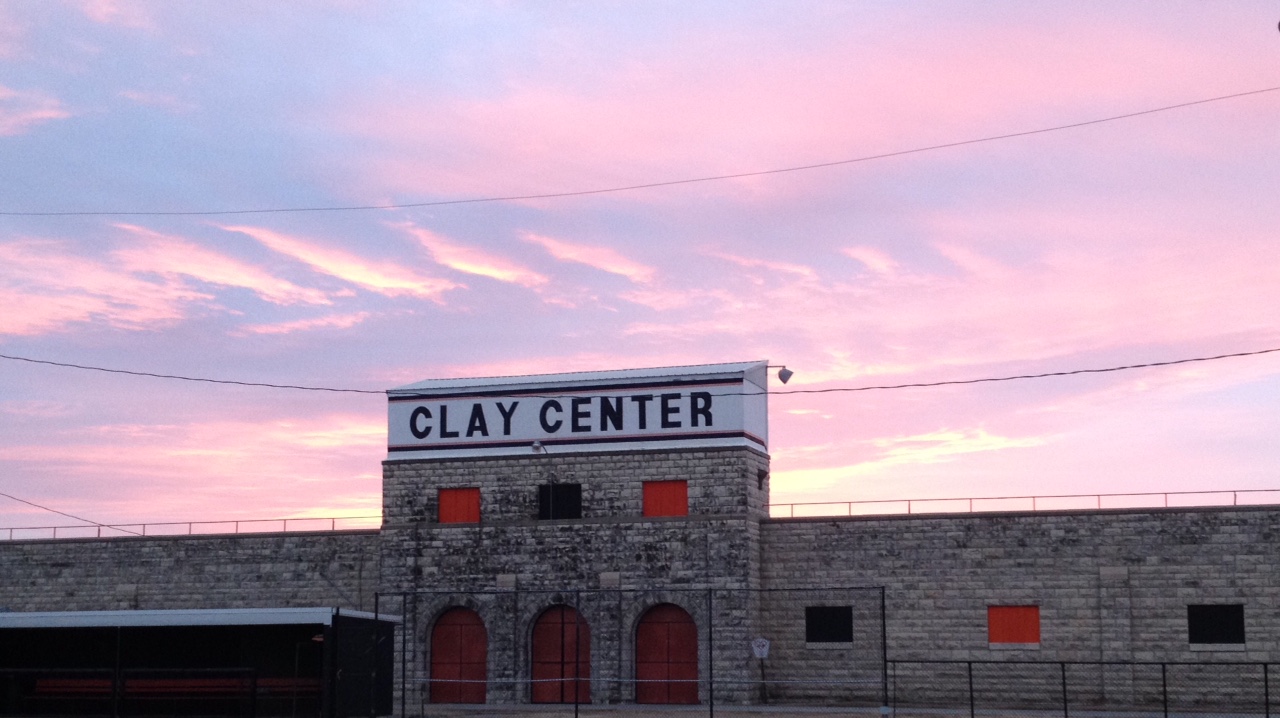
The USD 379 Board of Education is moving forward on building a new football stadium and selling Otto Unruh Stadium. Unruh Stadium will likely be demolished as the land becomes a commercial venture. It’s a sad day for Clay Center and for an iconic community structure but we look forward with reserved optimism to what the future holds.

If my memory serves me, the City of Clay Center transferred stadium ownership to the school district for $1.00 sometime in the 1990s. Basically, the city (the community) gifted the iconic structure to the school district since they were the site’s primary users. 

I regret not trying harder over the past twenty years to convince USD 379 school boards and administrators to be better stewards of their stadium site. I apologize for not being a better advocate of Otto Unruh Stadium and demanding better from our local leadership. 

I dropped the ball on doing my part to improve things and rally community support for action. Several times while working at Campbell Field I’d walk past the rag-tag, chain link fence entrance at the south end of the football stadium and get totally pissed off at how bad it looked. If you’ve been to Unruh Stadium, you know this fence. It’s been bad since I attended my first Tiger Football home game in 1994. (Mini Rant: Couldn’t we have spent $20-30,000 at some time to have an exceptional local masonry company put in matching limestone walls and gates or, better yet, a limestone arch entry/ticket booth extension ramping up to an ADA-compliant seating area?)

Being pissed off on these occasions, I’d resolve to go to Stuart Administration Center and ask the superintendent to quit complaining about all that’s wrong with Unruh Stadium and do something right for the facility. I never did. I’m disappointed in myself for not taking a stand for our facilities and demanding more from the tax dollars being banked in the district’s capital outlay fund. 

Unruh Stadium is just a sports field. In the grand scheme of things, sports are not, and shouldn’t be, one of the top five priorities of a school district or a community. Nevertheless, Otto Unruh Stadium is a sports field that has deep meaning and history for our community. As the legend goes, it was built brick by brick by Clay Center citizens from locally-quarried limestone and funded as part of a WPA-related project.

The basic coaching tenet and philosophy “Brick by Brick”, which guided the latter half of my nine seasons as a Tiger Football coach, was based on the history and design of Unruh Stadium. To this day, I firmly believe we build better athletes, teams, and communities, and do better and deeper work when we create better bricks and build one brick at a time.

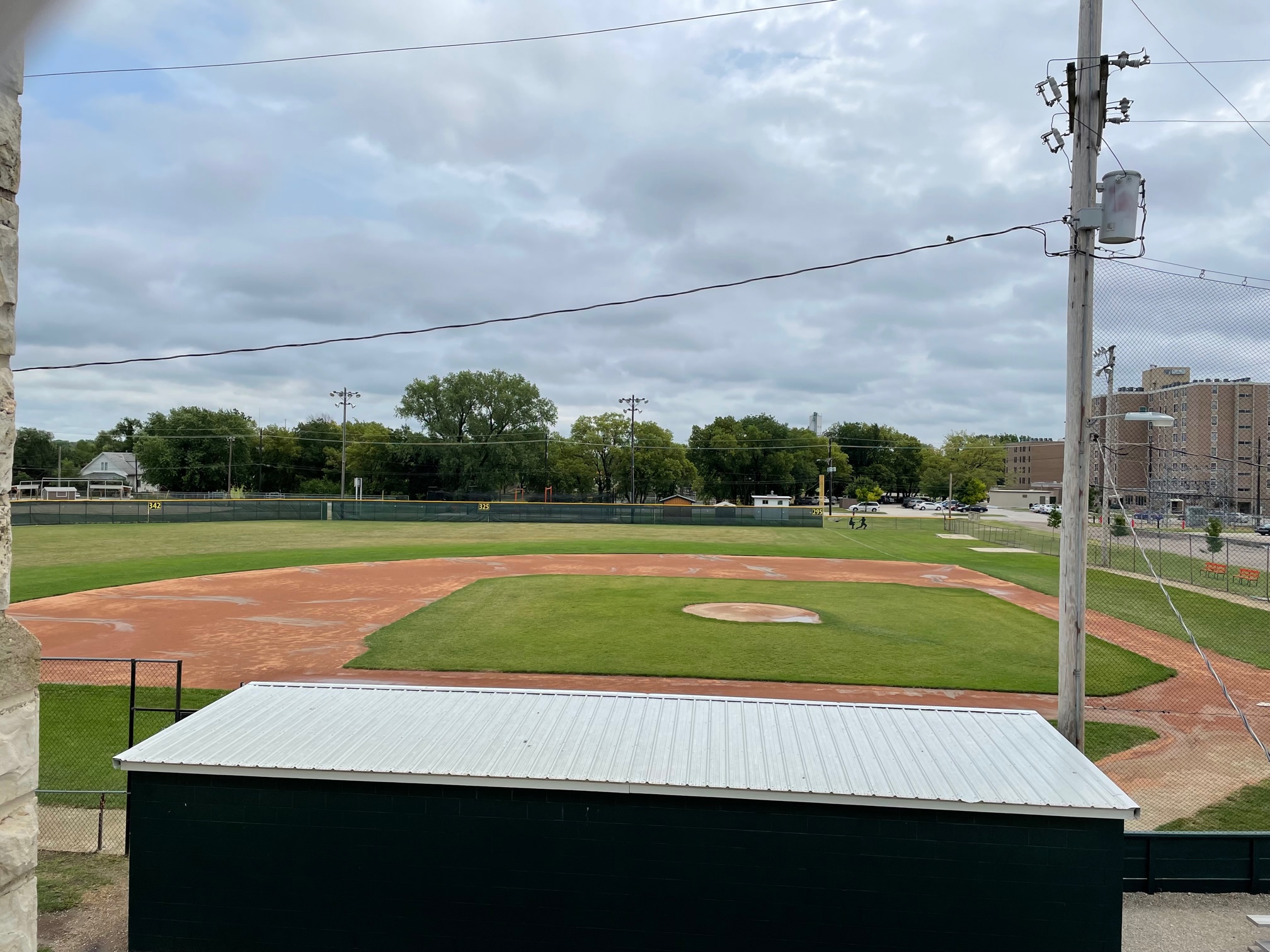
I’d hazard to guess I’ve spent more time in the shadow of Otto Unruh Stadium than many folks. As a fan, parent, coach, strength & conditioning coach, graduation speaker, baseball field volunteer, tour guide, etc. I’ve had a lot of experiences there. 

I’ve cheered in the stands, yelled at officials, been penalized, lost heartbreaker games, chased foul balls, won thrilling victories, dealt with gut-wrenching injuries, and ran the stadium stairs in Unruh. 

I’ve been a baton dad, band dad, proud dad, and a dad watching his kids learn to ride bikes there.

I’ve given tours to first graders and ended each tour with a session of top-of-our-lungs primal screaming underneath the stadium. I’ll never forget the pure joy and the smiles on the kids’ faces as our screams echoed off the walls. 

I’ve seen hundreds of senior pictures, team pictures, and family pictures taken against the backdrop of the stadium’s limestone walls.

I’ve dodged tornadoes, thunderstorms, power outages, sleet at March baseball games, and long 110°F summer American Legion tournament days inside the protection of Unruh Stadium.

I’ve “felt” the roar of the Tiger Bike Night event from the home locker room prior to a Tiger Friday Night in America football game.

I’ve “Touched the Sign”.

Many who read this will say, “Hays, you’re just a sappy, pigheaded, and sentimental old fool who needs to get with the times.” Maybe so. Oh hell, I’m about the sappiest, most pigheaded, and mega-sentimental old fool out there! It’s okay, though, because it drives my passion and sometimes drives that passion a touch too far. 

However, I’m also one who can recognize and see the potential in the people and the places we have in our community. I know the value of responsible leadership, the value of responsible tax dollar expenditures, and the responsibilities inherent in elected, paid, or volunteer public service. 

The ultimate trust must be earned by consistent action, not lip service. Lose the public trust and lose the ability to lead.

Good luck to USD 379 and to the Tiger Legacy supporters as we move forward on the new stadium project. Brick by brick. 

I’ll leave with one nugget of sports field wisdom I’ve learned over the years through time, trial, and toil:

Sports fields are easy to build. Sports fields are hard to maintain.

It’s up to us, the Clay County community, to be better stewards and demand better stewardship of our new and shiny things as well as our older and time-worn things. We cannot afford to sit back as we watch our community’s gifts deteriorate by design, lack of will, or lack of resources by our leadership.

Tiger Family always!

2 Comments

Filed under Coaching, Rants, Reads, Uncategorized, Writes

Filtering

I listened to former MLB pitcher Mike Boddicker on a Kansas City sports radio this week and he said something that activated my coaching radar. With his years of pitching expertise, the host asked him to theorize why the Kansas City Royal’s young pitchers were struggling so much. Thoughtfully, he responded that perhaps too much information was being fed into their heads. He said with so much to think about swimming in their heads while on the mound, their physical performance suffers.

Bingo! I think Mike Boddicker might be onto something here. I’ve written many times about this before in sports. Most sports are doing things not thinking things. That’s why things like muscle memory and daily practice are so important. When a player is on the field in the action of a game, thinking, in particular overthinking, is bad news.

Professional sports and sports, in general, are becoming more and more data-driven. In my opinion, this is a very good thing. Having the information to make better choices about strategy and resources is never a bad thing. The problem we get into as coaches and as organizations is we fall in love with the data but we fail to implement the filtering of the data to our players or team members. 

Filtering?

It’s when the people at the top end of the organizational ladder analyze all the available data and “filter” the relevant data to the relevant people. In a perfect world, by the time the information gets to the individual player, only the most relevant information that individual needs to do their job is in their head. That player then practices within that context, repeating the action again and again until they improve, and then takes it to the field without having to actively think about it.

You can also think about filtering as an informed simplification. As Detective Joe Friday said, “Just the facts, ma’am.”

Filtering is a lesson I learned as a green, somewhat dumb, and often overly-enthusiastic baseball and football coach. The hitters I coached didn’t need to have the dozens and dozens of physical cues involved in a swing swirling in their heads as the pitch was delivered. They needed only to load, step, and swing to attack the baseball. The mind can be a terrible thing when bogged down with too much information.

From experience, I know if I’m in the box thinking about where my feet are, what position my hands are in, if my weight is transferred, and, on top of that, the scouting report on what this pitcher likes to throw 1-2, I’m probably going to be taking a leisurely walk back to the dugout leaving the tying run on second base.

Thinking too much diminishes performance.

Same for football. Fast (quick) explosive high school football is the way we wanted to play the game. It’s the way we developed our players every day with everything we did from warmups to conditioning. We also knew the value of scouting and film study in order to give us the advantage to make up for what we lacked in sheer size and speed. The hours and hours of film breakdown of an opponent was a lot of information. Too much information for your average high school male athlete. Hence, we learned to filter. 

Although we knew as defensive coaches that on third and four in a shotgun spread formation with the back on the left and the right guard, #63, sitting slightly back on his haunches meant they were going to run their bread and butter, QB counter to the left, pushing all that info into a 17-year-old’s head probably meant that the 17-year-old was going to freeze on the field. Coach Dail Smith used to call it, “paralysis by analysis”. Busy minds = Slow feet.

To avoid paralysis by analysis, what do you do? You filter. In the example above, we knew all that information as coaches. Since the QB counter seemed to be one of their bread and butter plays, it was put into the top 6-8 run plays for the scout offense to run all week. We’d teach the linebackers to notice when the guards were sitting back on their haunches and attack. Basically, we take the 4-5 scout details and break them down to one or two for the players, work the recognition and skills repeatedly, and give them the best chance of succeeding during the game. And if we forced the opposing team to go to something other than their bread and butter plays? That was the icing on the cake. 

If you can beat me with your second, third, or fourth-best packages, you deserve to win. If you beat me with your bread and butter packages, I deserve to lose.

Data is cheap in today’s digital world. Programs like HUDL are so freaking awesome and provide so much data to a coach at any level. Sabermetrics and analytics are a sports nerd’s dream. But the downside is the sheer, daunting amount of data we generate. The important work for the modern coach and organization is to sift through the data, decide what’s important and who it’s important to, and then pass it down. A little bit of salt makes the stew better, but a handful of salt ruins it.

Filter the information to your players. Give them the basic knowledge they need without throwing a wrench into the gears of performance. Too much on-field thinking, paralysis by analysis, is a dangerous thing. Prepare your players, practice, and turn them loose to perform. 

Mike Boddicker might be right about what’s wrong with all these talented, young arms in the Royals’ system. Simplify and let the physical talent shine.

Load. Step. Swing.

Sifting gold in a cabin, 13 Eldorado, Yukon Territory, 1898. (Asahel Curtis, Public domain, via Wikimedia Commons)

Leave a comment

Filed under Coaching, Training

The Favorite Place to Play

Coaches should always have a favorite place to play. This favorite place should trickle down to their entire team and organization. Everyone from the assistants to the players to the support staff should share a passion for this place.
What is the place?
Simple. It’s wherever the next game on the schedule is.
Because that’s what it’s all about. Getting your team ready to play the next game wherever it is.
Any other concerns, worries, or complaints steer the ship off course. There’s already a lot of other stuff to deal with in getting ready to play a game, especially at the high school or youth sports level, to detract from the goal of reaching that favorite place. A coach’s actions and demeanor matter. Negative thoughts spread to teenage athletes before anything can be done to prevent it and affect performance.
There’s a certain special feeling going to a game and seeing the field or the lights or the arena waiting ahead. A favorite kind of place lies ahead.
Anticipation. A touch of nerves. The heart quickens. It’s a special feeling.
So what’s a coach to do?
Put their head down and go to work whether you’re playing on the most pristine of fields or on something barely suitable as a landfill site.
Get ready for the next game, wherever and whenever it is.
Make the places and spaces we inhabit better. Leave a mark. All day, every day.
Isn’t that what life’s all about?
Above all else, enjoy the ride!

Leave a comment

Filed under Coaching, Reads, Uncategorized

$hit Work

I’ve been a molecular microbiologist for 33+ years. I’m just about as high as I can go on the university’s science technician ladder. Today, I needed to swap out three CO2 gas cylinders for our cell culture incubators. They weren’t completely empty but with the weekend approaching, I felt it wise to replace them before they could run out. The CO2 gas is vital to growing mammalian cells for our experiments. If the CO2 levels run too low, the cells will die. 

We have two fairly important experiments going on. One is a bacterial cell adherence experiment a visiting scientist is working on. Being a visiting scientist, time is limited, so the cells dying at this point would not be good if we want to complete this work. 

The second experiment is a gene-editing experiment I’ve been working on for almost a year. I’m trying to knockout a gene in a cell that’s could be vital for a bacterial pathogen’s entry into the host cell during the infection process. Needless to say, I do not want the CO2 to run out over the weekend and the potential gene-edited cells to die after 12 months of work. 

In short, properly changing the CO2 tanks is important.

The process of changing a gas cylinder is straightforward but it has to be done exactly right without leaks and with the proper gas flow to the incubator. The gas cylinders are stored in a locked cage outside the very north end of the building. One must use a cylinder hand cart to securely transport the empty CO2 cylinder all the way across the facility, swap it out for a full cylinder, and push it all the way back to the lab. Once in the lab, I installed the tank, check for leaks, ensure proper gas flow, and repeat.

On my second trip back to the lab with a full tank, a well-meaning coworker passed me in the hallway. The coworker laughed and said, “Why don’t you get a student worker to do that shit work?” I glared the best Coach Hays glare I could muster and the coworker politely skittered away.

But that question kept rattling in my brain as I went on the last round of drop-off and pick-up. 

$hit work? 

What the hell?

There’s really no such thing, is there?

Every job needs to be done or the system doesn’t function the way it should. The work matters. And if the work matters, it’s important it is done right no matter the size or the perceived importance of the task.

The same is true in coaching sports. The small work is often as important as the perceived important work. Coaching the lower-level or inexperienced athlete is more important for the long-term foundational success of your program than spending the majority of the time coaching the upper-level athlete. 

Just like in the lab, there’s no $hit work in sports coaching. It all matters but the work a coach does with the athletes who need it the most is often the most important thing one can do.

We’ve all heard the old axiom, “we are only as strong as our weakest link”. Those weakest links in our team, program, or organization might be considered the “$hit work”. Nevertheless, like the importance of properly changing the CO2 tanks, coaching up your weakest links makes the chain stronger.

Pay attention to the $hit work.

Do that work with purpose, pride, and passion.

Never forget how important the $hit work really is.

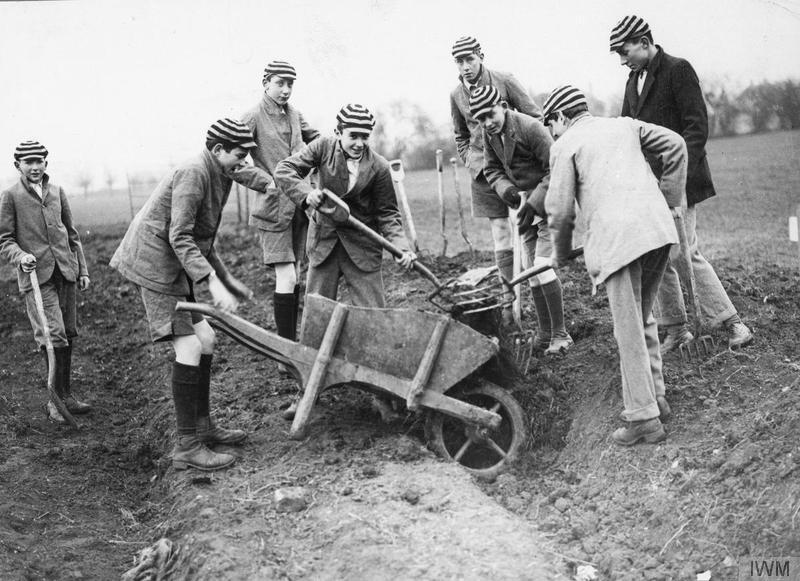
Agriculture in Britain during the First World War: Schoolboys fork out manure from a wheelbarrow onto an allotment during the First World War (via Wikimedia Commons).
Lance Cpl. Eithan Osborne dumps horse manure into a wheelbarrow during the Single Marine Program’s volunteer opportunity (via Wikimedia Commons).

Leave a comment

Filed under Coaching, Rants, Uncategorized