Category Archives: Rants

Bits & Pieces

I was listening to sports radio today and heard a story about Cam Newton, the quarterback of the Carolina Panthers. After hearing the story, I was shocked at my initial reaction. The story was about Cam Newton saying, “I’m an African-American quarterback that may scare a lot of people because they haven’t seen nothing they can compare me to.”

Now, now…don’t jump to conclusions. I didn’t think anything negative about the Carolina Panthers QB. I like him and the energy and joy he brings to the game.

What jumped into my 51-and-a-half, grumpy-old-white-guy head was, “That’s right, Cam Newton is black, isn’t he.” What surprised me was that, as a bona fide, 51-and-a-half, grumpy-old-white-guy, I just see Cam Newton as a QB.

Have we progressed to the point where—for most of the NFL football fans in America—race  is beginning to matter less and less? But, race still matters and race should be celebrated instead of targeted with those unfounded stereotypes.

Hopefully, we are getting to the point where, thanks to guys like Marlin Briscoe, James Harris, Doug William, Randall Cunningham, Warren Moon, etc., we can finally bury the belief that it is not “normal” for an African American to play QB.

I wonder if we are re-defining what “normal” means?

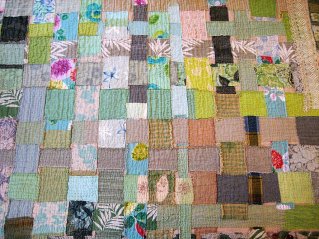
What is “normal”, anyway? Is there even a normal in America anymore? Not the “normal” that is built on stereotypes. Maybe normal has become a patchwork of bits and pieces. Maybe normal is made up of many facets that shine from different angles and radiate many colors. Maybe, just maybe, things are changing for the better.

The day when old, grumpy, white guy sees an African American QB as just a QB, it is good news. It is a sign of progress. It’s a better place to be where things like skin color matter less than action and deed.

Bits and pieces bound together to make the world a better place.

We are, in fact, made of bits and pieces of damn good stuff.

We are a patchwork of awesome.
Quilt_weaving_close_up

Leave a comment

Filed under Rants

Athletic Alphabet

I don’t like playing freshman on the varsity level in high school. Never have liked it, probably never will like it. It’s personal preference backed up by years of personal observation. I’ve too often seen a developmental flatline in the athletes who played varsity as freshman through the rest of their high school career.

Very few of these kids are better all-around varsity players as seniors than they were when first stepped onto a varsity field as a freshman. Their growth curve as an athlete always seems to stagnate in comparison to their classmates who didn’t start playing varsity until a year or two later.

Why?

I don’t really know for sure.

Maybe it’s mental. Perhaps the athlete consciously or unconsciously feels they have achieved their destination and don’t need to get any better. The “I HAVE ARRIVED” syndrome.

Maybe it’s physical. The athlete was an early-bloomer whose later-developing peers were able to surpass them.

Most likely it is theses athletes don’t ever learn their Athletic Alphabet.

Huh?

The Athletic Alphabet is the collection of basic things an athlete needs to learn in their sport. Technique, playbook, physical tools, intensity, motivation/drive, execution, experience, plus many other things are the collected in the alphabet.

I am a much better developmental coach than I could ever be as a varsity head coach. My strength was in the development of athletes by making the athletes realize they need to get better every day. When the athlete would achieve their goaI, I would pat them on the back and then turn up the pressure with a new, more loftier, goal.

I tried to get them to understand the importance of a step by step approach to being a competitor AND pounding it into their young, teenage heads this step by step approach never stops. There is always someone out there better than you are. Never be satisfied being the best on your team or in your town.

The alphabet analogy came early in my coaching career. We were coming back from a dismal freshman football performance. I was not a happy camper on the bus. I challenged the players to invest in learning the things they needed to learn to play high school football. Learn their job on every play and learn how to do that job correctly with the techniques we developed through effort every day in practice and drills.

I told them their middle school football experience taught them only the letters A, B, and C. They needed to start learning more letters because what the hell could you spell with only an “A”, a “B”, and a “C”?

Cab. That’s it…one word! Cab.

You can’t get very far in life knowing only the word, “cab”, can you?  

Even if that one word or that one thing you can currently do is pretty damn good, it is not nearly good enough. If you learn how to use all 26 letters in the alphabet, though, you can make any word. Armed with the whole A thru Z in your arsenal, you can create eloquent sentences and communicate effectively with others.

As an athlete, you need to learn, develop and master the basics of a sport before you can be highly competitive at that sport. In sports, you need the whole Athletic Alphabet to fill your potential.

Don’t be satisfied.

Don’t settle for someone just giving you a spot on the hill. Strive (and do the requisite work) to be KING OF THE HILL.

There is no such thing as “good enough”.

The ultimate competition is with yourself.

There is only you and your potential.

Never stop getting better.

photo (12)

Leave a comment

Filed under Coaching, Rants, Training

Name On The Front

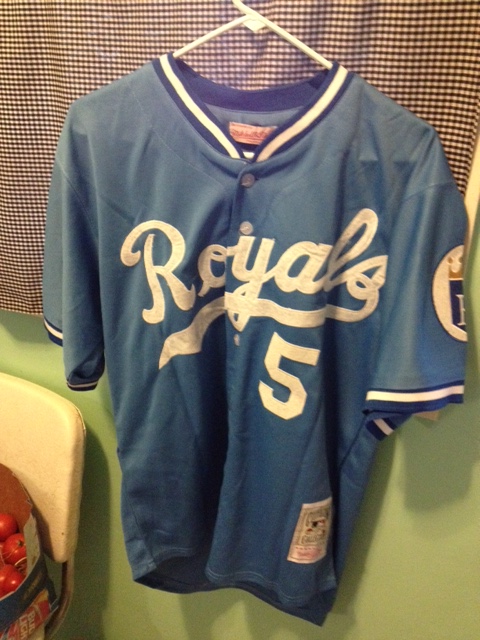
You may or may not have heard, but the Kansas City Royals won the 2015 World Series! They out-hustled, out-worked, out-scouted, out-played the Mets to win four games to one. I was happy. I sat in complete bliss watching the postgame celebration late Sunday night and into early Monday morning.

It was fun.

But, as my head hit the pillow a little after 1:00 AM on Monday, November 2, 2015, my thoughts shifted to the one question. That one question that always haunts a coach, “How do we get better?”

In the Kansas City Royals case, “How do they keep winning into 2016 and beyond?”

If you’re looking for a happy, blue-Kool Aid-infused blog post about how awesome everything is and how we should keep the train on the track as is, I apologize in advance. You are going to be pissed off at old Coach Hays. This is going to be a rant about how we can leverage this current success into a long-term success by focusing on the stale, overused team sports saying about playing for the “name on the front of the jersey”.

The secret to the Royals future success and with the associated continuance of your fandom needs to be grounded in this. We need to be Royals fans. Not just Gordon fans, not just Hosmer fans, not just Cain fans, and not just Perez fans. We need to cheer like crazy for the guys on the roster, the guys who go out and play the games every day. AND we need to avoid falling in love with the individual over the team.

Small market or mega-market, professional sports teams have to be smart about how, when and where they spend money. The mega-markets can afford mistakes on long-term, high dollar contracts. The small markets cannot. They have to be willing to part ways with current players and/or parlay a current start into two or three future stars.

That is what I believe Dayton Moore’s as a general manager lies. Don’t get bogged down in heavy, long-term contracts at the expense of your future. Be consistently great by being an organization consistently evolving.

  • Acquire talent.
  • Develop talent.
  • Coach up the talent.
  • Put the talent in a position to win.
  • Deal talent.
  • Repeat.

But, this is tough. It’s tough as a GM to pull the trigger. Okay, you short memory people, remember how ticked off you were last year when they let Billy Butler walk to the A’s. Remember?

The Royals have built an exceptional system under Dayton Moore. It is something I never could or would have believed the Glass family would have committed the resources to a decade ago. They have great scouting on both the talent and game front. They have great assistant coaches and minor league coaches (I forego inclusion of head coach Ned Yost in this list as his greatest asset to the organization is allowing people around him to do their jobs.). They have tapped into Latin America like few other teams did to mine talent.

In short, I trust this management to compete.

Compete.

Is that all we can ask as fans?

Compete, compete, compete, and then, on occasion, tremendous things will happen as fortune smiles on your endeavors and the baseball gods sprinkle your team with greatness—like the 2015 World Championship.

Don’t be mad at either the player or the management for the Gordo’s, the Salvi’s, the Zobrists, the Hosmers and the Cuetos walking out the door. Remember, they are leaving a whole bunch of awesome memories and results in their wake.

The name on the front, people.

The “now’s” instead of the “has been’s”. The “producers” instead of the “washed-ups”.

Go, Royals!

Thank you to everyone in the organization for 2014 and 2015. It’s been an awesome ride as a fan.

Now, let’s go get 2016!

IMG_2673

IMG_2671

Leave a comment

Filed under Rants

Slingers

I am a huge fan of Malcolm Gladwell. I just like the way he thinks and researches things. He seems to be that kind of interesting person you’d like to talk to on a train ride across the midwest. Like I said in the last post, he might be the actual, living Most Interesting Man In The World.

One of the first articles from Gladwell I read was The Physical Genius (The New Yorker, August 1999). In the article he wrote about advanced gestalt psychology development and vision in great athletes, like Wayne Gretsky and Tony Gwynn, a musician (Yo Yo Ma), and a neurosurgeon, (Dr. Charlie Wilson). These gestalt-exhibiting athletes are able to see and perceived the whole as more than just the collective sum of the parts. Brilliant and thought-provoking stuff. 

In his book,  DAVID AND GOLIATH: UNDERDOGS, MISFITS, AND THE ART OF BATTLING GIANTS, Gladwell explores the underdog and how the underdog often succeeds by taking advantage of what the “giant” sees as disadvantages. Below is a link to a video of Gladwell talking about his spotlight example in the story of David and Goliath. It is well worth a few minutes of your time to watch and listen to this Ted Talk about David and Goliath. He talks about how David took advantage of his slingshot skill to beat the intimidating giant Goliath. The value of a “slinger” is explained in detail. At the very minimum, you will leave this video with a whole new viewpoint about a Bible story we all thought we knew.

Too many people look at things like King Saul:

  • Be like everyone else
  • Operate like everyone else
  • Stick to the convention.

Because of who we ARE, we have to approach things differently. Like I’ve mentioned more than a few times before, we aren’t big, we aren’t particularly fast, we aren’t incredibly naturally talented, but we are who we are. We have to approach things from a non-conventional direction in order to develop into a successful team with the ability to slay the giants we faced. We developed our kids to be SLINGERS to battle the giants. Mobile, agile and able to hit the opponent like a cannon shot all game long.

The successes we had almost always lined up to the times we held tight to the David philosophy and tailored everything to that particular group of kids. Our failures more often than not came when we tried to squeeze square pegs into the round holes of convention. Instead of forcing these kids into our conventions, we should have been kicking down the round-holed-wall and rebuilding it to the necessary specs fitted for the current players.

Now, where’s my slingshot?

1 Comment

Filed under Coaching, Rants

Going Pro

I’ve had a lot of my athletes go pro. Seriously, look it up. It’s absolutely true.

It’s just that none of them have gone pro playing sports.

They are professionals, nonetheless.

  • Farmers
  • Ranchers
  • Teachers
  • Soldiers
  • Engineers
  • Park rangers
  • Firemen
  • Pilots
  • EMT’s
  • Doctors
  • Coaches
  • Landscapers
  • Linemen
  • Mechanics
  • Recreation specialists
  • Nurses
  • Construction workers
  • Fence builders
  • Bankers
  • Salesmen
  • Laborers
  • Entrepreneurs

And the list goes on and on.

They are successes in their own stories.  They make me proud to have been their coach. No win, no matter how big it seemed at the time, matches the joy of observing these young men as husbands, fathers, and fine adult citizens.

I’ve coached kids who were (are) borderline brilliant. I’ve coached kids who had many adults in their teenage lives who thought they were borderline criminals. Except for a few rare outliers, I liked them all. Except for a few outliers, I believed in them and believed ALL of them would grow up (eventually) to become fine adults. They have.

Sports are great. Enjoy them while you still have the opportunity to participate. Compete within yourself to be the best you that you can be. But, please, please, please, never forget sports are a first step in your developing life, not the last step.

It gets better from here. I know this may be hard to believe, but it’s true.

Trust me on this one, kids.

800px-NFL_Draft_2010_stage_at_Radio_City_Music_Hall
mockdraft

Leave a comment

Filed under Coaching, Rants

The Youth Sports Conundrum

Sometimes I speak my sports mind.

Sometimes I tell people the “truth” on sports as I see it.

Sometimes this gets me in trouble.

Recently, I was asked at our youth baseball association meeting if I was excited as a former high school level coach to see all these local kids playing youth club baseball. I thought for a moment, looked at the floor trying to think of a politically correct way to answer this question.

I couldn’t—so I spoke the sports truth, “Yes…and NO!”

“Yes” because it’s great to see kids playing baseball, but “NO!” because I don’t think you should ever approach youth baseball for the purpose of someday having your dozen or so kids all becoming high school stars.

Eyes widened. Jaws fell open. I quickly tried to elaborate that, as I high school level coach, I’d prefer to see kids enter the high school program armed primarily with a love for the sport and the ability to throw and catch. There will be attrition. Even in the best case scenario, only about half of those dozen kids who play on a youth team will probably still be playing in their later high school days.

Kids will change, their bodies will grow and shift by the time they reach high school. If a kid has that love and passion for the game, I can teach them (or re-teach them) as they enter the high school program and mold them into the players best suited for their skill set. These kids will put the hours of hard work needed to be a solid player. They will use their love of the game to push through tough times and tough situations to get better every day.

That is what I want to see out of a youth sports program. Help kids love the sport, teach them the basic fundamentals of the sport, and give them the basic skills tool set to be successful. All the other pieces of the puzzle will fall into place with hard work and repetition.

Youth sports are not a minor league for high schools. The two bottom things on the list of priorities for a youth sports program are the emphasis on winning above development and a philosophy of making future high school stars. Most of the problems that grow out of youth sports are rooted in these two negative prioritizations. The “burnout” problem so often discussed as a major problem with youth sports most often grows out of these two philosophical approaches.

Youth sports exist to teach kids the fundamentals of a sport. Youth sports programs should teach the kids how to play the game, teach kids about the value of teamwork and the value of competition.

Above all else, youth sports need to teach kids to enjoy the sport and the opportunity to play.

Play hard and have fun!

Campbell Infield

Leave a comment

Filed under Coaching, Rants

Football Is NOT Life: 2015

I wrote the blog post, Football is NOT Life, in 2010. I re-post it every year at the start of the season as a reminder to myself and to you. When first published, I was two years out of my bad breakup with football coaching. The obsession with coaching the sport was waning and life, my real, actual life was beginning to seep back into its position of dominance in my psyche. It’s hard to explain if you’ve never experienced it. Football coaching— coaching, in general—has a tendency to take over the way one thinks.

Everybody wants to win, it is written in the marrow of our bones. However, not everybody can win and we need to remind ourselves there are worse things in life than losing a game of football, no matter how much it hurts.

Respect the kids and respect the coaches. Parents, be your child’s biggest fan, not their biggest critic. Respect the work and effort everyone invests, no matter how disappointing the outcome is. Use games and sports to build character in our young people, not to expose poor character.

Please read this post and think about it.  If it helps, then pass it on to the next person before we adults take all the fun out of this great game.

(originally posted on September 21, 2010)

FOOTBALL IS NOT LIFE 

I know this may sound highly irrational and maybe even a bit hypocritical coming from me, but contrary to what the t-shirts say, FOOTBALL IS NOT LIFE!.

Football is the greatest damn game ever invented, but it is not life.  Football is intensity, competitiveness, sportsmanship, and violence, but it is not life.  Football requires immense strategy and teamwork, but it is not life.  Football provides education, drama, entertainment, and a solidarity which binds communities, campuses and fan bases throughout the nation, but it is not life.  Football is universal, it is played by presidents and paupers, genius, and idiot, big and small, aggressive and passive, rich and poor, but it is not life.  Football should not be all consuming.  Football should not be the top priority.  I know this for a fact, I have tripped and fallen down this hole before (see my story).

Football can be like a package of Oreos, both need to be consumed in moderation.  You’ve been there, you opened the package of Oreos and left it out on the counter.  Sooner, rather than later, the whole package is gone and you don’t feel so good.  But if you open that package and only take a couple of Oreos and place the package in the cupboard for a later date, they not only taste spectacular, but last and satisfy for days upon days.  Football is not life.  It should be taken in moderation and/or with a tall glass of milk, (preferably 1% or skim).

Football has it’s proper place, it has its proper perspective. Football is not the primary reason for the existence of high schools, colleges, and universities. Yes, football is important.  It is important to compete.  It is important to work hard to be the best coach or player you can be.  It is important to compete with purpose, pride, and passion.

I think Coach Paul Lane said it best with his prioritization of the sport,

“Faith, family, and football is a game we are lucky enough to play.”

Football is important to me.  But football is not life.  Let’s work to keep football in its proper perspective and place. I would hate for you to get a football belly-ache.

Unruh from scoreboard

Leave a comment

Filed under Rants

Be Indelible

I used to confuse the word indelible with the word inedible. So when I’d see a permanent marker with “Indelible Ink” printed on it, I’d think, “No $#@!, Sherlock! Who would want to eat a Sharpie anyway?”

Now I’m slightly smarter…well, enough smarter to know that inedible and indelible are completely different things. Indelible means to make a lasting mark—it means that something will not be forgotten or removed.

I like that.

Indelible.

I want to coach and develop indelible athletes.

I want to produce indelible writing.

I want to make an indelible impact on my communities.

I want to be indelible.

MarkerParticipate or Compete?
As an athlete, or as part of any organization, which are you choosing to be?

The participant shows up most of the time and, more often than not, jumps into the wagon to go for the ride.

The competitor is the one who pulls the wagon and makes everyone around them better. The competitor is the very definition of indelible. The competitor is never satisfied with their current efforts and performances. A competitor does the things the participator refuses to do.

What does a competitor do? Well, in high school sports, in my opinion, the competitor is the athlete who puts in the extra offseason work to improve at least 4 or 5 days a week.

  • Baseball – 50 throws & catches, 50 swings, 50 ground balls/pop-ups.
  • Football – Explosive power development, 25 starts and footwork reps, routes, and throws.
  • Basketball – 250+ shots a day, ball-handling skills, explosive power development.
  • Tennis, golf, volleyball, etc. – All need skills reps

All In
I am a firm believer in playing multiple sports and being involved in multiple activities, hobbies, etc. But, the work and the commitment to all these activities requires a monumental effort. The key is to, as the wonderful Mrs. Hays often says about life and work and parenting, “Be present.” Pay attention to the needs of the situation staring you in the face. Focus 100% on the task at hand and not 60% with the other 40% worrying about the next activity on you agenda.

Be Present = Go All In

Whatever you do in life, go all in. Jump into the fray feet first with a fully-focused effort. Don’t straddle the border with one foot in and one foot out. Hit the accelerator and give your drive and desire full throttle to make your world a better place.

That is the very meaning of indelible.

Go all in.

Compete, don’t just participate.

Leave a lasting mark.

Be Indelible

1 Comment

Filed under Coaching, Rants, Training

Herding Cats

Sometimes coaching high school kids feels akin to an attempt at wrangling a dozen cats out the backyard gate while avoiding a fully-functioning sprinkler head. In other words…utter chaos.

A team and each individual kid on that team needs direction–they need to know where they are supposed to go and some idea of how to get there. One of the knocks from I hear way too often from coaches is today’s kids don’t care, they don’t “buy” into what the coach is selling.

The truth is, today’s kids are probably brighter and sharper and have an increased problem-solving capacity than we ever did. They want to know what you are asking them to do, why you are asking them to do it, and where is it going to take them. Kids today have very well-honed bullshit meters.

They are skeptical and need to be convinced the plan and vision you present to them is the real deal. Where us grumpy, old folks used to accept what we were given and did what we were told, these kids want to know the bigger picture and see what is beyond blind acceptance. And they have the collective power of the internet and social media for information.

One of the first coaching lessons I learned from Paul Lane in football and Rex Carlson in baseball was to be upfront and be honest. These two fine coaches taught me the athletes cannot read my mind and need to be told and shown what I need them to do. Tell the kids what we are going to do, why we are going to do it, and how it will make them better as an individual and as a team.

Another knock against the kids is they just don’t get it. “They spend too much time sitting in front of their video games or have their faces glued to their phones.” You all know the attitude. The grumpy old man, stay-off-my-lawn you juvenile, drug addicted, delinquent” attitude we often have toward the habits of youth.

Kids today want a vision. They want (and desperately need) someone to recognize their potential and help them map out a path to achieve it. I’ve said this a hundred times, but everybody wants to win. Everybody wants to be a success. They just need the plan and the guidance.

That’s what the successful coach is able to do.

Dream the plan.
Devise the plan.
Sell the plan.
Implement the plan.

And then drive the individual and the team in the right direction and never let them take their eyes off the prize.

Just like successfully herding a dozen of the cutest, most well-behaved cats out of the back yard, your athletes will eventually find their goal—but you’ll always end up worn to a frazzle and sporting a few fresh scratches.

Vision.
Direction.
Communication

The keys to the kingdom.

“Cats on Beach” by haitham alfalah – haitham alfalah. Licensed under Attribution via Wikimedia Commons – http://commons.wikimedia.org/wiki/File:Cats_on_Beach.JPG#/media/File:Cats_on_Beach.JPG

Leave a comment

Filed under Coaching, Rants

Rowing or Riding?

Which athlete are you? The one who rows the boat or the one who simply rides along?

I read an interesting blog post today from Seth Godin called Along for the Ride that reminded me of this aspect of team sports dynamics.

“How long have you been along for the ride? When is your turn to actually drive?”

As a player or a coach, these questions should be a constant in your development.

  • When is it your time to step up?
  • Did you miss it?
  • Did you ignore it?
  • Do you want nothing to do with it?

We are seeing an increase in younger athletes getting on the varsity sports field. Freshman, sophomores are being thrown into key team roles.  I have also noticed a trend where these same young players are thrown into the fire often don’t seem to get much better.

They are as good when they walk out the door as they were when they walked in.

These kids get put on the boat as riders and never develop into rowers.

Athletes need to eventually take the responsibility of driving the team train. Experience and leadership can’t ride the train. Experience and leadership need to be the drivers.

It’s your turn to step up.

It’s your turn to row.

Be what you are meant to be.

Out work. Out hustle. Out perform. Every day.

1 Comment

Filed under Coaching, Rants, Training