Category Archives: Training

A Look Back: Hell Week Thursday

NOTE: This is a look in the rear view mirror at what we used to do for the first week of summer conditioning. It was dubbed “Hell Week” by participants. Thursday rolled around, our systems have been duly shocked and now it’s time to start the process of building a team attitude. Try to instill the importance of being the best you that you can be for the good of the team. Be part of the whole, not the whole part.

If there was an easier day to Hell Week, it had to be Thursday.  Speed work, low volume/high intensity, following our motto of getting faster by running fast,  then finishing the workout with agility cone runs.  The team building activity of having a blindfolded returning letter man being guided by underclassmen teammates through an obstacle course was a thing of beauty.  If, of course, you are the kind of person who considers a blindfolded, 250 lbs. offensive lineman (with a somewhat nasty disposition) trying to climb steps under the guidance of several scared-to-death-sophomores a thing of beauty.

Hell Week 2005

Thursday

Winning is not a sometime thing, it’s an all the time thing.  You don’t win once in a while; you don’t do the right thing once in a while; you do things right all the time.  Winning is a habit.”         -Vince Lombardi

6:30-6:40  Attitude and Self-Improvement

Attitude
1. “I’ll do it” instead of “I’ll try”
2.  Overcome the urge to quit or to not even try at all.

Self Improvement –identify weaknesses and improve

6:40-6:45  Stretch Runs

6:45-7:00  Sprint Ladder
10-4, 20-4, 40-2, 100-2   


7:00-7:15 Cut Circuit:  4 groups/4 flat cones per drill
1. Down and Backs – 3x
2. U-Turns – 3x Right and 3x left
3. Zig zags – 3x
4. Cut Drill – 3x down and 3x back

7:15 Hold the Rope – Freshman Read
Blindfold relay race.
Returning letterman blindfolded with team partners talking them through course.

Breakdown

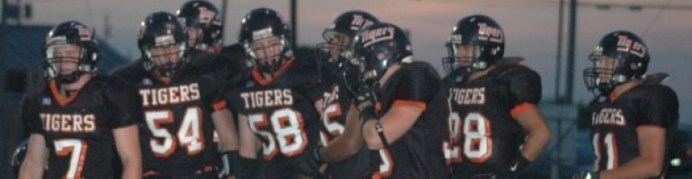
Tigers 2006 runout


1 Comment

Filed under Training

A Look Back: Hell Week Tuesday & Wednesday

NOTE: This is a look in the rear view mirror at what we used to do for the first week of summer conditioning. It was dubbed “Hell Week” by participants. I had a local businessman tell me once that he knew when we had started summer conditioning each year because he’d see the boys walking around town like old men because they were so sore. I liked that. And in a couple weeks, the boys would start liking the athletic transformation their bodies would go through.

Tuesday of Hell Week was a day to actively recover from the shock of Monday.  Emphasis was put on warming up with our dynamic routine forcing oneself to obtain a full range of motion in the muscles.  Time to stretch out  the things we spent yesterday tightening up.  But don’t get confused thinking Tuesday was a vacation day.  It was simple, but it was hard.  Many kids this year still fondly remember the lunges up and down the hill at all possible angles.  The hill at Clay Center Community High School was (and still is) a real SOB.

Hell Week 2005

Tuesday

Winning is not a sometime thing, it’s an all the time thing.  You don’t win once in a while; you don’t do the right thing once in a while; you do things right all the time.  Winning is a habit.”         -Vince Lombardi

6:30-6:40  5 P’s  Purpose, Pride, Passion, Persistence, Performance

6:40-6:45  Stretch Runs

6:45-7:00  Hill Series (6 lines)
Runs- Forward and Back
Bear – Up and Down
Lunge Walk – Forward and Back, Diagonal Up & Down, Left and Right Across
Duck Walk – Forward, walk down

7:00-7:15  Four Corner Drill

7:15 Hold the Rope – Juniors Read
Team Cage Carry
1.  Seniors one lap.

2.  Returning lettermen, everyone else sits once then sit on cage.

3.  Whole Team

7:20  Abs – 50 Sit Ups

Breakdown


Wednesday of Hell Week, the day after the day after soreness is the worst.  Kids would be so sore they wouldn’t even be whining.  They would think it would be a somewhat easy day since we were repeating the body weight circuit.  That is how a teenage boy thinks, it HAS to be easier today than it was Monday, doesn’t it?  But, with the soreness being worked out,  it was just as hard.  Then the hammer comes down in the form off upper body plyometrics,  military push-ups, side to side push-ups, wheelbarrows, push-up walk, walk the plank and around the world push-ups.  Whoa, makes me hurt just thinking about it!

Hell Week 2005

Wednesday

Winning is not a sometime thing, it’s an all the time thing.  You don’t win once in a while; you don’t do the right thing once in a while; you do things right all the time.  Winning is a habit.”         -Vince Lombardi

6:30-6:40  Performance Triangle: Nutrition, Hydration and Rest

6:40-6:50  Stretch Runs

6:50-7:05  Body Weight Circuit

Jumping Jacks 50
Push-Ups 20
Crunch Series – 10 center, right, center, left, center
Lunges- 10 each leg
Navy Seals- 10
Sit-Ups- 20
Squat Jumps- 20
Push Ups Side to side- 10
Walk the Planks- 3 down and back
Split Lunge Jumps- 12
Crunch Series- 10 center, right, center, left, center
Squat and Touch- 15
Walkouts- 10
Sit Ups- 20
Around the Clock Lunges
Supermans- 2 x 30 seconds

7:05-7:15 Upper Body Plyos
1.  Military Push-ups, Side to Side Push-ups.
2.  Wheelbarrows, Push-up Walk
3.  Walk the Planks, Around the World Push-ups

7:15 Hold the Rope – Sophomores
Inverted Wall Hold

Breakdown

Tigers @ Royal Valley 2008


Leave a comment

Filed under Training

A Look Back: Hell Week Monday

NOTE: This is a look in the rear view mirror at what we used to do for the first week of summer conditioning. It was dubbed “Hell Week” by participants. I always wanted to start the summer program as soon as possible after state track. Wait any longer and the high school kids slip into bad sleep and exercise habits that take ANOTHER full month to break. Another full month we are falling behind the competition. My belief was (and still is) that every day of training is vital and that one day wasted puts you three days behind.

Monday of Hell Week was designated as a “wake your body up” workout.  Not easy, but not too hard, just hard enough to make the kids conclude they needed to get to get in shape.  Below is the workout plan from 2005.  I think we had nine trash cans in the vicinity of the CCCHS gym and by the end of the second round of body weight circuit, they all had a young potential football player leaning over them.  Needless to say, the bodies were awake.

Hell Week 2005

Monday

Winning is not a sometime thing, it’s an all the time thing.  You don’t win once in a while; you don’t do the right thing once in a while; you do things right all the time.  Winning is a habit.”         -Vince Lombardi

6:30-6:40  Expectations
Make yourself better every day this summer…have fun and get better.
We need everyone to contribute in a positive fashion on and off field.
Find your niche and become great at what you do.

STAND TALL RULE
No bending over, sitting, leaning, kneeling…EVER
Bending over physically = Bending over mentally

6:40-6:50  Stretch Runs

6:50-7:05  Body Weight Circuit

Jumping Jacks 50
Push-Ups 20
Crunch Series – 10 center, right, center, left, center
Lunges- 10 each leg
Navy Seals- 10
Sit-Ups- 20
Squat Jumps- 20
Push Ups Side to side- 10
Walk the Planks- 3 down and back
Split Lunge Jumps- 12
Crunch Series- 10 center, right, center, left, center
Squat and Touch- 15
Walkouts- 10
Sit Ups- 20
Around the Clock Lunges
Supermans- 2 x 30 seconds

7:05-7:20 Agility Stations(~ 5min each.)
1.  Gate Drill
2.  5 Cone
3.  Full Moons/Half Moons
4.  5-10-5

7:20-7:30  Seniors- read “Hold the Rope”
Wall Sit 5 min.

cropped-tiger-huddle-20061.jpg

Leave a comment

Filed under Training

The Greatest

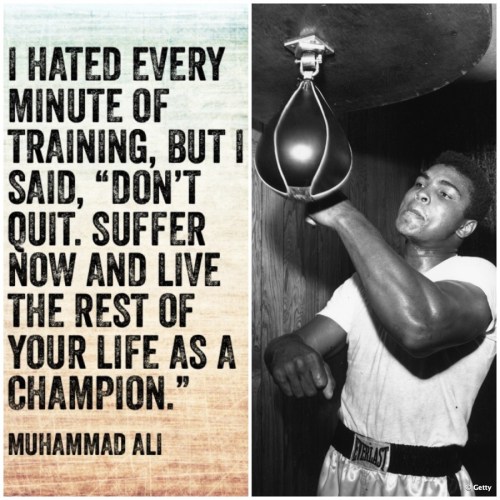
Muhammad Ali has died. The Greatest is gone.

When I was a kid, I did not like Ali.

He scared me.

Ali was a brash and loud athlete. I was a quiet, shy kid-athlete. I didn’t understand him. Besides, he beat my boxing heroes Joe Frazier and the young George Foreman. Loud and boisterous beat stoic and quiet.

I’m sure there was also the religious aspect, Muslim. Which, as a young Catholic school kid, I had zero understanding of in the 1970’s. There was a political aspect, which, as a young, middle-class white kid on the fringe of a large, metropolitan area, I had very little understanding of.

It wasn’t until I saw an episode of my can’t-miss Saturday sports show hosted by Charlie Jones that my whole worldview on Muhammad Ali shifted. The majority of the show highlighted Ali’s training regimen. It was impressive. The amount of work and the intensity and focus on which he approached training converted me to a fan right there.

And of course, as the camera rolled so did Ali’s mouth. I barely noticed it.

For the first time, I saw Muhammad Ali for what he truly was—the greatest. The work it took on a daily basis to make his time in the ring appear completely effortless and natural as he floated  “like a butterfly and stung “like a bee”.

I saw a man doing 3000 sit-ups in a day before, during, and after sparring/running/speed bag/heavy bag work. About one-third of those being done on a trainer pounding on his torso with boxing gloves as he completed each rep. That image never left me.

Memories. Good and bad.

Memories of a day and a sport long gone.

Memories of Muhammad Ali.

The Greatest.

tumblr_n3vbsbhZrh1rbuw7do1_1280


Leave a comment

Filed under Training

Getting Technical

I read an article about a 6’ 8” college basketball player who decided this spring to switch and play football at the same college. The football coaches were working to refine his big man basketball skills toward the goal of being an offensive tackle. It was a very interesting article and kind of reinforced my belief there are certain common physical movements which exist between sports.

The head football coach made a comment that the staff didn’t mind working with such a green athletes because many of their actual football recruits also show up with no, or very little, fundamental technical skill from the high school level. I about choked. It made me mad at first, but then I remembered how many times over the past five or so years I’ve noticed this lack of fundamentals in action at high school football games I’ve watched.

How can this be? Is teaching solid technical proficiency becoming a lost coaching art?

Fundamental technique is the building block on which winning programs are built. In baseball and football coaching, everything, for me, revolved around developing solid technical skills. Being sound technical offensive and defensive linemen allowed us to overcome a general lack of size, speed, and athleticism in order to compete almost every time we stepped on the field.

Years ago, one rival baseball coach asked me once how it was that our kids all seemed to be able to drive the ball on the line to all fields. I told him the truth. I told him we teach front-hand hitting technique and every, single thing we do in practice, in the cage and on the field is geared toward developing a consistent technical swing. He looked at me like I was nuts, shook his head and laughed as he walked back to his dugout.

At football coaching clinics, I always got a kick out of the “progressive” coaches who talked nothing but schemes and theories while laughing behind the old, highly successful coaches who talked about fundamentals and drills and perfection. Simple science.

By Snyder, Frank R. Flickr: Miami U. Libraries - Digital Collections [No restrictions or Public domain], via Wikimedia Commons

By Snyder, Frank R. Flickr: Miami U. Libraries – Digital Collections [No restrictions or Public domain], via Wikimedia Commons

Perhaps it is too simple for some to understand.

It is not magic.

It is not simply innate ability.

It is hard work. And teaching. And holding the line. And being strict. And demanding. And sometimes being completely unlikeable to the players.

It is pushing to get better every day.

Technique matters. It’s not sexy or shiny or going to make a big splash, but…

Technique matters.

It gives you an advantage. Good fundamental technique and good preparation give the advantage of an extra step. In sports, even at the lowly high school level, this single step can be the difference between winning and losing. Being fundamentally sound gives your team the edge over an opponent of equal or lesser quality and levels the playing field somewhat against a superior opponent.

Make the commitment. Get technical and get better.

By Royalbroil (Own work) [CC BY-SA 3.0 (http://creativecommons.org/licenses/by-sa/3.0)], via Wikimedia Commons

By Royalbroil (Own work) [CC BY-SA 3.0 (http://creativecommons.org/licenses/by-sa/3.0)%5D, via Wikimedia Commons

Leave a comment

Filed under Coaching, Training

Under Your Skin

(This is my 350th post on The Coach Hays blog since I first started this dog and pony show in 2009. To celebrate, I thought a proper rant would be fitting. Thanks for reading and I hope I can keep going for at least 350 more.)

What makes a good athlete? What makes a team successful?

It’s about commitment. It’s about grinding through the work and the repetition. It’s the footwork drills. It’s the extra swings. It’s taking the shots after practice or perfecting your jump technique.

It’s going beyond what the practice and game plans say you should do. It is going beyond what your supporters say and further than your biggest detractors could ever dream was possible.

It’s the competitor’s mark to be permanently worn under your skin.

It’s a mark you wear with pride. As an individual. As a competitor. As a group. As a team. As a family.

  • Not a hashtag.
  • Not a poster hanging on the wall.
  • Not a program t-shirt.

The mark of a winner is burned on your heart. It seeps into every nook and cranny of your competitor spirit.

You do the work necessary. And then you do it again.

Look in the mirror. What do you see? If you don’t like the results you are reaping, look at what you are sowing.

  • Are you putting in the work? Input = Output.
  • Are you blaming instead of improving?
  • Talking instead of performing?
  • Whining instead of winning?

If you don’t like where you’re at, then take the steps to move forward. Sow the good seed.

Ask yourself, “Am I along for the ride or am I going to put this team on my shoulders and rise to the top?”

Commit. Improve. Do the work.

Hard work is the magic.

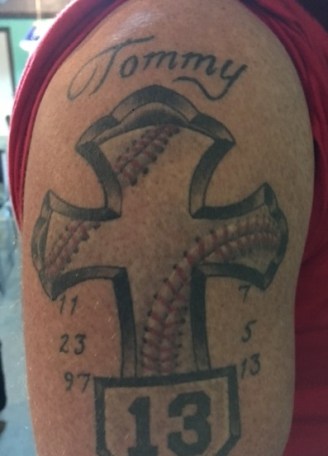
Wear the mark of a competitor. Decide if your mark is a temporary tattoo or if is it written in your marrow.

Be dependable. Be consistent. Be a rock.

Wear your commitment under your skin. As I’ve said before, Be Indelible.

Permanent and unshakeable. 

TLWtattoo

Photo used with permission. #TLW13

Leave a comment

Filed under Coaching, Rants, Training

Get a Grip

Have you signed up for the FREE Baseball Excellence Tip of the Week? No? What’s keeping you? If you are a baseball coach, a baseball parent, or a baseball player, regardless of age (the younger your player, the better actually), get over to their website now and sign up HERE. It’s awesome and you will thank old Coach Hays later. They are my go-to source for teaching the game of baseball.

I have become a lover of Monday mornings. Hate me if you please, but want to guess why? Monday morning is when the email Tip of the Week arrives from Baseball Excellence. See, what have I been telling you? Baseball makes life better.

This past Monday’s tip was a topic near and dear to my heart…gripping a baseball bat. It taught me a thing or two and gave me the idea for a series of blog posts on hitting.

Over the past year, I have watched thousands and thousands of swings from T-ball aged kids up through high school. Over the next few months, I am going to attempt to address some of the issues I consistently saw in these swings. We’ll start at the start and focus on gripping the bat.

Grip

First things first. Take your bat and lay the barrel on the ground in front of you and lean the knob against your body. Reach down, grip the bat and lift the barrel up and out to eye-level. Next, bring the barrel of the bat to your back shoulder and look down at your knuckles. The middle knuckles should be pretty close to being aligned with the middle knuckle of top hand being aligned just below the middle knuckle of the bottom hand. This is a proper grip.

The handle of the bat should be gripped where the fingers join the hand and not in the palm. It doesn’t matter if your young player is 8 or 18, teach this and teach this and demand this from day one. A palm-gripped bat is a slow, weak bat. It may work fine in T-ball, it may work fine in coach/machine pitch, and it may get the hitter through their early years of kid-pitch baseball, but it will not work well as they mature. They will struggle to hit the ball as an early teen player and begin to lose interest in the game. I know I’ve said this before, but the numero uno reason kids quit playing baseball as they enter their teenage years is struggling to hit a baseball as pitching gets better. Hitting a baseball is one of the true joys of this great game.

Waggle

Once the proper grip is addressed and practiced over and over with the above grip test drill, the hitter needs to learn to keep this proper grip loose and relaxed. You hit a baseball hard through bat speed, not strength. Bat speed is generated through good mechanics and a short, loose swing. Gripping the bat to tight is a MAJOR problem I see in hitters of all ages. If your hitter has a slow swing that floats through the zone, there is probably a pretty good chance, the hitter has a white-knuckle grip on the bat.

One way to help a hitter keep a loose, relaxed grip on the bat handle is to teach them to waggle, or move, the bat around in their stance. Bat waggles come in all shapes and sizes. It is the one thing every hitter can personalize and develop their own style. Some hitters shake the bat back and forth. Other hitters make small circles. Hall-of-Fame player Cal Ripken, Jr. had the famous clarinet fingers as his waggle. Whatever works to keep the grip on the bat loose and ready to explode.

More on grip and swings in the next post, but for now…some baseball homework!

Homework: Practice grabbing the bat with the proper grip. Get in your batting stance and find a comfortable waggle that allows you to move the bat around while keeping your grip relaxed and loose.

Here are some pictures of my natural bat grip alignments.

Bottom Hand Grip Align

Bottom Hand Grip Alignment


Top Hand Grip Align

Top Hand Grip Align


Bottom Hand Grip

Bottom Hand Grip (when my top hand is on the bat my bottom thumb rests on the handle.)

Leave a comment

Filed under Coaching, Training

Athletic Alphabet

I don’t like playing freshman on the varsity level in high school. Never have liked it, probably never will like it. It’s personal preference backed up by years of personal observation. I’ve too often seen a developmental flatline in the athletes who played varsity as freshman through the rest of their high school career.

Very few of these kids are better all-around varsity players as seniors than they were when first stepped onto a varsity field as a freshman. Their growth curve as an athlete always seems to stagnate in comparison to their classmates who didn’t start playing varsity until a year or two later.

Why?

I don’t really know for sure.

Maybe it’s mental. Perhaps the athlete consciously or unconsciously feels they have achieved their destination and don’t need to get any better. The “I HAVE ARRIVED” syndrome.

Maybe it’s physical. The athlete was an early-bloomer whose later-developing peers were able to surpass them.

Most likely it is theses athletes don’t ever learn their Athletic Alphabet.

Huh?

The Athletic Alphabet is the collection of basic things an athlete needs to learn in their sport. Technique, playbook, physical tools, intensity, motivation/drive, execution, experience, plus many other things are the collected in the alphabet.

I am a much better developmental coach than I could ever be as a varsity head coach. My strength was in the development of athletes by making the athletes realize they need to get better every day. When the athlete would achieve their goaI, I would pat them on the back and then turn up the pressure with a new, more loftier, goal.

I tried to get them to understand the importance of a step by step approach to being a competitor AND pounding it into their young, teenage heads this step by step approach never stops. There is always someone out there better than you are. Never be satisfied being the best on your team or in your town.

The alphabet analogy came early in my coaching career. We were coming back from a dismal freshman football performance. I was not a happy camper on the bus. I challenged the players to invest in learning the things they needed to learn to play high school football. Learn their job on every play and learn how to do that job correctly with the techniques we developed through effort every day in practice and drills.

I told them their middle school football experience taught them only the letters A, B, and C. They needed to start learning more letters because what the hell could you spell with only an “A”, a “B”, and a “C”?

Cab. That’s it…one word! Cab.

You can’t get very far in life knowing only the word, “cab”, can you?  

Even if that one word or that one thing you can currently do is pretty damn good, it is not nearly good enough. If you learn how to use all 26 letters in the alphabet, though, you can make any word. Armed with the whole A thru Z in your arsenal, you can create eloquent sentences and communicate effectively with others.

As an athlete, you need to learn, develop and master the basics of a sport before you can be highly competitive at that sport. In sports, you need the whole Athletic Alphabet to fill your potential.

Don’t be satisfied.

Don’t settle for someone just giving you a spot on the hill. Strive (and do the requisite work) to be KING OF THE HILL.

There is no such thing as “good enough”.

The ultimate competition is with yourself.

There is only you and your potential.

Never stop getting better.

photo (12)

Leave a comment

Filed under Coaching, Rants, Training

The Work Necessary

The Kansas City Royals are 2015 American League Champions!

The Boys in Blue are in the World Series against the New York Mets!

But a weird thing happened the morning after they won the ALCS over Toronto. Instead of waking up 100% joyful and ready to roll for the Series, I woke up thinking about two plays from ALCS Game 6 and how these two plays spotlight the value of coaches doing the work necessary for their players.

  1. When Alex Rios stole second base against David Price, a left-handed pitcher who allows unbelievably few stolen bases when he is on the mound.
  2. When Lorenzo Cain scored the game-winning run from first base on Eric Hosmer’s double down the right field line.

Both plays, at face value, look totally like big plays made through the exceptional speed and athleticism of those two athletes. But if you look closer, listen to the announcer comments, and the postgame interviews of players and coaches, you begin to see a whole different story.

True, Alex Rios and Lorenzo Cain are two incredibly gifted athletes but that is not what gave them the advantage and confidence to execute those clutch plays on one of the biggest stages of their sport.

What gave both players the edge was the hard work and analysis of the coaches and advanced scouting department.

Yeah. Coaching matters, scouting matters, preparation matters. Hard work IS the magic. Although both plays look to be just a couple of plays of guys running, the amount of time and effort—film study, the scouting report from the scouts following the Blue Jays for the past few months, transfer of that information to the player—are staggering.

Case One – Rios steals second base on a jump he takes off of the first movement home by David Price. Price is difficult to steal on. He’s left handed and although he doesn’t have a great move, he has a quick slide-step delivery which makes it hard for the runner to get an aggressive lead or jump. Scouting appears to have picked up on a tendency for him to sometimes forget about the runner and not give him a “look” when he’s going to pitch the ball to his catcher. For several pitches, he peeks to Rios before delivery to home. On this particular pitch, he doesn’t peek or look to first base and goes straight home, Rios runs on Price’s first movement and is safe with a stolen base–the VERY FIRST stolen base allowed by David Price ALL YEAR. Rios did not end up scoring, but it was a blow to the confidence level of the Blue Jays and added to the pile of things they had to think about.

Scouting, picking up on tendencies, AND being able to relay those details to the player = Makes the game looks easy.

http://m.mlb.com/video/topic/28898650/v525581583

Case Two – Royals third base coach Mike Jirshele and the scouts studied Toronto’s exceptional right fielder, Jose Bautista. They noticed he often fields a ball down the right field line and spins to throw the ball by turning his back toward the infield instead of opening up frontside where he would be able to see the infield all the time. They also noticed he almost always wheels to the blindside and throws the relay to the shortstop positioned around second base.

Coach Jirshele planned on taking advantage of this if, and when, the situation arose. Well, it arose. In fact not only were the players coached this during practices and meetings, but they were given a refresher before game six AND Coach Jirshelle revisited this with Cain and Hosmer BEFORE the inning even started since they were due to bat.

http://m.mlb.com/video/topic/135309324/v525692683

Preparation works.

As a coach, when you watch hours and hours of film or live action, you begin to see patterns. When you rewind and watch a play over and over a dozen times or more, the structure patterns emerge. These patterns become tendencies when put together and analyzed.

  • Tendencies allow a coach to focus preparation.
  • Tendencies allow a coach to focus teaching.
  • Tendencies allow a coach to give his players an edge.

The word “Coach” must be used as a verb, rather than just as a noun. 

As a coach, do the work necessary to put your team in a position to succeed.

Hard work is the magic.

OLYMPUS DIGITAL CAMERA


Leave a comment

Filed under Coaching, Training

How In The World…?

Another DAVID AND GOLIATH post on one of my favorite football coaching memories.

I learned a valuable lesson about succeeding as the underdog early in my football coaching career. I learned this from our offensive coordinator at the time, Coach Dail Smith. He didn’t sit me down and explain this lesson. It didn’t pop into my head like a light bulb of understanding. I learned this valuable lesson from a short pre-game talk at the 50-yard line of Otto Unruh Stadium with the head coach of our most bitter rival, the Marysville Bulldogs.

As the lowest coach on our program’s coaching totem pole, it was my job to remember to get the VHS trade scout tapes from the equipment box and return them to the opposing coach before the game. (Yes, back in the dark ages, the upcoming opposing coaches would meet on Saturday morning and trade game tapes from the night before and the week before. I imagine the HUDL online system is golden compared to VHS trade tapes.)

Well, I ran the Marysville tapes out to midfield to give back to Coach Warner, who I knew a bit from coaching baseball. I handed him the tapes and said hello. He takes the tapes, smiles and asks, “How in the world do you get high school kids to learn all those plays?”

I said, “Huh?”

“Your playbook must be four inches thick. How do you guys do it?”

“What do you mean?”

“When I charted your plays from these past two games,” he said, handing me our two VHS tapes. “I counted 127 different plays. How in the world…?”

I just shrugged my shoulders and bit my lip to keep from breaking out into a fit of laughter. “I don’t know, coach. I guess our kids are awesome or something.” I told him good luck and ran to our sidelines laughing like a hyena all the way.

Now, I know our kids. They are awesome kids. But they aren’t that awesome (or quite that smart). 127 plays? I still laugh about that to this day and it’s still one of my favorite memories—and coaching lessons.

Simple is better, even if it looks like a Chinese fire drill.

Coach Smith designed an offense to look and act like this big 127 separate play chaotic monster. But, in all actuality, it was a very simple, multiple-look offense. An offense which exploited the best things we did while trying to mask the things we didn’t do well.

Again, David using his advantages to compete against Goliath instead of entering into a disadvantageous matchup.

Well, you may be wondering by now how many plays Coach Smith did have in his playbook. First, I don’t think he ever made a real playbook or did so willingly. But he did scratch out the basics.

The numbers?

We had about 6-8 running plays and a handful of passing plays.

We taught the kids their job on these 15 or so plays until they knew what they were supposed to do like clockwork. Then we ran those plays out of 27 different formations we had that year. And every kid could go to those formations in their sleep because we drilled and drilled and drilled those formations in summer camp and two-a-days until they were blue in the face.

So, when our kids learned their jobs on those 15 plays and compound it with all those formations, I am sure our offense looked like this massive, complex gargantuan playbook. Something that made our opponents spend hours of scouting and practice time covering the hundreds of plays.

Using our tools to be the best we could be.

Just like David against Goliath.

Coach Smith was a wily, old fox, wasn’t he?


IMG_2636

Leave a comment

Filed under Coaching, Training