Category Archives: Training

My Ball!

Football has been on my mind lately. I know what you’re thinking, “Stop the presses! Hays never thinks about sports.” The general consensus has always been, even in the days before I coached the game, that a certain percentage of my total brain function is dedicated to football thought 24/7/365. This is different, though.

My latest football obsession has been triggered by a book (Yes, I said a book.). I’ve been reading (and listening) to Malcolm Gladwell’s book about the misconception of the underdog called DAVID AND GOLIATH: UNDERDOGS, MISFITS, AND THE ART OF BATTLING GIANTS. Gladwell is one of my favorite intellects currently walking this fine planet. Forget the grey-haired, elderly, beer-sipping character from a TV commercial, Malcolm Gladwell may truly be The Most Interesting Man In The World.

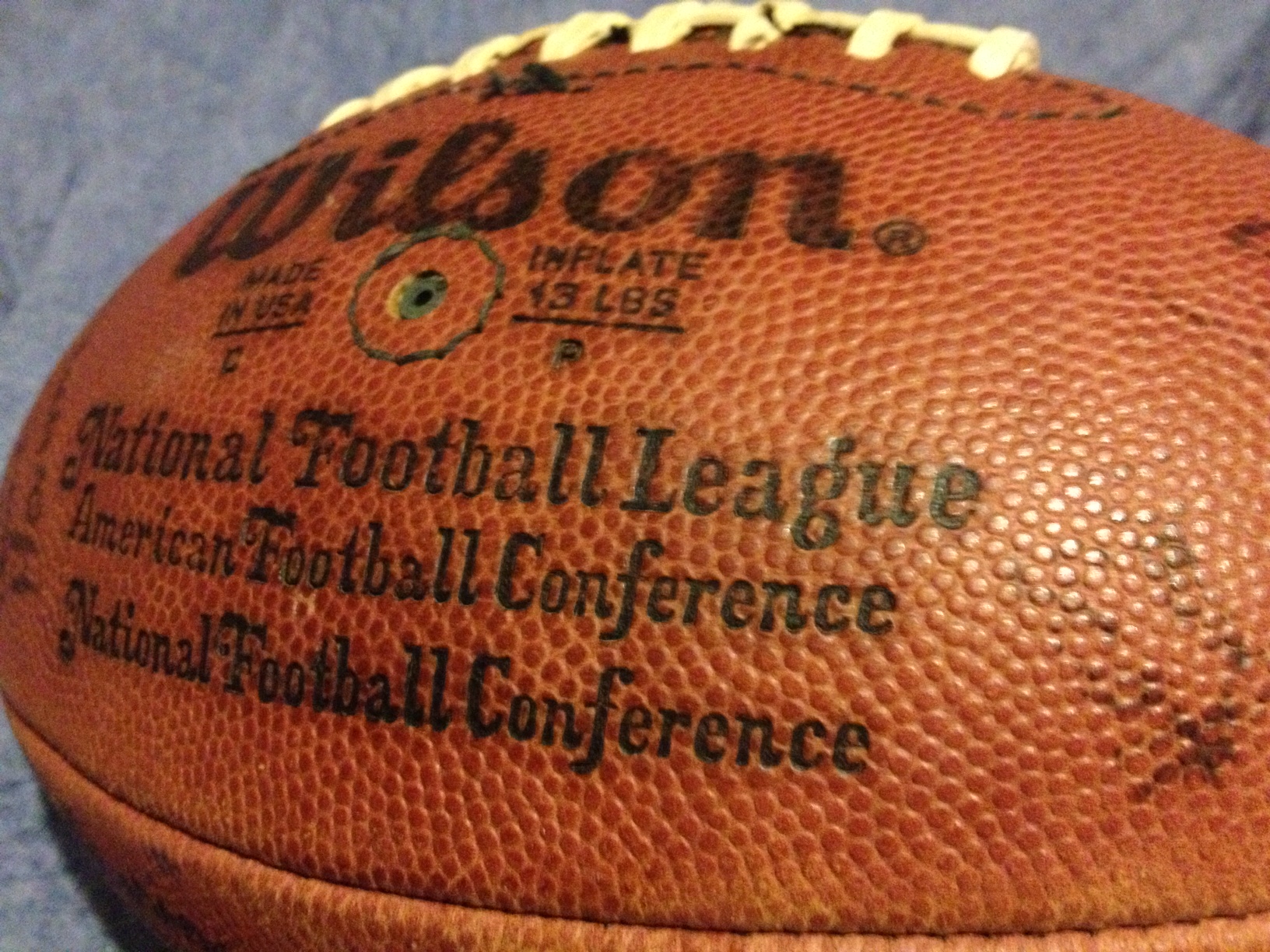
Many of the patterns and habit of underdogs—which, by the way, lead to more successes than expected—outlined in the book remind me of the things I learned while coaching. I’ll attempt to touch on some of these learned lessons over the next months on the blog. One of the most important lessons learned was this intricately simplistic, but incredibly effective, definition of the game of football. The “MY BALL!” philosophy of Coach Paul Lane.

In my town, we are perennial underdogs. We have the collective genetics of a lower middleweight wrestler. We aren’t big, we aren’t particularly fast, we aren’t incredibly naturally talented, but we are who we are. If you were to line our Clay Center boy’s teams up before the game at the 50-yard line against the opponent and take a vote on who’ll win from physical appearance only, we’d lose that vote in a landslide 95 times out of 100.

We are who we are.

Being what and who we naturally are, we have to approach things from a non-conventional direction in order to develop into a successful team. We have to think outside the proverbial box because we don’t have the natural athleticism that fits nicely into that box. I don’t mean to be mean-spirited because I loved coaching this tough-minded, hard-working population of kids. It is just the harsh reality—we have to develop competitive teams, not inherit competitive teams.

Coach Lane’s number one teaching point for the Tiger Defense consisted of only two words, MY BALL!. When the opponent had the ball, our job was to physically take our ball back, either by force or by making the opponent punt the ball back to us in three plays. Our goal was to be selfish by taking our ball back whenever the opponent happened to gain possession of it—and take it from them ASAP.

A beautifully simple, yet effective definition of the game that 99.9% of our teenage boys were able to grasp. They could “get it”. Football went from this apparently confusing game of rules and playbooks, and techniques to something they could wrap their young minds around. It’s all about MY BALL.

  • Get it back when we don’t have it.
  • Take care of it when we have it and move it to our special piece of prime real estate at the opposite end of the field as many times as possible.

With this simple mental framework in place, we could teach our kids their jobs and they could understand why they had to do that job. The team needed them to do their job in order for us to get Coach Lane his ball back.

Easy-peasy.

“MY BALL!” made me rethink the game of football and more importantly, rethink how I studied and taught the game of football. Two simple words, one simple philosophy that helped our underdogs as they worked to become successful. David beats Goliath playing the game David’s way and not Goliath’s way.

Until next time.
WilsonFootball

1 Comment

Filed under Coaching, Training

Fully Formed

I had this recurring dream about showing up to the locker room one day and meeting the principal at the coach’s office door. No, I was not in trouble so this wasn’t the usual administrative nightmare which, in all actuality, was my coaching reality. In my dream, the principal is standing at the office door to introduce me to the strapping athlete at his side, who just happened to transfer to our school. A Brian Urlacher-type. Ready-made out of the box ready to step on the field and dominate.

Fully formed.

Ready to go.

But this never happened. Sure we had our share of kids transfer in, but none of them ever was a Division I caliber athlete.

The mythology of the transfer student.

The mythology of “fully formed” is just that…a myth.

Even in the writing game, nothing starts fully formed. An idea becomes a sentence, the sentence becomes a paragraph, the paragraphs become chapters, and the chapters become a draft. The draft is chopped up and reworked, and then polished to a shine. Next, trusted people read it, suggest changes, and the whole process repeats itself until the book is fully formed.

Hard work is the magic.

Nothing is fully formed out of the box.

When I was just starting out in coaching, I used to grump and griff around that the new kids coming into the program didn’t already know the things I wanted them to know. I’d get frustrated when the kids couldn’t do the things I thought they should do.

I was an idiot.

I would grumble out loud, but Mrs. Hays would point out, “If those kids already knew everything, they wouldn’t need to pay you now, would they?”

Thanks, Mrs. Hays.

I would point a finger at the developmental level coaches and Coach Lane, who taught freshman English class, would say, “I can’t expect 8th graders to come in knowing freshman English, I need to teach them freshman English.”

That’s why he was such a good head coach and mentor.

Everyone needs work. Everyone needs coaching and teaching.

Fully formed never just walks in the door.

Done right with a developmental approach, though, and fully formed can walk out your door.

Developing athletes is a sports coach’s #1 job. It truly is why they pay us.

Developing athletes is the key to success. Make the kids who walk through your door the best they can be. Help them realize their potential and their dreams.

Send them away at the end of their time with you as  fully formed as you can make them.

DB+Parallettes

Leave a comment

Filed under Coaching, Training

The Jack-In-The-Box

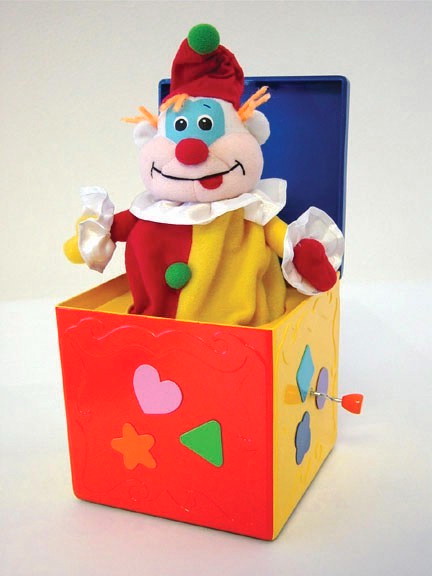
The jack-in-the-box.

You turn the crank slowly. Nothing happens.

You turn slower and slower and slower in anticipation of the freaky clown popping out when the lid springs open. With every turn, your heart beats faster and your eyes get a little wider. The chime rings out the tune one slow note at a time as you get closer and closer to the always surprising endgame and then…

POP!

Jack-in-the-box

Developing athletes is similar to a jack-in-the-box. The athlete cranks the handle by practicing and training. When the time is right, the breakthrough comes, and the performance “pops” for all to see.

I saw this with several of the baseball kids we coached this summer (I know, I know, I retired. Insert Mrs. Hays laughing). Starting this spring, these particular players worked and worked to become better hitters. We worked with them on staying vertical and using their tall, lanky frames to generate angular force through a short, compact swing.

These players slowly cranked the handle of their athletic jack-in-the-box to get better throughout the season. They put in meaningful time at the batting cages and at practice. Honestly, they hit the crap out of the ball more often than not this summer. Finally, for one of the players, the catch was sprung on the lid and he hit his first home run to seal a victory in our final game of the summer. It was a legit shot that easily cleared the left field fence. I even smiled—during an actual game, if you can believe that.

This is how athletic development works. You work toward a goal. You grind it out day after day to what often seems to no avail. You get frustrated. You despair. Sometimes, you quit. But to those who keep turning that handle on their athletic jack-in-the-box with grit and determination, success will come.

You will improve.

It is inevitable.

So, keep lifting, keep running, keep swinging, and throwing. Practice ball-handling and shooting baskets every day. Continue to work on your technique, your footwork, and your mental game. Just keep cranking and good things will happen.

I’ve said this many times in the past, but one of the most important things a coach or teacher can do is to see the potential in a kid and help them achieve that potential. Teach them to keep working and to keep turning their cranks of improvement until their talent springs forward.

Now, it’s time to shove this old, tired, jack-in-the-box of a coach down, snap the lid shut, and throw him back into the storage closet. I am retiring from active coaching…again.

Maybe (Stop laughing Mrs. Hays.).

Leave a comment

Filed under Coaching, Training

Be Indelible

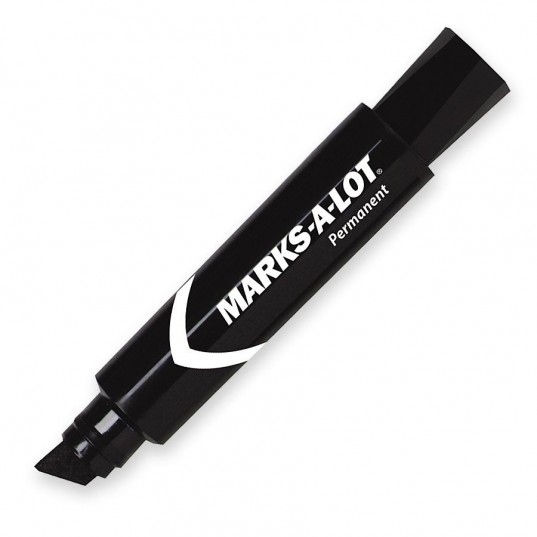
I used to confuse the word indelible with the word inedible. So when I’d see a permanent marker with “Indelible Ink” printed on it, I’d think, “No $#@!, Sherlock! Who would want to eat a Sharpie anyway?”

Now I’m slightly smarter…well, enough smarter to know that inedible and indelible are completely different things. Indelible means to make a lasting mark—it means that something will not be forgotten or removed.

I like that.

Indelible.

I want to coach and develop indelible athletes.

I want to produce indelible writing.

I want to make an indelible impact on my communities.

I want to be indelible.

MarkerParticipate or Compete?
As an athlete, or as part of any organization, which are you choosing to be?

The participant shows up most of the time and, more often than not, jumps into the wagon to go for the ride.

The competitor is the one who pulls the wagon and makes everyone around them better. The competitor is the very definition of indelible. The competitor is never satisfied with their current efforts and performances. A competitor does the things the participator refuses to do.

What does a competitor do? Well, in high school sports, in my opinion, the competitor is the athlete who puts in the extra offseason work to improve at least 4 or 5 days a week.

  • Baseball – 50 throws & catches, 50 swings, 50 ground balls/pop-ups.
  • Football – Explosive power development, 25 starts and footwork reps, routes, and throws.
  • Basketball – 250+ shots a day, ball-handling skills, explosive power development.
  • Tennis, golf, volleyball, etc. – All need skills reps

All In
I am a firm believer in playing multiple sports and being involved in multiple activities, hobbies, etc. But, the work and the commitment to all these activities requires a monumental effort. The key is to, as the wonderful Mrs. Hays often says about life and work and parenting, “Be present.” Pay attention to the needs of the situation staring you in the face. Focus 100% on the task at hand and not 60% with the other 40% worrying about the next activity on you agenda.

Be Present = Go All In

Whatever you do in life, go all in. Jump into the fray feet first with a fully-focused effort. Don’t straddle the border with one foot in and one foot out. Hit the accelerator and give your drive and desire full throttle to make your world a better place.

That is the very meaning of indelible.

Go all in.

Compete, don’t just participate.

Leave a lasting mark.

Be Indelible

1 Comment

Filed under Coaching, Rants, Training

Load. Step. Swing

The title is absolutely correct;. “Load (Period) Step (Period) Swing (Period)”

It’s not “Load, step, swing” or what I see way too much from young players, “loadstepswing”.

A good and consistent baseball swing consists of three distinct and separate parts.

  1. The load.
  2. The stride.
  3. The swing.

bat_tee3

Why is “Load. Step. Swing.” so important? Because it’s vital to develop solid fundamentals in young hitters so they will be fundamentally solid older hitters. Fundamentally solid older hitters are able to enjoy success against better quality pitching as they mature and enjoy playing the game longer.

Do you know why most kids quit playing the game of baseball? They say the game is not fun for them. The game is no longer fun for them because they usually struggle to hit the baseball at the advanced level. Hitting a baseball is fun. Period. Ask any kid, they’ll back me up at an almost 100% clip.

Here is the simple method I used to instruct hitters. I use this same basic philosophy to help hitters from preschool kids up to the collegiate level. It works, It’s basic. It makes hitters able to hit laser shots from the left field line to the right field line. And when one hits the ball hard, good things happen.

Get Bouncy

Athletes move on the balls of their feet, not flat-footed or with weight on the heels. Relax the body and get bouncy to be a better athlete.

Hitter’s Rhythm

Stand up. Go ahead, get off your rump and stand with feet comfortably about shoulder width apart. Now get bouncy off the balls of your feet. Feels good, right? Next, rock side to side. When one heel comes off the ground the weight shifts to the other heel on the ground. Do you know what this is? It’s your body’s natural, relaxed motion of hitting a baseball. It is hitter’s rhythm.

Hitters should naturally rock with this rhythm almost unconsciously, even when just standing around. (It’s how we find each other in the crowd…look for the guys rocking back and forth in hitter’s rhythm).

Load

When weight rocks to back foot, the hands load to the back shoulder and lock into place.  It’s like shooting a rubber band at your sister. Be honest, do you take that big, thick, Sunday morning paper rubber band and only pull it back an inch before firing it in the direction of their beloved sister? Heck no! You pull that rubber band back as far as you can so you can fire it at that beloved sibling with explosive speed and power. Same for loading up in your swing. When a hitter loads, the rubber band has been pulled and now you are ready to release that locked and loaded power onto the ball.

Step

The step, or stride, will vary between hitters depending on where the hitter is comfortable in their stance. If the hitter likes a narrow stance and longer stride is usually more natural. If the hitter likes a wide stance, then the stride is usually short. If I see a kid having problems controlling the stride or being consistent with their stride, the I’ll put them in a wide stance and have them just pick up their front foot and post it down right where it was. The whole purpose of the step is to shift the energy from the load into the barrel during the swing.

I like to teach hitters to “stick” the ball of the front foot into the ground with the outside of the foot pointed toward the pitcher. The hitter needs to post the front leg to stop the forward body momentum shift so the hitter doesn’t slide through the front hip and waste all that loaded up power. A solid step movement should be relaxed, quiet and stick the perfect hitting position. (see Hitting Position for an explanation on the importance of starting a swing from a consistent hitting position.)

Swing

You’ve loaded, you’ve stepped, and now you are in perfect hitting position. What’s next?

Simple, it’s a swing.

Take your front hand (the bottom hand) and pull the knob toward the ball in a quick, compact, powerful swing. By developing a consistent hitting position, a hitting only needs to learn the one swing which is directed toward the pitched ball. The swing needs to start from the back shoulder and go directly to the ball, no matter where it is pitched. Inside, outside, high, low, or right down the middle. A hitter with a good fundamental swing can hit any of these pitches with power to all fields and makes for a dangerous hitter who is very difficult to pitch to and defend.

Sounds like fun, doesn’t it?

Sounds like something we all want, right?

So, repeat after me.

“Load.”

“Step.”

“Swing.”

Say these three words hundreds and hundreds of times in your head and out loud. It is the rhythm of a hitter. It is the rhythm of baseball.

Three separate words, not one.

Three separate parts, not one.

Load. Step. Swing

Hitting a baseball is one of the great things in life.

Enjoy life!

Happy Hitting!

bat_tee1

3 Comments

Filed under Coaching, Training

Still Waters

One of the best teams we ever coached was a group of kids who were magnificent running down the rapids. Virtually unstoppable and an honest-to-goodness tour de force when the current flowed swiftly in their direction. But, we would lose focus and intensity when the current became easy and let up. When things should have been easy, when the game should have been packed away neatly under the “W’ column, we’d struggle to tread water and keep our heads above water.

Handling success and maturity means you must learn to navigate the still waters to keep afloat and continue to move in the desired direction. It is one thing working to succeed, but it’s a whole other thing to achieve success and then stay successful. One of the true joys of being good is the scramble, the character, and the discipline invested in order to stay good.

Tom Osborne, the legendary football coach at the University of Nebraska, said that everyone wants to win; it’s human nature. The difference between winners and losers often depends on how willing one is able to go all in and put in the work necessary. And in order to stay a winner, one has to work even harder and with greater efficiency to stay on the mountain.

One needs motivation, an edge. Some sort of carrot to dangle just out of reach in front of you that keeps your motivated. My favorite edge as a player and a coach is the “Chip on Shoulder” approach. Succeed despite the barriers you face. Suceed because there are people who don’t believe you will ever accomplish anything.

The edge. When you choose to play on the edge you have to be careful of two things.

  1. It’s easy to fall over the edge, so you must stay balanced and anchored.
  2. Key an eye on those who will push, nudge, or flat-out kick you over the edge.

The KC Royals in the first month of the season are a good example of this. They found a chip-on-the-shoulder edge which worked very well. But, when this motivator went too far, they fell over the edge and lost their composure. Fortunately, it appears they were able to step back and reboot under control to be successful. Use the edge to motivate your habits and performance, not lose emotional control. Be motivated without becoming consumed by the motivation.

Use the edge to motivate your habits and performance, not lose emotional control. Be motivated without becoming consumed by the motivation.

So you’ve turned things around. Your team and your performance proved to be successful. Pat yourself on the back, smile, and then get back to work. You have things to accomplish. The job has just begun. Find your edge and anchor yourself to your motivation.

To be a success, you need to learn to navigate the still waters. There will not always be a swift stream to move you along, so you need to be able to put your oar in the water and pull yourself forward time and time again.

Word hard.

Work focused.

Play hard.

Play focused.

Just don’t get pushed over the edge.

Still_Water_At_Dusk

Courtesy WikiCommons


Leave a comment

Filed under Coaching, Training

Finding Their Missing Somethings

“Let me tell you something, Dorothy Gale from the Wizard of Oz was one of the great all-time leaders. She took three people that were missing something and had them look back inside themselves to find something they thought they never had. She wanted to go home, that was mission No.1, but in the end it was all about everyone else.”

I read this quote from Clint Hurdle, manager of the Pittsburgh Pirates, in Sports Illustrated’s 2015 Major League Baseball Preview. Not only is it a statement about what a good leader does, it is perhaps the best distillation of the very essence of The Wizard of Oz I have ever seen.

wonderful-wizard-oz-l-frank-baum-paperback-cover-art

A leader seeks their own goal by helping everyone around them find what makes them better. A coach needs to pay attention to know what each of his or her players desires or needs and work with that athlete to make them better. When the collective individual goals are met, the team goals often follow for the coach. The devil is in the details. The devil is in making every single individual who walks through your door better on a daily basis.

I saw another fitting quote in a training and conditioning magazine this past week from Coach Mark Morrison, who is Head Strength and Conditioning Coach for Hendrick Motorsports. On the subject of training individuals and the myriad of training philosophies/programs available, Coach Morrison said,

“At the end of the day, as long as you are developing happy, healthy, strong, lean, and agile athletes, you have done your job.”

Truth! Write this in stone and live by it. Be the coach who, like Dorothy, finds the missing somethings in your athletes. Be the coach who helps them be happy, healthy, strong, lean, and agile athletes.

You will be a happier (and more successful) coach because of it.

Leave a comment

Filed under Coaching, Training

Rowing or Riding?

Which athlete are you? The one who rows the boat or the one who simply rides along?

I read an interesting blog post today from Seth Godin called Along for the Ride that reminded me of this aspect of team sports dynamics.

“How long have you been along for the ride? When is your turn to actually drive?”

As a player or a coach, these questions should be a constant in your development.

  • When is it your time to step up?
  • Did you miss it?
  • Did you ignore it?
  • Do you want nothing to do with it?

We are seeing an increase in younger athletes getting on the varsity sports field. Freshman, sophomores are being thrown into key team roles.  I have also noticed a trend where these same young players are thrown into the fire often don’t seem to get much better.

They are as good when they walk out the door as they were when they walked in.

These kids get put on the boat as riders and never develop into rowers.

Athletes need to eventually take the responsibility of driving the team train. Experience and leadership can’t ride the train. Experience and leadership need to be the drivers.

It’s your turn to step up.

It’s your turn to row.

Be what you are meant to be.

Out work. Out hustle. Out perform. Every day.

1 Comment

Filed under Coaching, Rants, Training

Swinging For A Better Investment

It’s almost baseball season.

Doesn’t that phrase have a nice ring to it? It is music to my ears. I can almost picture the excitement of kids all across this great country as they look forward to stepping on the diamond.

As you parents and coaches get ready to outfit the young players in your life, I want you to consider a purchase that will pay off 100x greater than just about anything else you are looking to buy for baseball.

Buy a tee.

I am a firm believer every kid should have a tee AND every kid/parent/coach should have a basic idea of how to use one.

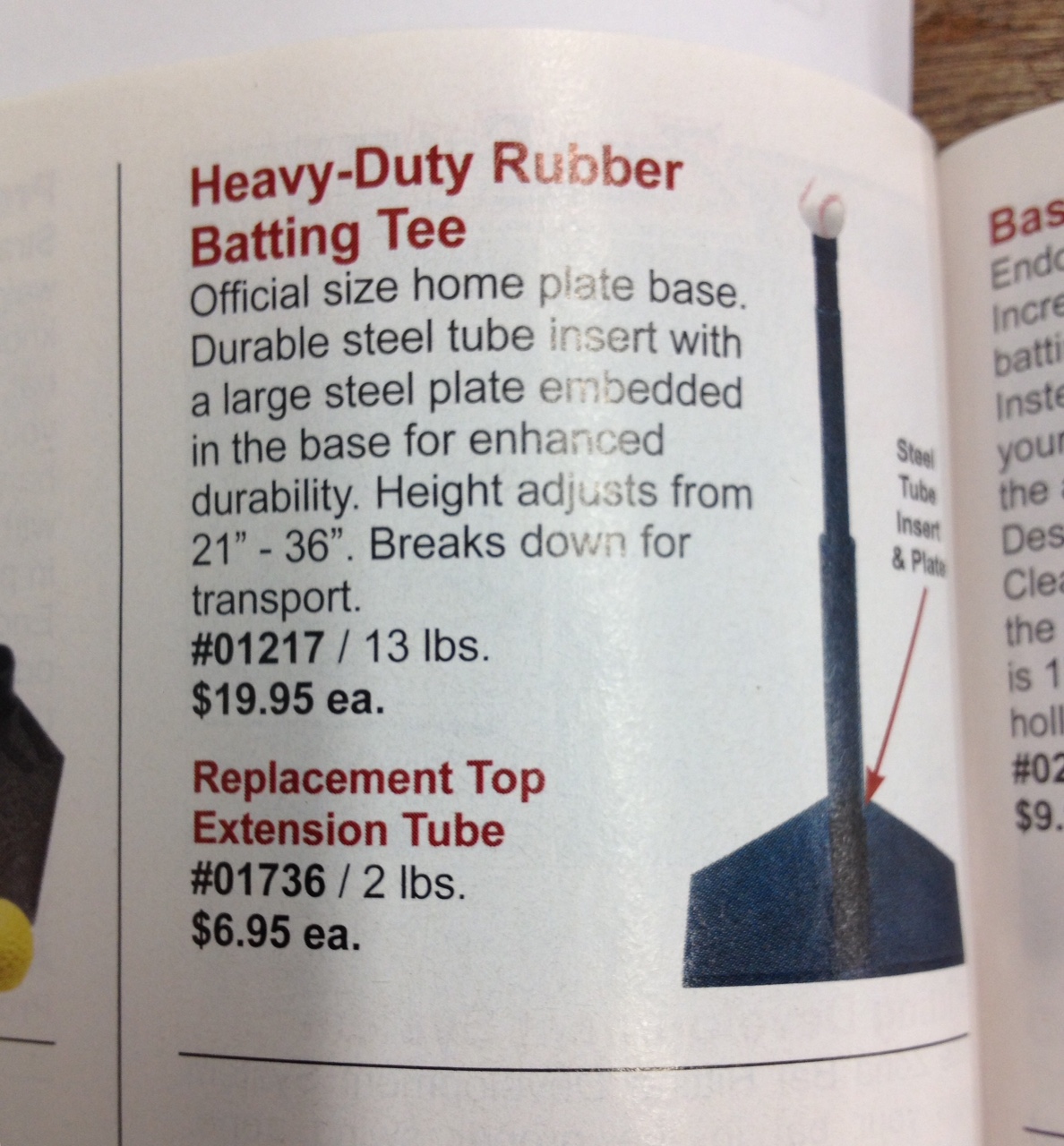
Here is a quality tee you can get for $20.

BattingTee

Thinking about spending $200-$500 on a bat? STOP!

First, and foremost, be willing to spend the $20 on a tee to teach the player to hit screaming line drives regardless of the bat they hold in their hands.

It is not the equipment that catches or hits a baseball; it is the skill of the hand that holds the equipment which accomplishes great things.

Buy a tee.

Learn how to use it.

Learn how to teach with it. See my earlier blog post, Hitting Position: The Hosmer Breakdown, for more information and keep an eye open to a upcoming post about tee drill progression. (And free open hitting sessions will start soon, also.)

Buy a tee. Hang a net to hit into or drill a hole in a ball and tether it to a 15-20′ piece of clothesline rope. Hit baseballs, plastic golf balls, tennis balls, or any kind of ball you can scrounge up.

Save yourself some money. Don’t be fooled into thinking a $400 baseball bat will miraculously make you or your kids a better hitter. At the end of the day, there is only one thing that makes a better hitter—WORK and REPETITION.

Have a great preparation to Baseball 2015!

Now, go buy a tee.

Leave a comment

Filed under Coaching, Rants, Training

Coach Hays Rant: Not A Fan

“I’m not going to play this spring (or winter)(or summer) because I’m gonna lift.”

This phrase, when spoken from a high school athlete makes me cringe. I know what it means, I’ve been there. I used this excuse myself as a senior in high school and didn’t go out for wrestling. Here is the interpretation that enters my brain through the coach translation area of my cerebral cortex when I hear that phrase from a high school kid.

I don’t want to play __________ because I really don’t want to work that hard.

95% of the kids I’ve heard the “I’m going to lift” mantra from fail at this goal miserably. Sure, they show up in the weight room, but very little work gets done.

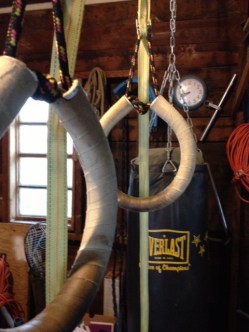
Rings

I admit I’m not a fan of the recent rise in the high school sport of powerlifting. Sure, it’s all pretty cool, but is it doing justice to our athletes? Are we pushing kids into powerlifting participation (even though it’s not a sanctioned competitive sport by the state athletic association) at the expense of other sports they could, and should, be participating in? Is powerlifting becoming the focus over the actual sports a high school offers?

Truth is you get better at sports by playing sports. The training component is vital, but it is still just a component. Playing multiple sports gives one an edge in physicality, in conditioning, and in competitiveness, which is such an important component, yet so overlooked. Give me eleven young, high school men who know how to compete and I will knock the mother-loving socks off your 300 lb. bench pressers who spend 8 months of their year lifting.

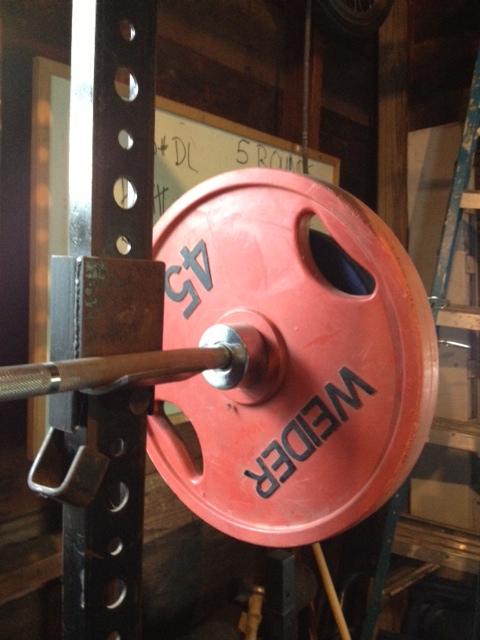
Plate

Explosive power development requires speed, agility, quickness, and strength. That strength is a certain type of strength—an explosive strength derived from a specific technical approach. Like I’ve said many times before, I want to develop bullets rather than bowling balls. Powerlifting as the primary focus does not build athletes. Period.

Moral of the story…play a sport whenever you can. It is the best “big picture” thing you can do. Don’t get stuck on the one particular tree and forget all about the forest.

  • The first step is to compete.
  • The second step is to practice with an approach to improve.
  • The third step is to attack a well-rounded physical training program to develop physically, mentally, and emotionally.
  • The fourth step…enjoy the ride.
  • The fifth step is to repeat steps one through four as often as possible.

Time is precious. Make the most of every tick of the clock and work to be the best you that you can be.

Hard work is the magic.

Rant over. Back to your regularly scheduled programming.

1 Comment

Filed under Rants, Training